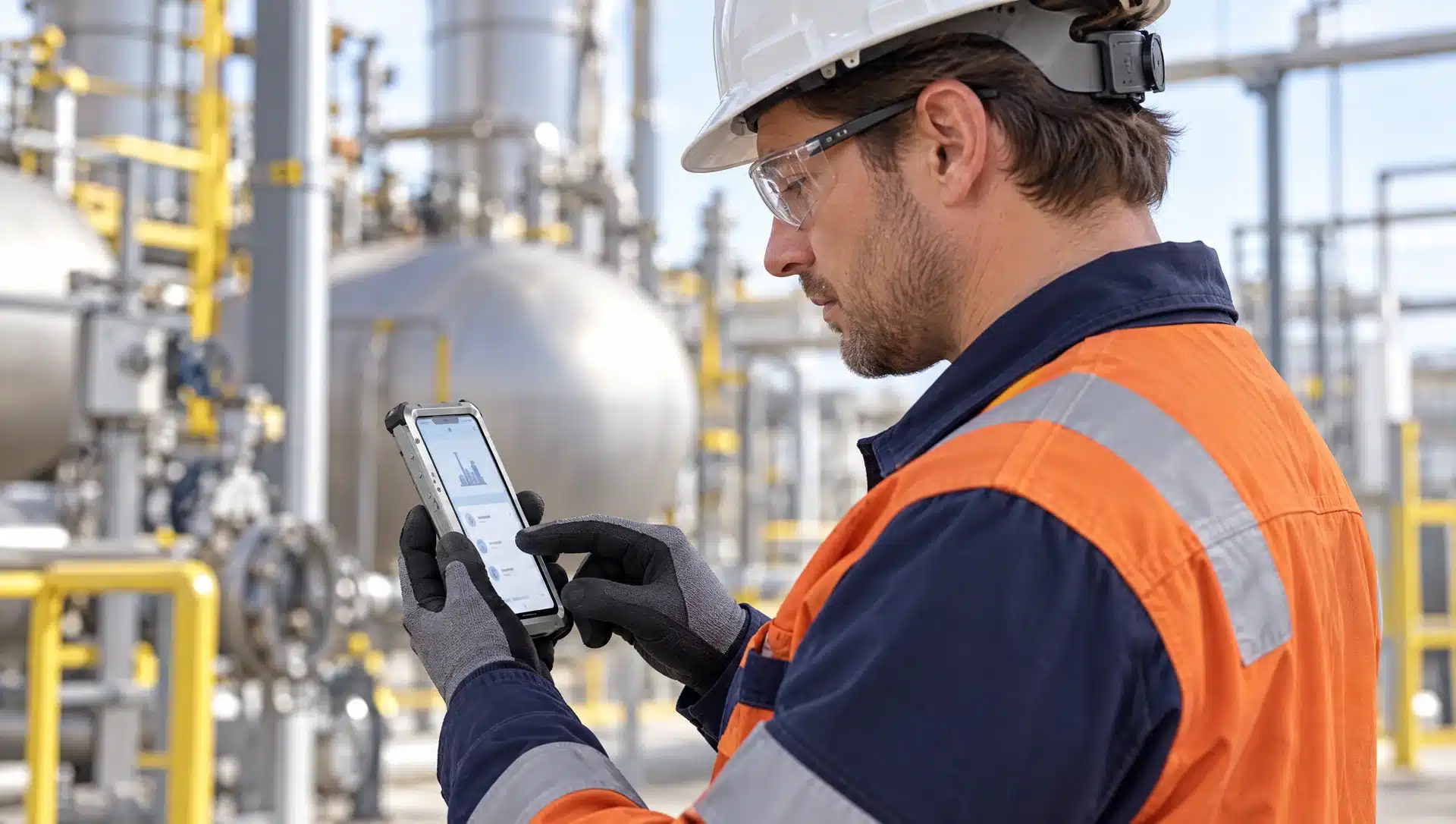



When evaluating mobile hardware for hazardous environments, facility managers naturally focus on physical safety. They meticulously check ATEX certification ratings, Zone 1 classifications, and gas group compatibility to ensure a device will not trigger an explosion.
However, as industrial facilities accelerate their digital transformation, a secondary, equally dangerous vulnerability has emerged. Cyberattacks targeting critical infrastructure are increasingly focusing on the industrial mobile edge.
Connected handheld devices represent a prime entry point for threat actors seeking access to operational technology (OT) networks, SCADA systems, and industrial control loops. At Atexxo Manufacturing, we understand that true industrial safety requires a dual approach: preventing physical ignition while simultaneously locking down digital access. Here is how enterprise operators are hardening their mobile fleets against cyber-physical attacks.
The expanding attack surface at the industrial edge
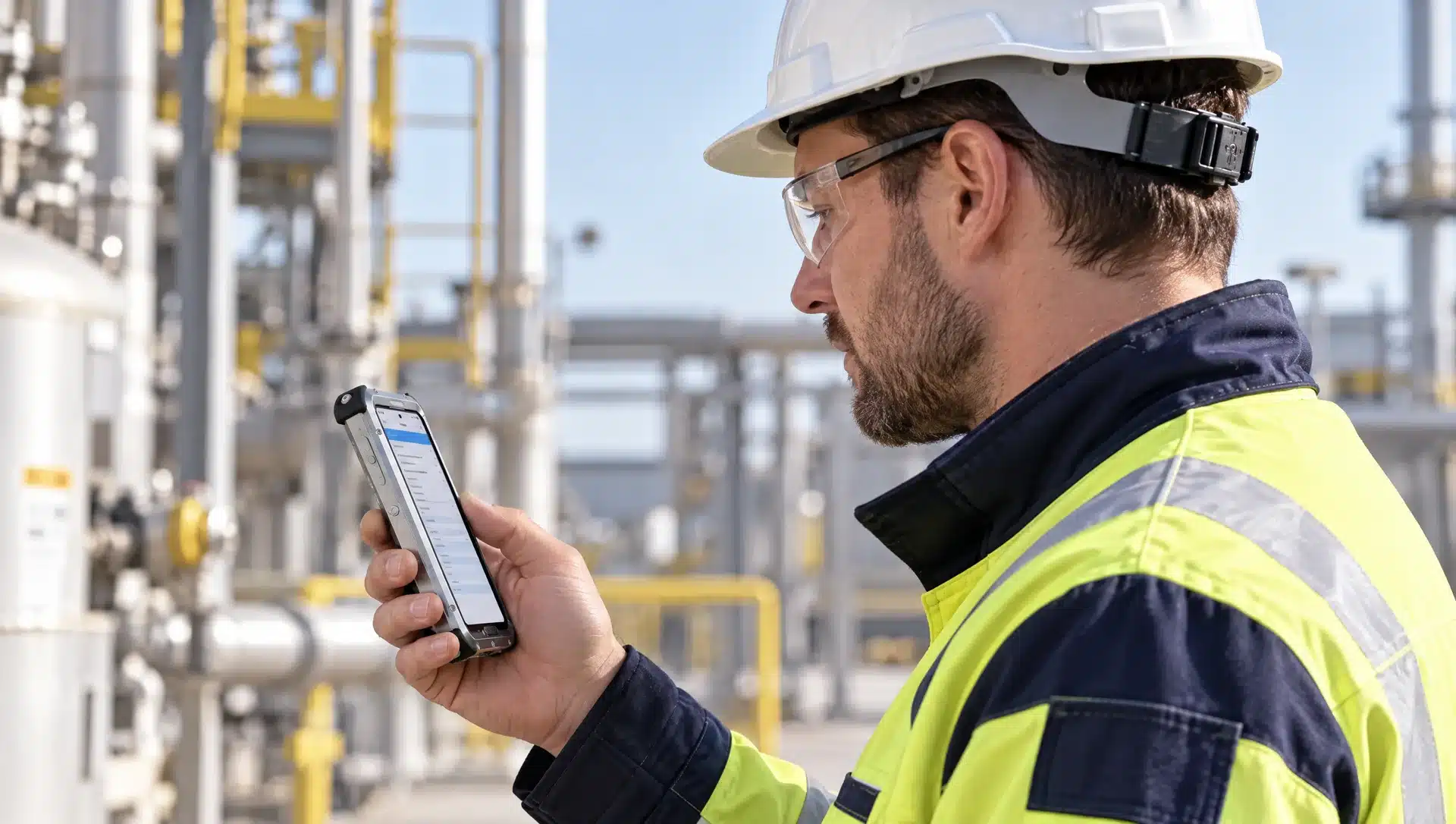
Modern refineries, chemical plants, and offshore rigs rely on deeply interconnected digital infrastructure. Field technicians carry smartphones that communicate directly with cloud analytics platforms, enterprise ERP systems, and edge SCADA gateways.
Cyber-attackers actively target these cyber-physical systems because they act as the bridge between digital commands and real-world machinery. A compromised mobile device operating inside a Zone 1 processing suite represents much more than a standard corporate data breach. The operational threats include:
- Corrupted telemetry: Attackers can inject false sensor readings into control loops, causing operators to misdiagnose process anomalies or improperly adjust pressure valves.
- Emergency isolation: Disruption of mobile network traffic can isolate a lone worker from automated emergency communication right when a physical incident occurs.
- Lateral network movement: Compromised mobile endpoints allow threat actors to bridge traditionally air-gapped corporate IT networks directly into sensitive, highly restricted OT environments.
Why iOS leads in high-security operational technology
Selecting mobile hardware for safety-critical environments requires a deep evaluation of the underlying operating system. Consumer platforms with open application execution environments present significantly wider attack surfaces.
iOS has established itself as the enterprise standard for high-security OT environments due to its rigorous, hardware-level security stack.
- The hardware-isolated secure enclave: At the silicon level, modern iPhones contain a dedicated coprocessor that is physically isolated from the main application processor. It handles all cryptographic keys and biometric data entirely within its own hardware boundary. Even if the primary operating system is compromised by malware, the secure enclave remains fundamentally inaccessible.
- Strict application sandboxing: iOS enforces rigid app sandboxing. Every application executes in its own isolated environment, completely preventing it from reading or modifying data belonging to other apps or system memory.
- Extended enterprise lifecycle: Equipment procurement in hazardous industries involves lengthy compliance cycles. Apple’s commitment to providing continuous security updates for up to seven years ensures that devices remain hardened enterprise assets throughout their physical service life.
Locking down the fleet with mobile device management
A hardened hardware platform requires centralized policy enforcement. By pairing Apple Business Manager (ABM) with an enterprise mobile device management (MDM) solution, IT security teams maintain absolute, over-the-air control across the entire field fleet.
This enables several core governance capabilities essential for industrial security. Supervised mode grants non-removable management authority to IT teams, preventing field personnel from bypassing security profiles or installing unvetted third-party software. Administrators can completely disable the native App Store, locking devices exclusively to approved work applications like SAP or IBM Maximo. Furthermore, rapid security responses (RSR) allow security teams to push critical, targeted security patches instantly to the entire mobile fleet without requiring user intervention or full operating system reboots.
Zero trust and dynamic geofencing in classified zones
MDM policy enforcement becomes exceptionally powerful when integrated with physical location data through geofencing. This applies a zero-trust architecture to the physical plant geography: no device is inherently trusted by default, and access permissions adjust contextually based on exactly where the technician is standing.
To visualize how physical location alters device permissions in real-time, explore our interactive security policy simulator below:
As demonstrated, automated restrictions enforce compliance effortlessly. When a technician enters a highly sensitive processing unit, the MDM profile can automatically disable the camera hardware to comply with site privacy mandates, re-enabling it only upon exit. Simultaneously, entering an isolated zone can automatically trigger background lone-worker monitoring protocols without requiring manual user input.
Bridging software security with ATEX physical protection
Deploying advanced mobile software security into classified zones creates a unique engineering challenge. You must utilize flagship hardware to run the software, but you cannot compromise on explosion safety.
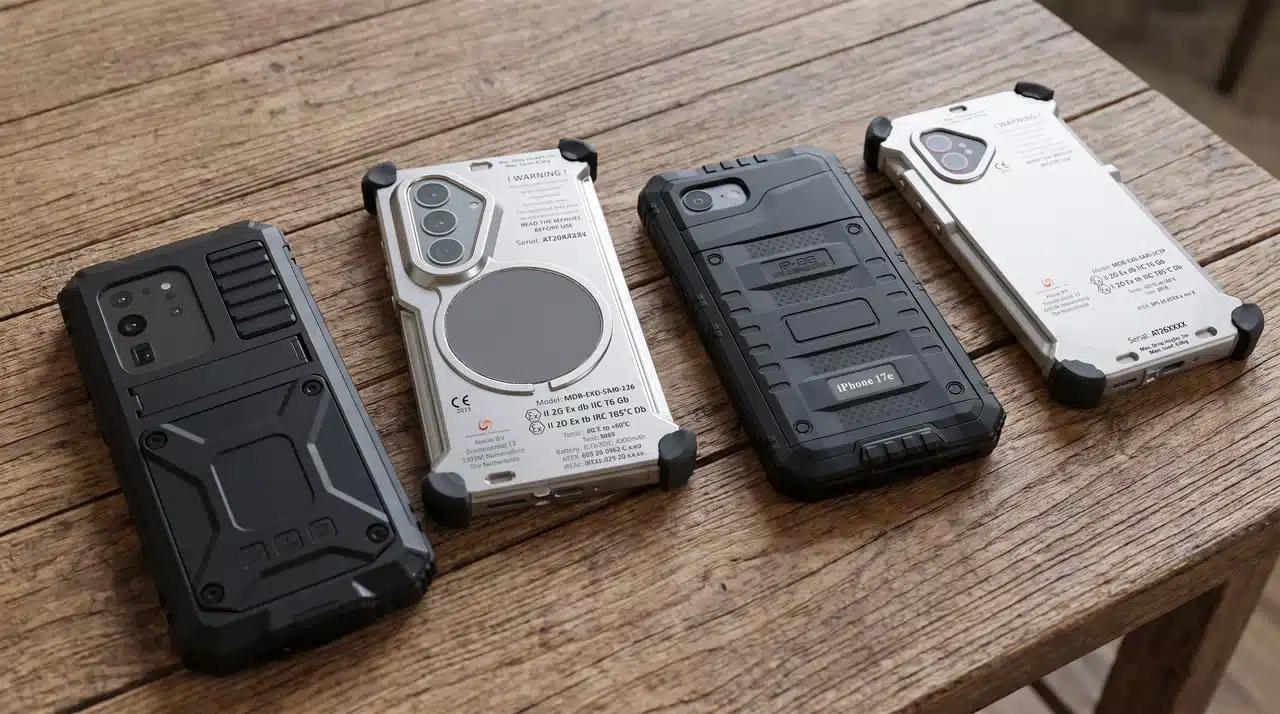
The combination of a premium device—such as the iPhone 17 Pro Max—housed within a certified Atexxo explosion-proof enclosure resolves both sides of the security equation.
Our precision-engineered housings meet strict ATEX and IECEx Zone 1 physical safety standards, perfectly containing any internal thermal or electrical energy to prevent vapor or dust ignition. Crucially, they do this while retaining full native support for the secure enclave, Face ID biometric authentication, MDM enrollment, and zero-trust geofencing. This dual-layer approach guarantees that your operations remain both physically safe and digitally impenetrable.
Frequently asked questions
Why is cybersecurity critical for intrinsically safe mobile devices in OT environments?
Intrinsically safe mobile devices connect field personnel directly to industrial networks, including SCADA, MES, and ERP systems. Unsecured mobile endpoints can serve as entry points for cyber-threat actors to breach OT networks, manipulate sensitive sensor data, or disrupt safety-critical emergency communications.
How does the iPhone secure enclave protect industrial mobile data?
The secure enclave is a hardware-isolated coprocessor embedded within the iPhone’s silicon. It operates entirely independently from the main operating system, managing cryptographic keys and Face ID biometric data in a hardware-sandboxed environment that remains secure even if the device’s main software is compromised by malware.
What is the role of mobile device management (MDM) in hazardous area fleets?
MDM software allows IT administrators to enforce strict security policies across an entire fleet of industrial smartphones over the air. Essential features include remote device wiping, blocking unapproved application installations, enforcing supervised mode to prevent tampering, and pushing instant security patches to field devices.