

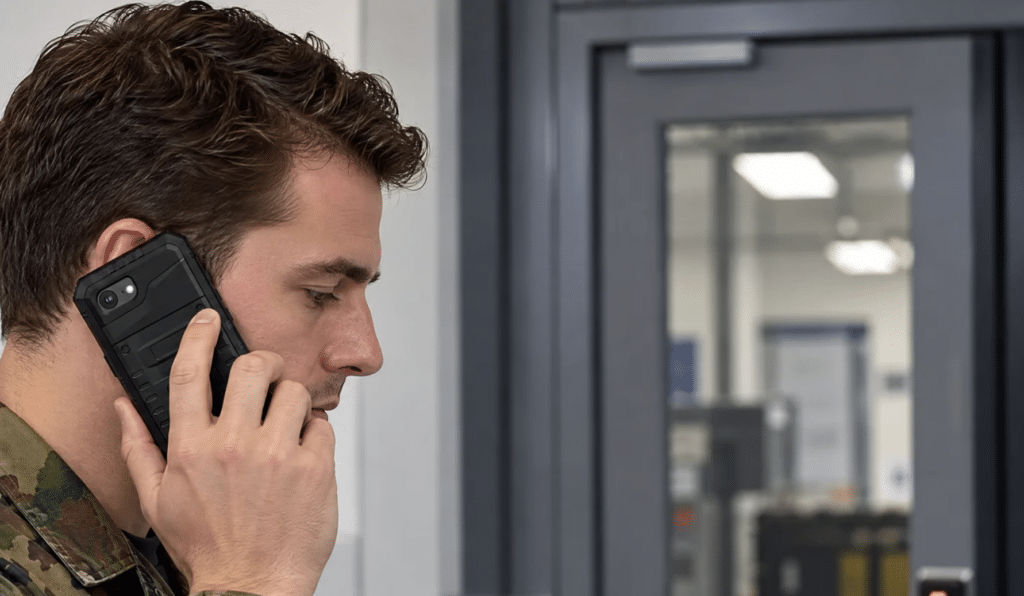
Apple’s official NATO Restricted clearance for iOS and iPadOS marks a historic shift in industrial mobile security. Following an exhaustive technical audit by Germany’s Federal Office for Information Security (BSI), consumer mobile devices can now handle classified government communications up to the NATO Restricted level using native platform security.
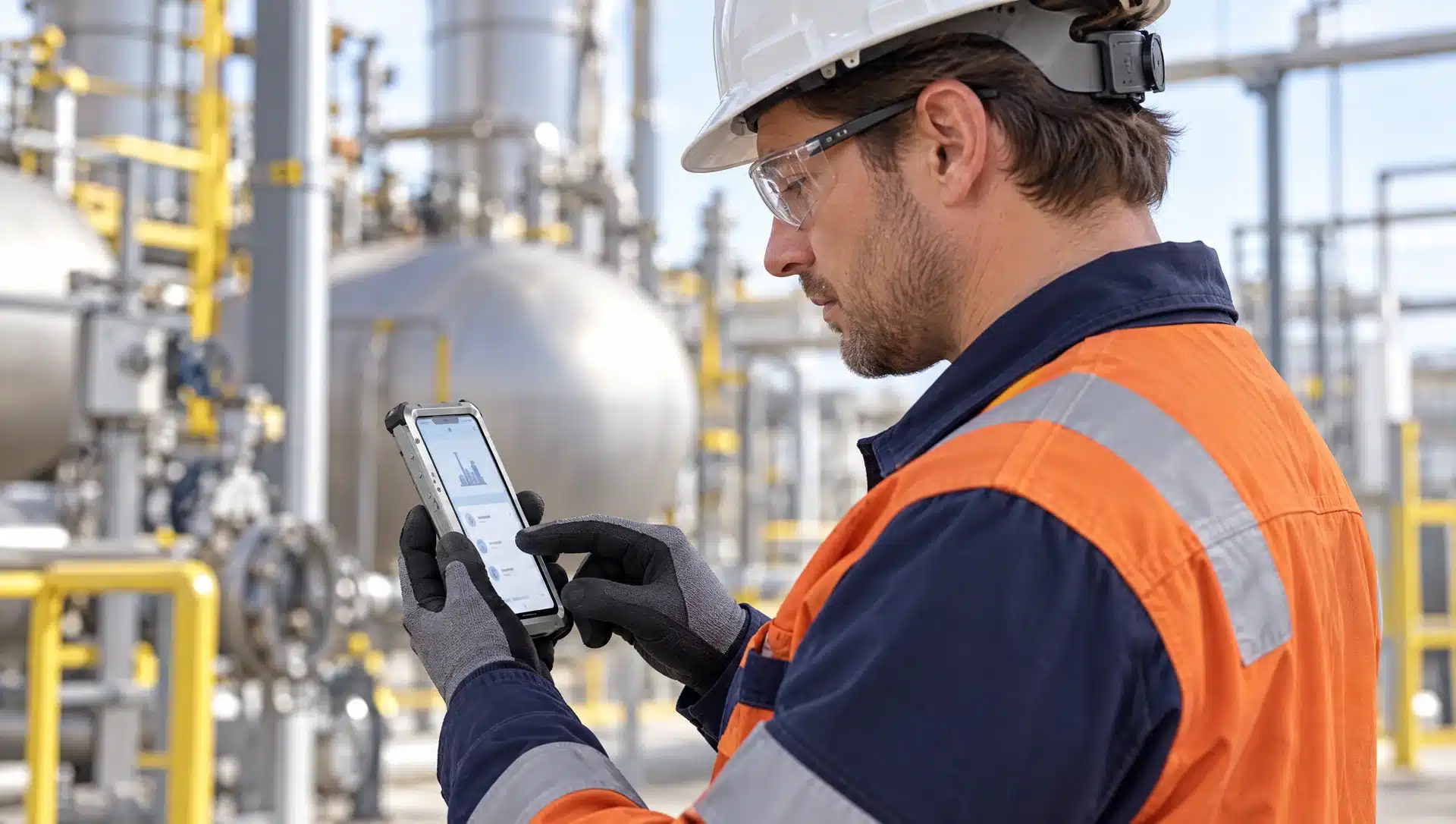
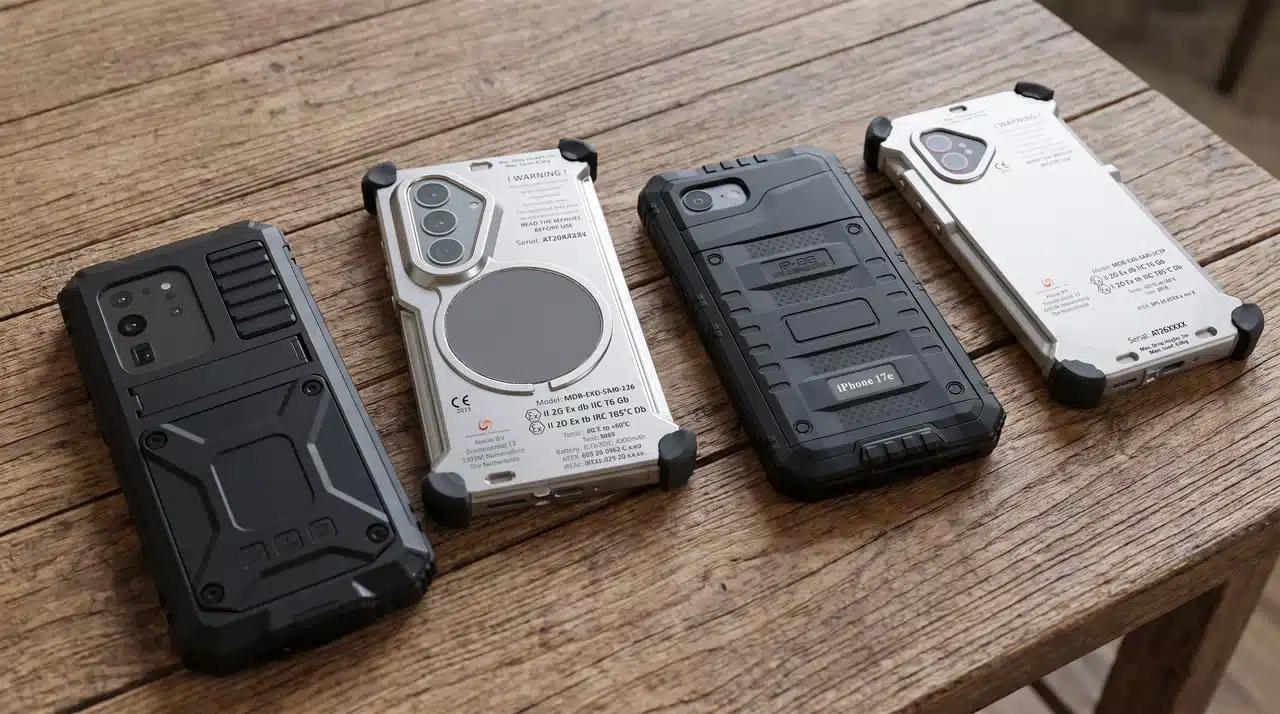
For operational technology (OT) and IT leaders managing oil refineries, chemical processing plants, and offshore platforms, this milestone completely alters the security equation. At Atexxo Manufacturing, we bridge this defense-grade digital architecture with physical explosion safety, turning NATO-cleared smart devices into fully certified Zone 1 and Zone 21 field terminals.
The architectural reality of NATO-level approval
NATO Restricted approval is not a marketing label—it represents a rigorous technical validation of Apple’s silicon, hardware, and operating system architecture.
- Silicon-isolated cryptography: The hardware-based Secure Enclave manages encryption keys entirely separate from the main application processor, preventing data extraction even during physical tampering.
- Secure boot and system integrity: Multi-stage cryptographic checks ensure that only authorized, uncorrupted system code can execute when the device powers on.
- Advanced memory protections: Built-in Memory Integrity Enforcement neutralizes sophisticated zero-day exploits and buffer overflow attacks at the kernel level.
- Direct OS patch management:Security updates originate directly from Apple, eliminating vulnerability windows created by third-party Android OEMs.
- Zero reliance on software wrappers:The clearance was achieved using native iOS features, requiring no custom operating system forks or secondary containerization software.
| Security vector | Legacy industrial Android handhelds | Atexxo Zone 1 converted iOS |
| Information assurance | None / OEM self-attestation | NATO Restricted approved (BSI evaluated) |
| Operating system design | Heavily modified, fragmented Android builds | Unmodified, native iOS architecture |
| Security update cadence | Irregular patches; 1- to 3-year support windows | Direct zero-day security updates for 6 to 8 years |
| Silicon security architecture | Varies by third-party chip manufacturer | Hardware-isolated Secure Enclave & memory integrity |
| Enterprise IT governance | Fragmented management silos | Unified zero-touch MDM (Intune, Jamf, SOTI) |
Addressing the industrial edge vulnerability
Critical infrastructure assets—such as offshore platforms, refineries, and chemical production suites—are primary targets for ransomware groups and state-sponsored cyber threats. Every mobile handheld connected to an industrial network represents a potential endpoint vector into operational control loops and SCADA systems.
Despite these risks, many facilities continue to rely on legacy industrial Android handhelds that introduce severe IT governance gaps:
- Operating system fragmentation:Niche industrial devices frequently run modified versions of Android that lag years behind current cybersecurity baselines.
- Third-party firmware exposure: Unverified software layers and custom drivers expand the attack surface for supply chain exploits.
- Premature end-of-life support: Dedicated industrial OEMs routinely abandon security patch distribution after 2 to 3 years, leaving active field equipment exposed to unpatched vulnerabilities.
- Governance silos: Non-standard mobile platforms force IT security teams to maintain separate, complex security policies specifically for plant workers.
Unifying physical safety and defense-grade cybersecurity
At Atexxo Manufacturing, we resolve the historical conflict between physical explosion protection and enterprise cybersecurity. By permanently enclosing modern commercial flagship smartphones—such as the iPhone 16 Pro Max or iPhone 17 Pro Max—inside precision-engineered ATEX and IECEx Zone 1/21 certified housings, we deliver a unified mobile platform.
Field crews gain access to native iOS hardware featuring pro-grade optics, integrated LiDAR spatial scanning, and offline edge AI capabilities. Simultaneously, enterprise IT departments maintain total centralized control through Apple Business Manager and Microsoft Intune, enforcing zero-trust policies across the entire organization without maintaining parallel security strategies.
Frequently asked questions
What does Apple’s NATO Restricted clearance mean for industrial processing facilities?
It confirms that native iOS hardware and operating system architectures meet the stringent information assurance standards required to handle classified government data. For industrial plant directors, it proves that an iPhone converted by Atexxo Manufacturing delivers superior cybersecurity compared to legacy industrial Android handhelds.
Do Atexxo-converted iPhones require custom third-party security software wrappers?
No. The NATO Restricted clearance was awarded based on Apple’s native platform security architecture.Devices operate using standard iOS, allowing corporate IT teams to manage field hardware using standard enterprise MDM profiles (such as Microsoft Intune or Jamf) without needing secondary security containers.
Are Atexxo-converted iPhones legally compliant for ATEX Zone 1 environments?
Yes. When a commercial iPhone is modified and sealed within an independently tested Atexxo explosion-proof enclosure, the entire assembly carries full ATEX and IECEx Zone 1 and Zone 21 certification, making it legally compliant for use in classified hazardous gas and dust environments globally.