

Static paper inspection forms record what engineering teams expected before a shift began, but they cannot adapt to what a technician actually encounters at the asset face. In volatile processing environments, relying on verbal radio calls and handwritten shift notes introduces ambiguity, misdiagnosis, and dangerous communication delays.
By combining augmented reality (AR) spatial overlays with live remote video support, forward-thinking operators are building a dynamic, real-time communication layer directly inside ATEX and IECEx classified zones.
At Atexxo Manufacturing, we convert high-performance smart devices into certified explosion-proof mobile terminals, providing field teams with the hardware muscle required to run advanced spatial tools in the world’s most challenging environments.
Bridging the visual gap with augmented reality
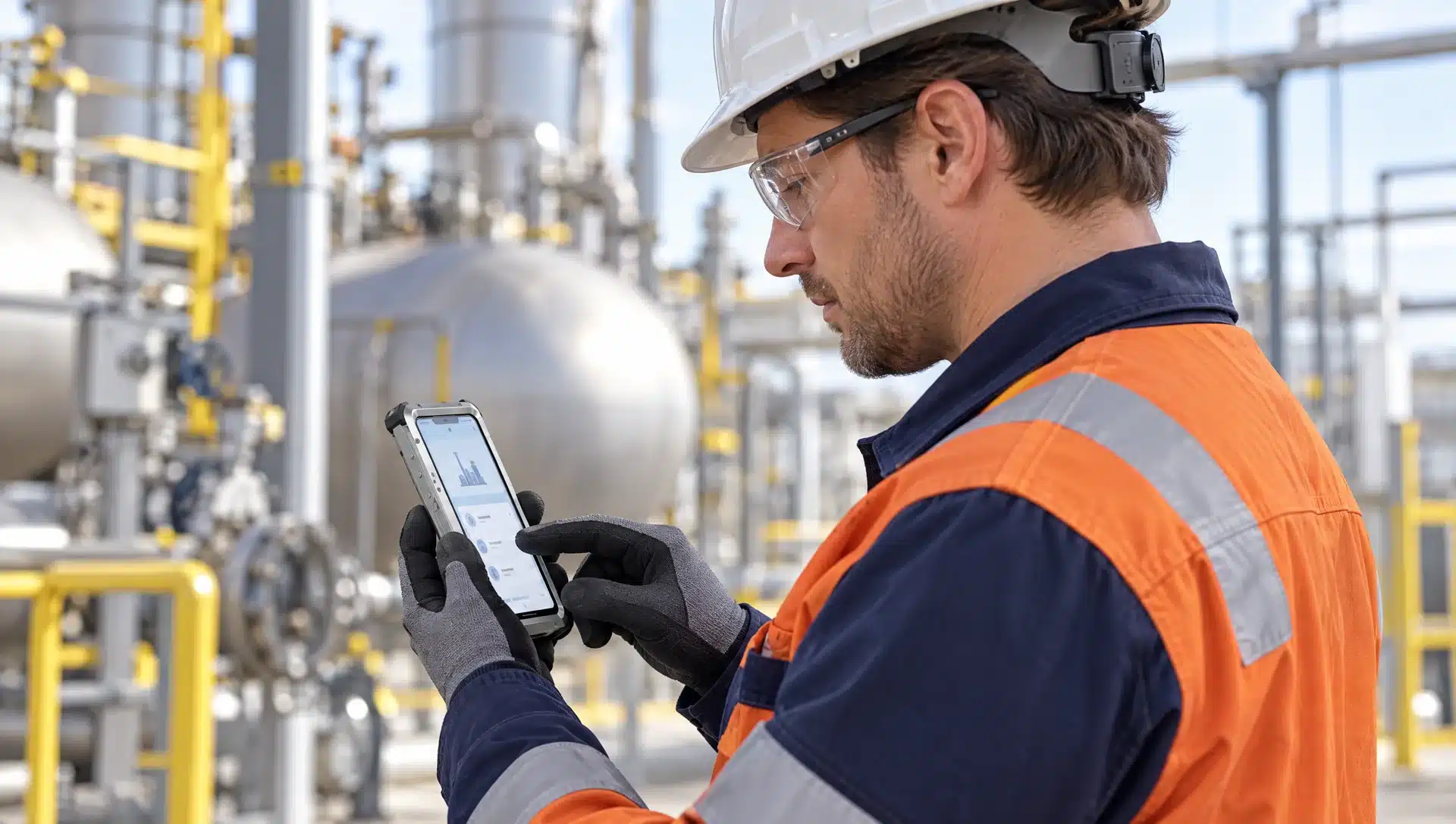
Describing a complex mechanical anomaly over a crackling two-way radio is inherently flawed. A technician in a Zone 1 area must verbally describe a vibrating pump or an extruded seal to an offsite supervisor who cannot see the asset, forcing decisions to be made based on interpretation rather than direct observation.
AR-enabled mobile solutions eliminate this visual disconnect entirely:
- 3D spatial annotations: offsite specialists draw digital markers directly onto the live camera stream. An arrow remains locked to a specific flange bolt, or a callout highlights an exact gauge reading, regardless of camera movement.
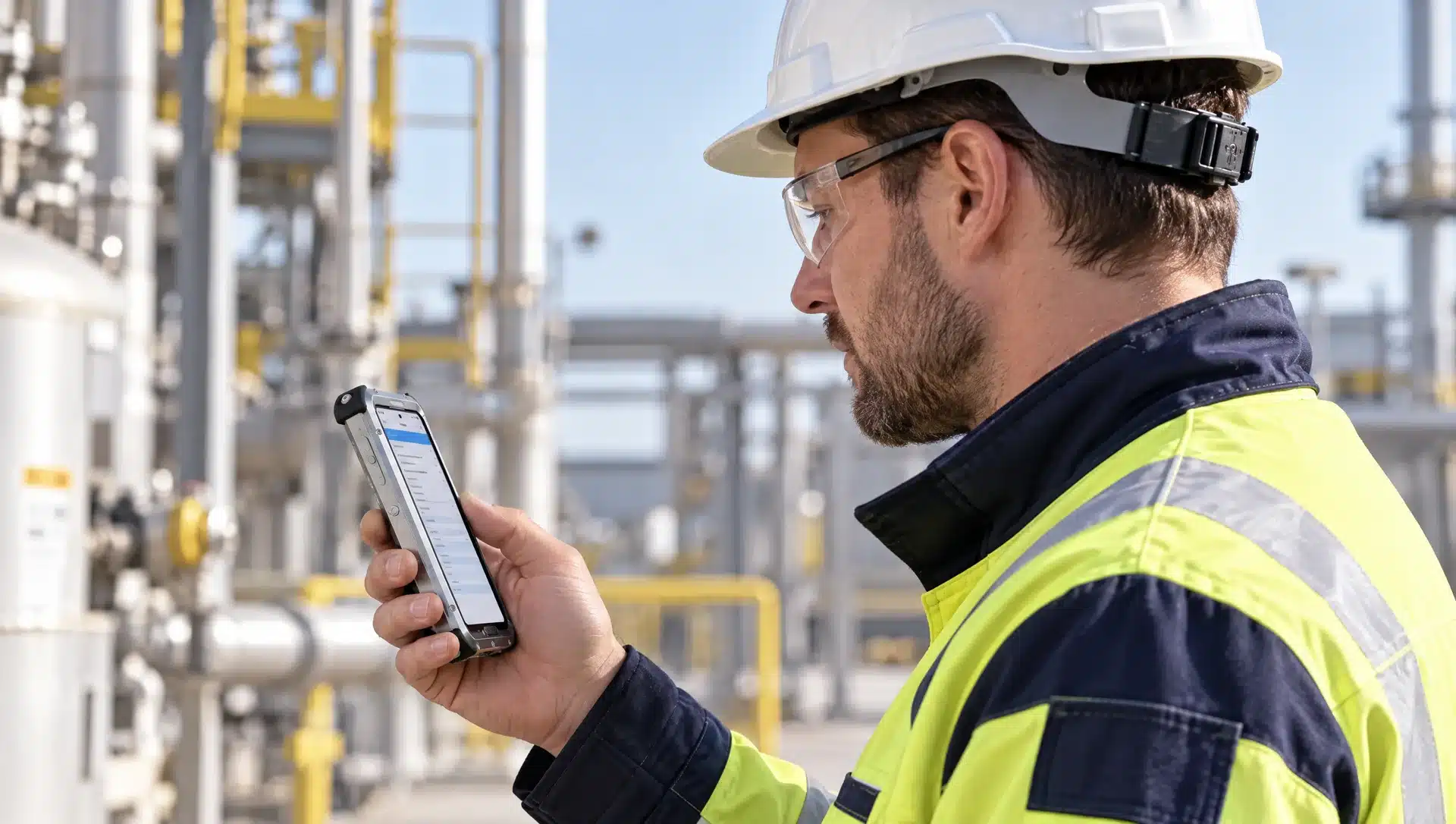
- Contextual telemetry overlays: live sensor metrics, pressure tolerances, and historical maintenance logs are projected directly over the physical asset in the technician’s viewfinder.
- Shared visual reality: technical guidance transitions from subjective verbal descriptions to visually confirmed, step-by-step resolution.
De-risking industrial shift handovers
Incomplete shift handovers remain a major contributing factor in process safety incidents across the energy and chemical sectors. Verbal summaries degrade after an exhausting 12-hour shift, and written paper logs are frequently rushed or incomplete.
With Atexxo-certified mobile devices, outgoing technicians capture time-stamped visual records, geotagged photos, and voice notes linked directly to asset IDs in the facility’s enterprise management system. Incoming crews review these interactive visual histories on their smartphones before stepping into the hazardous zone, eliminating guesswork during shift changes.
To see how upgrading to visual, AR-enabled workflows impacts site efficiency and error reduction, explore the interactive model below:
Powering spatial computing in classified zones
Executing low-latency AR streams, spatial mesh tracking, and multi-stream video calls requires significant processing power, high-RAM architectures, and pro-grade optics. Legacy “intrinsically safe” handhelds with underpowered processors frequently lag, overheat, or fail when running enterprise AR platforms like TeamViewer Frontline, Scope AR, or PTC Vuforia.
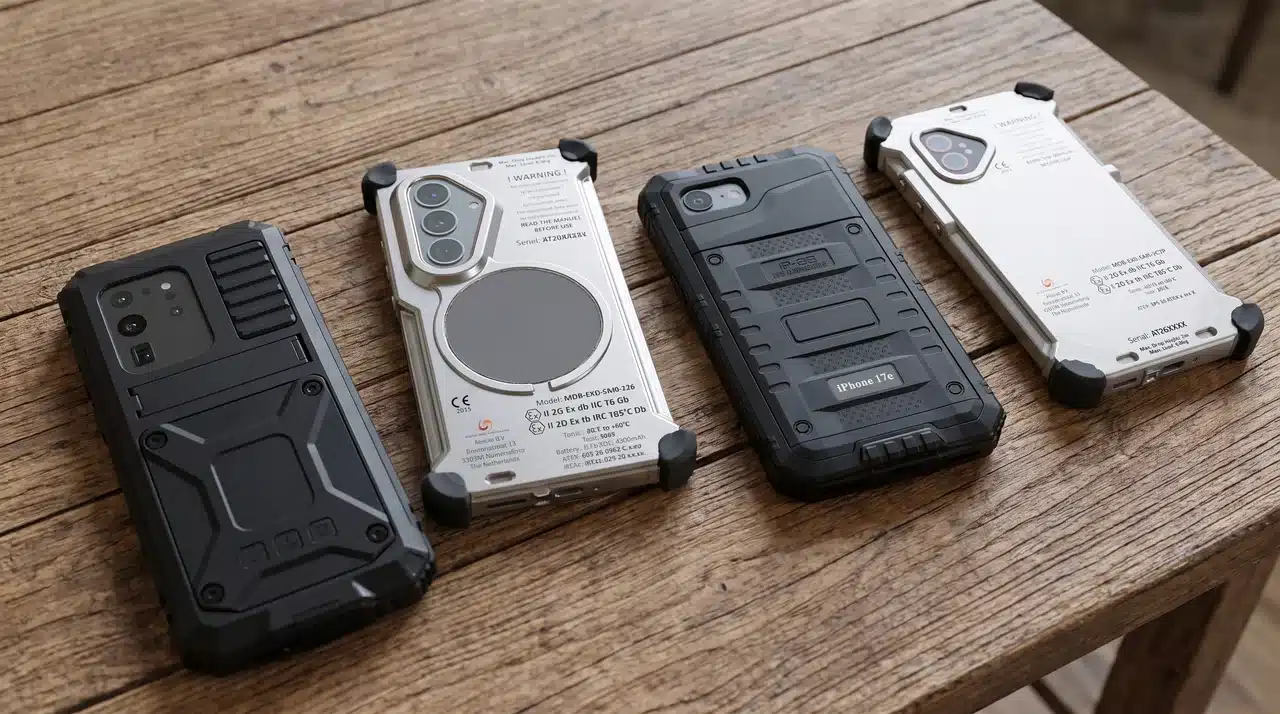
At Atexxo Manufacturing, we solve this hardware bottleneck by converting flagship Apple iPhones into certified ATEX and IECEx Zone 1 and Zone 2 explosion-proof solutions.
By preserving access to Apple’s A-series Pro chips, 48-megapixel camera sensors, and integrated LiDAR technology, Atexxo enclosures deliver the processing muscle required for spatial AR computing—without compromising physical explosion safety.
Frequently asked questions
How does AR improve shift handovers in hazardous areas?
Instead of relying on static, handwritten notes, incoming technicians view a time-stamped visual record of the asset on their mobile screen. Outgoing workers pin 3D digital markers and video clips directly to specific physical components, allowing the incoming shift to see exact asset conditions in context before entering the zone.
Can enterprise AR platforms function over private LTE or low-bandwidth site networks?
Yes. Modern enterprise AR remote support platforms are engineered specifically for industrial network conditions. They compress video streams and optimize spatial anchor syncs, maintaining smooth performance even over low-bandwidth private LTE, 5G, or Wi-Fi networks.
Is an iPhone approved for live AR streaming in an ATEX Zone 1 suite?
Yes, provided the iPhone is permanently housed inside an independently tested Atexxo explosion-proof enclosure rated for ATEX/IECEx Zone 1 environments. The enclosure maintains full physical safety compliance while leaving camera optics, touch response, and LiDAR sensors unobstructed for AR applications.