

When industrial facilities look to modernize their field operations, securing the capital for hardware and software is often the easiest part of the process. The real challenge for project managers is proving exactly what that technology gives back to the business.
In oil refineries, offshore rigs, and chemical plants, the case for connected workers often leans heavily on abstract concepts like “improved safety culture” or “better team communication.” While these are critical goals, abstract metrics rarely survive a strict capital expenditure review. CFOs and plant managers need hard numbers.
At Atexxo Manufacturing, we know that the return on investment (ROI) for digitalizing field work is entirely concrete and measurable. You just need to know exactly which operational bottlenecks to measure.
Beyond the buzzwords: what drives real ROI?
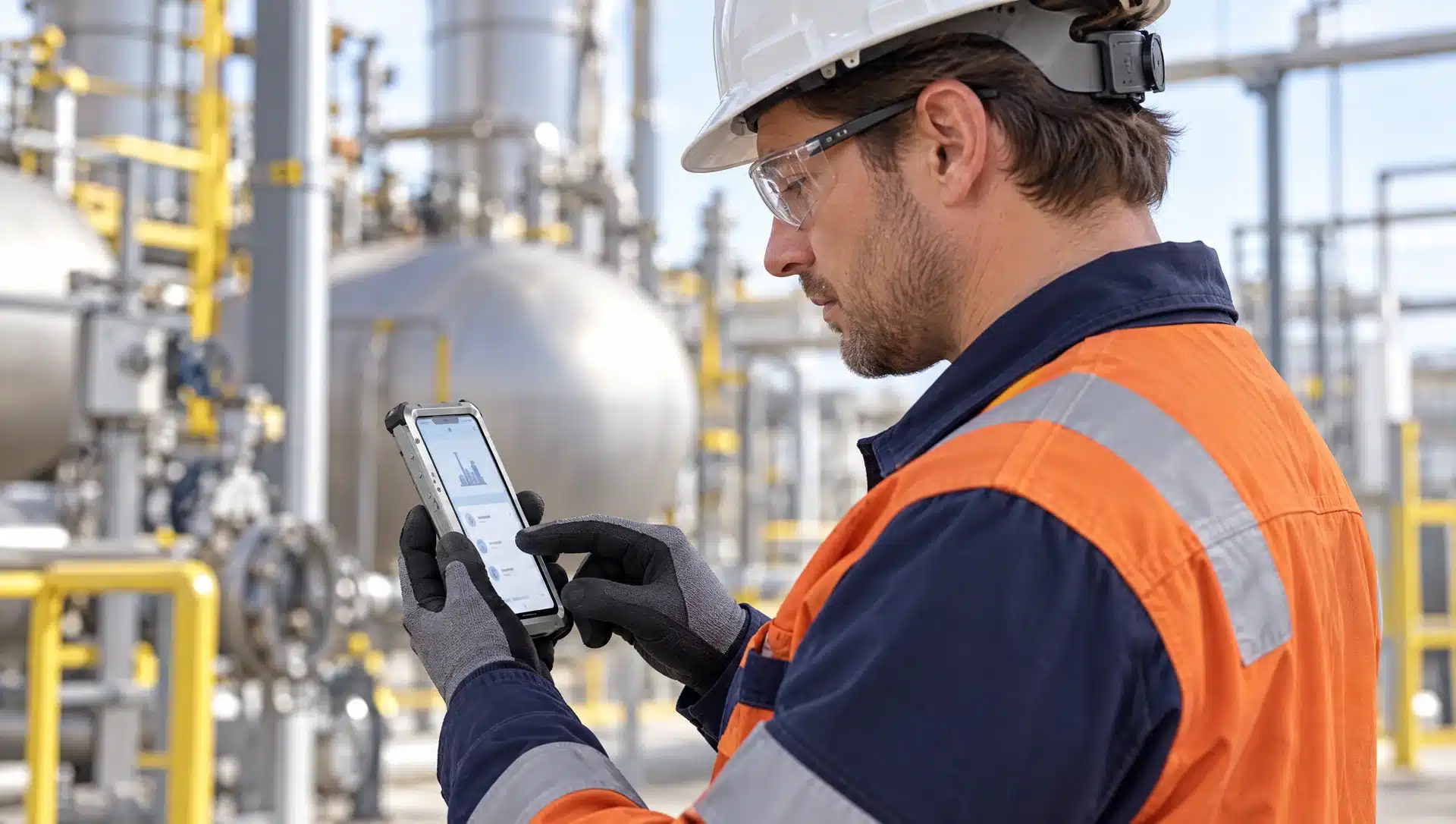
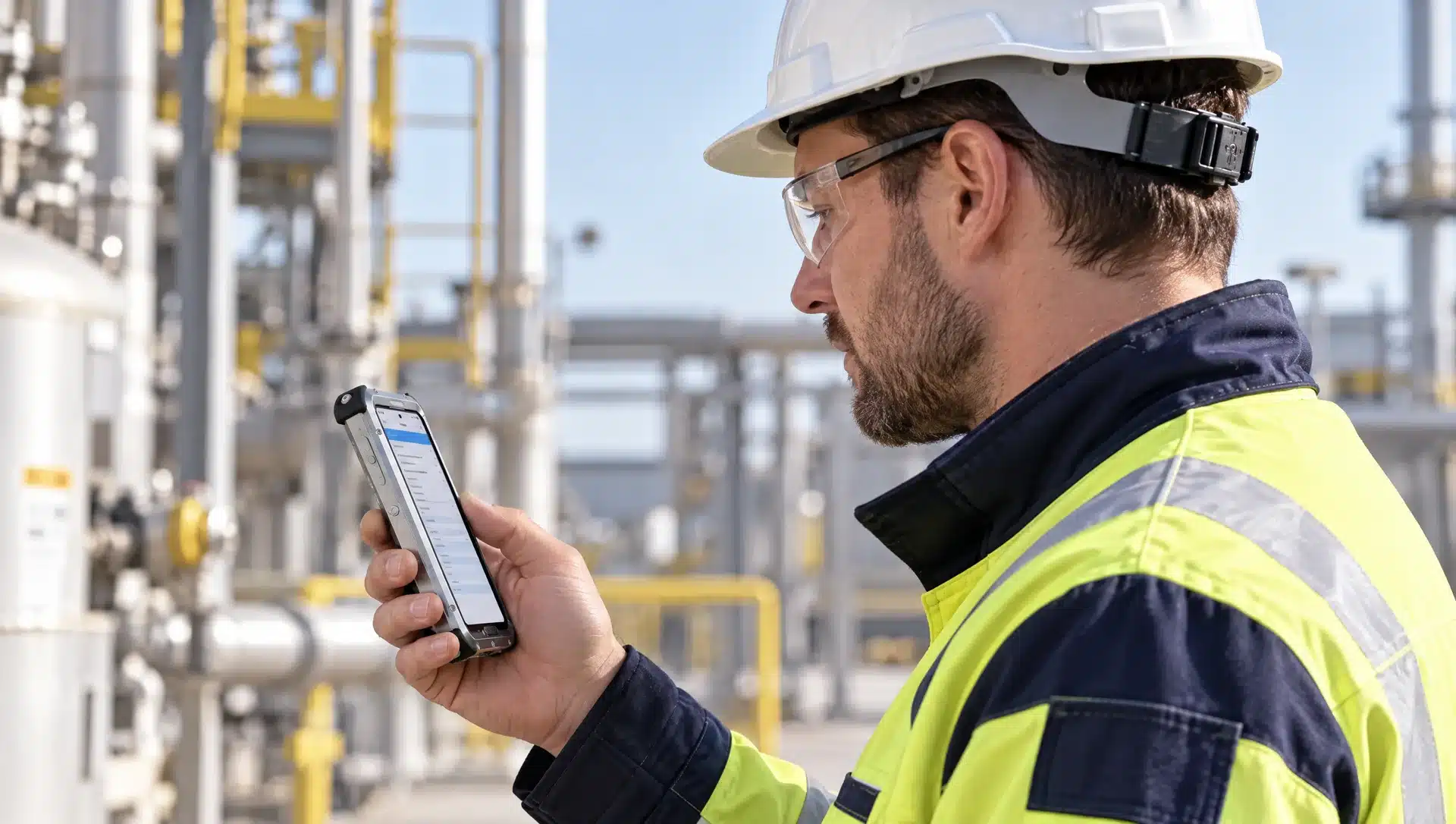
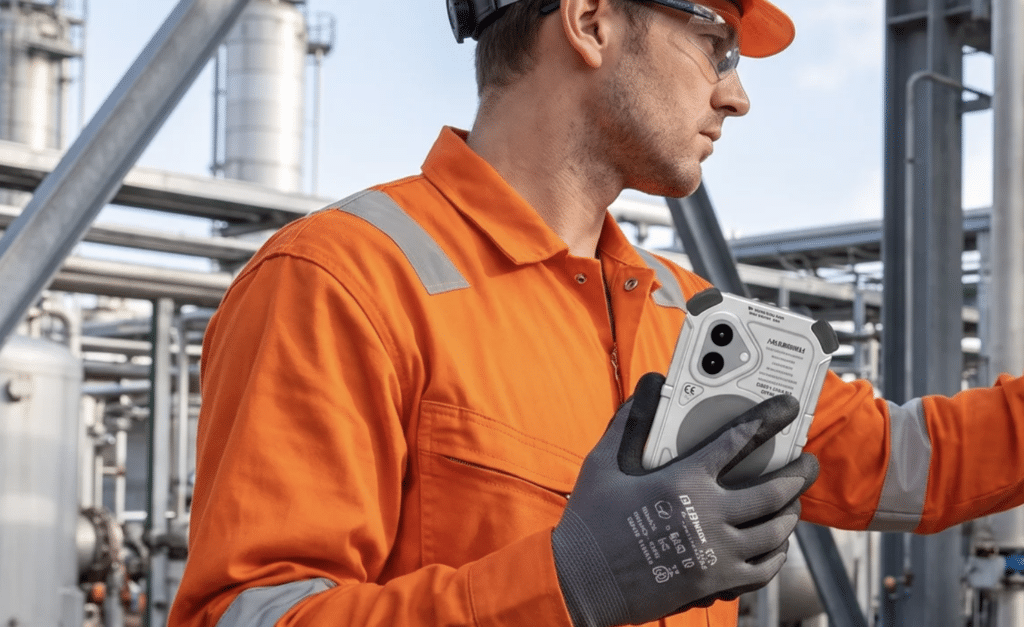
A “connected worker” in a classified environment is simply a field technician equipped with an ATEX or IECEx certified smart device (such as a converted iPhone) that maintains a continuous data link to enterprise systems.
Crucially, the ROI is not generated by the device itself. The financial return is generated by the operational delays that the device eliminates. Getting real-time access to digital permits at the asset face, instantly reporting near-misses, and receiving automated lone-worker monitoring without manual radio check-ins all translate directly into billable hours saved.
Reclaiming lost labor hours
To build a compelling business case, you must break down everyday operational friction into a financial formula. The two biggest culprits of wasted time are manual permits and physical transit.
- Permit-to-work (ePTW) overhead: Paper permit systems are a massive administrative drag. A field technician can easily burn 30 to 45 minutes per shift just traveling to the control room, waiting for physical supervisor signatures, and verifying equipment isolation. If you have a 20-person maintenance team working 250 days a year, recovering just 45 minutes per worker per shift unlocks 3,750 hours of productive field time annually. That is the equivalent of adding nearly two full-time technicians without increasing your headcount.
- Transit and travel time: In sprawling refineries or multi-deck offshore platforms, walking back and forth to retrieve printed work orders or clarify paper schematics consumes hours of dead transit time daily. Giving technicians instant access to enterprise software (like SAP or IBM Maximo) directly on an ATEX-certified smartphone keeps them at the asset face.
To see how these reclaimed hours impact your specific bottom line, use our interactive calculator below:
Mitigating the cost of incidents
Safety performance directly impacts financial performance. Every recordable incident incurs direct costs—such as medical attention, regulatory fines, and immediate plant downtime. However, the indirect costs (reputational damage, legal fees, elevated insurance premiums) consistently multiply that initial figure by two to four times.
A connected field team actively narrows the operational window for serious accidents. Automated lone-worker sensors, instant near-miss reporting, and direct video streaming to control rooms lead to emergency response times that are often 40% faster. Preventing just a single recordable incident or minor containment loss per year can immediately pay back the entire technological investment for a mid-sized site.
The hardware trap: why user adoption is your true metric
A certified device sitting on a charger in the supervisor’s office delivers zero return on investment. Historically, facilities relied on dedicated, legacy “intrinsically safe” handhelds. Because these devices suffered from sluggish processors, outdated operating systems, and terrible user interfaces, field technicians simply refused to use them. When adoption plummets, overall project ROI disappears completely.
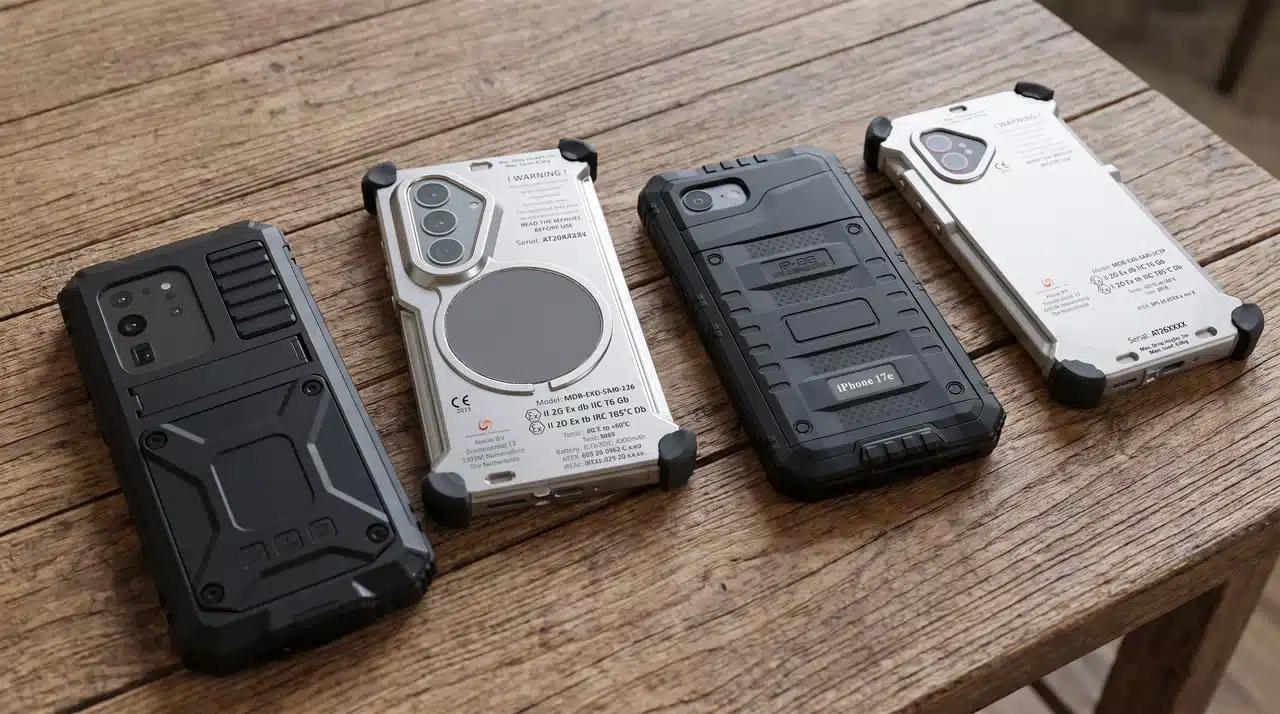
This is why deploying converted enterprise flagship devices—such as the iPhone 17 Pro Max inside an Atexxo explosion-proof case—fundamentally changes the financial equation.
- Immediate user adoption: Field technicians already know how to use iOS. A zero learning curve means digital permit and asset management software is actually utilized on day one.
- Lower total cost of ownership (TCO): Legacy industrial devices often require replacement every two years. Apple supports its flagship devices with security patches for six to seven years, significantly extending your active capital lifecycle and lowering device procurement costs.
- Eliminating specialist travel: The high-resolution 48MP sensors and optical stabilization found on modern iPhones allow onshore experts to guide offshore repairs remotely via live video, eliminating exorbitant helicopter transport costs.
Building the business case
When calculating your site’s ROI baseline for executive review, follow a simple evaluation framework: measure the total financial gains (recovered labor hours + non-productive time reductions + incident risk mitigation) against the total setup costs (hardware, Atexxo protective cases, software licensing, and MDM setup).
In most medium-to-large industrial facilities, this simple math reveals a complete payback period of just 12 to 24 months.
Frequently asked questions
What is the average payback period for a connected worker deployment in Zone 1 environments?
For medium-to-large oil, gas, or chemical processing facilities, the payback period typically ranges between 12 and 24 months. In offshore operations with highly expensive daily downtime, the payback period can be achieved in under 12 months simply by eliminating specialist travel costs and reducing non-productive time (NPT).
Why do consumer smartphones inside Ex-cases offer better ROI than dedicated industrial handhelds?
Consumer flagship smartphones offer vastly superior processing power, significantly longer software support lifecycles (often 6–7 years), and much better low-light camera optics. Most importantly, they offer high user familiarity, ensuring the devices are actually adopted by the workforce rather than abandoned in a locker room.
How does digitizing permit-to-work (ePTW) directly generate financial return?
Digitizing ePTW systems directly recovers roughly 30 to 45 minutes per worker per day by completely eliminating physical sign-off chasing, manual safety checks, and walking back and forth to control rooms. This instantly converts wasted administrative time into productive, billable field labor.