

Historically, tracking physical assets in classified hazardous environments meant dealing with a major technical bottleneck: commercial mobile devices could not enter volatile atmospheres without creating an explosion risk. As a result, chemical plants and offshore facilities relied heavily on paper logs, leading to lost inspection records, transcription errors, and delayed maintenance.
Today, safety managers and procurement teams are moving past paper workarounds. By deploying certified mobile technology, facilities can capture real-time asset data directly at the machine, transforming how enterprise asset management (EAM) and computerized maintenance management systems (CMMS) operate.
Eliminating the identification gap with contactless RFID and NFC
Before you can log maintenance data, an asset needs a clear, tamper-proof digital identity. Printed paper barcodes frequently become unreadable when coated in grease or mud, while typing long serial numbers while wearing heavy work gloves introduces widespread human error.
Ruggedized radio frequency identification (RFID) and near field communication (NFC) tags solve this problem. When attached to high-pressure, high-temperature (HPHT) equipment like drill pipes or chemical vessels, these tags maintain asset identity where physical labels dissolve.
| Asset management task | Traditional manual approach | Atexxo mobile workflow |
| Asset identification | Manual tag typing or visual barcode checks | Contactless RFID/NFC scanning through the Ex-housing |
| Chemical safety verification | Searching paper binders in control rooms | Instant NFC scan pulling up the 16-section SDS on-device |
| Structural monitoring | Subjective visual checks or delayed surveys | On-device LiDAR 3D point-cloud spatial scanning |
| Defect documentation | Handwritten notes and static photos | AI-stabilized video and low-light computational imaging |
| Database synchronization | Manual batch data entry hours later | Real-time cloud sync via private 5G and Wi-Fi 7 |
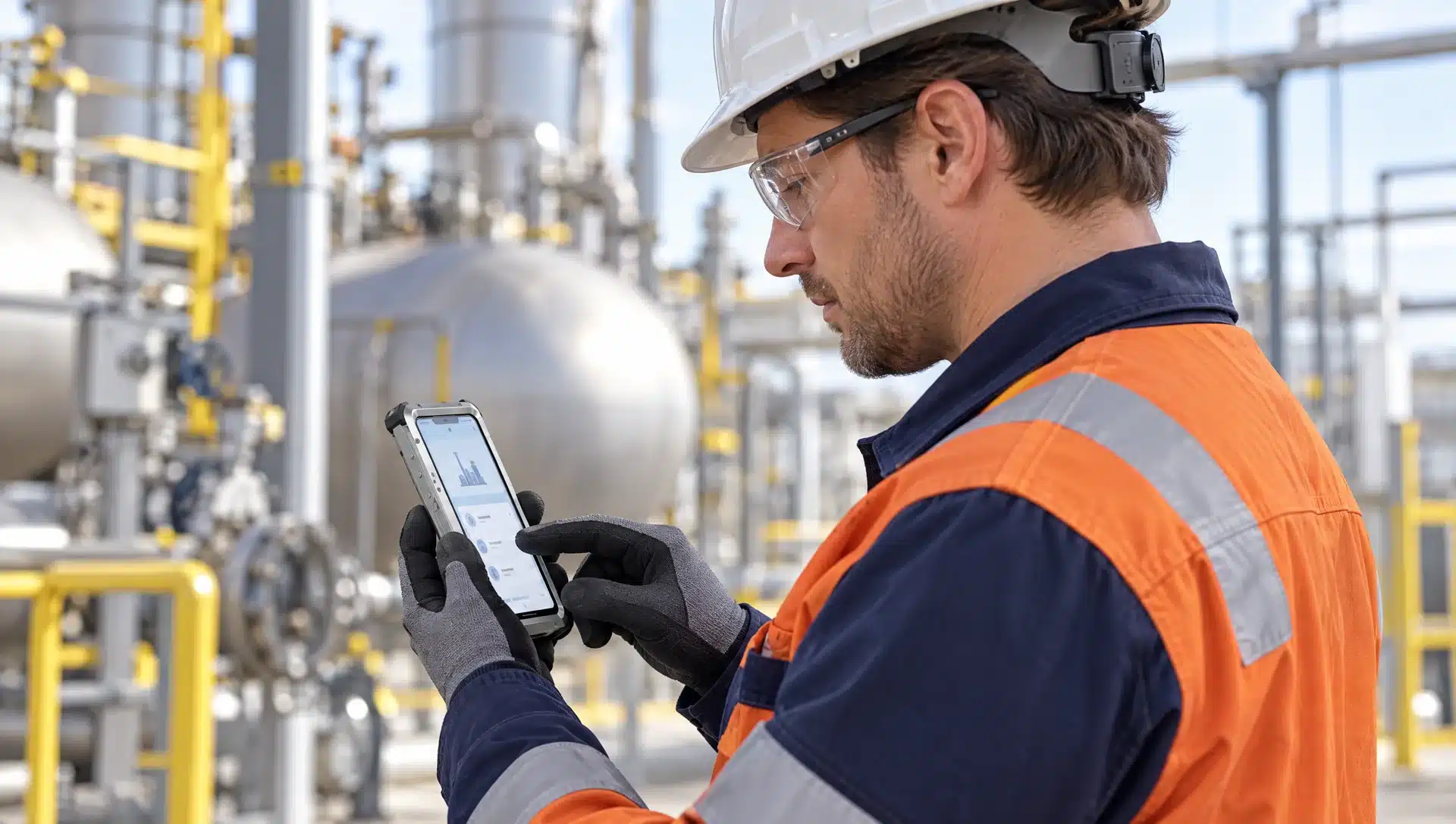
Using an Atexxo-converted smart device, technicians simply tap the asset tag to instantly load its complete maintenance history, open work orders, or pull up its safety data sheet (SDS) directly on screen.
AI-assisted visual inspections and thermal diagnostics
Identifying an asset is only the first step; documenting its exact physical condition requires advanced optical and processing capabilities. Modern computational photography is turning routine walkthroughs into automated diagnostic inspections.
- Action-stabilized visual feeds: navigating narrow catwalks or vibrating platform decks often yields shaky, unreadable inspection footage. AI-driven action stabilization smooths out motion blur in real time, creating clear video feeds for offsite engineering reviews.
- Computational low-light capture: detecting micro-cracks or fluid seepage inside dark pump houses requires advanced optics. Computational night modes merge multiple exposures to expose fine structural details without requiring bulky external lamps.
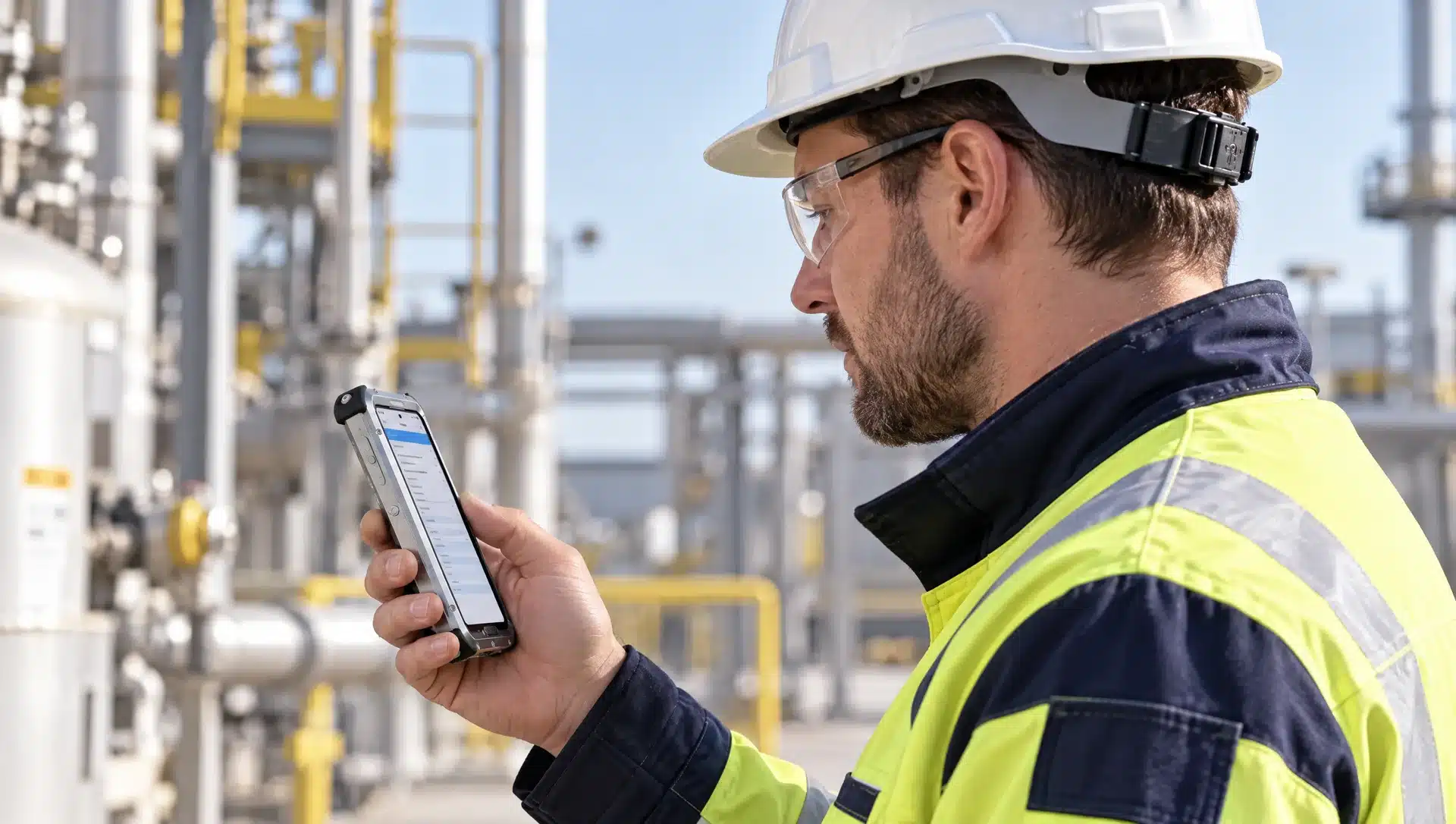
- Integrated thermal inspections: connecting auxiliary thermal imaging probes via Bluetooth or USB-C allows technicians to scan electrical panels, bearing assemblies, and tank levels for thermal anomalies, flagging overheating components before alarms trigger.
To determine which mobile capture technology best suits your specific facility needs, use our interactive selector tool below:
Utilizing LiDAR scanning for digital twins and structural monitoring
While RFID identifies what an asset is and photography documents how it looks, integrated LiDAR calculates where it sits in 3D space with centimeter-level precision.
By firing rapid laser pulses to measure exact distances, smartphone-integrated LiDAR builds dense 3D point clouds of plant infrastructure during routine walkthroughs:
- Structural deflection checks: detect foundation settling, vessel wall displacement, or structural bowing on aging offshore platforms long before visual deformation becomes noticeable.
- As-built 3D documentation: capture objective point clouds of newly installed piping runs. Overlaying multi-year 3D scans instantly highlights structural shifts invisible to the naked eye.
- On-site volumetric calculations: calculate stockpile quantities, excavation volumes, and process tank storage on demand, eliminating the need to wait for external survey teams.
Using high-speed Wi-Fi 7 or private 5G networks, field teams can stream these detailed 3D spatial files directly into central digital twin platforms without leaving the hazardous zone.
Consolidating your inspection fleet with Atexxo Manufacturing
Carrying multiple single-purpose tools—such as a dedicated barcode reader, a separate digital camera, and a heavy thermal scanner—creates severe hardware fatigue and increases procurement costs.
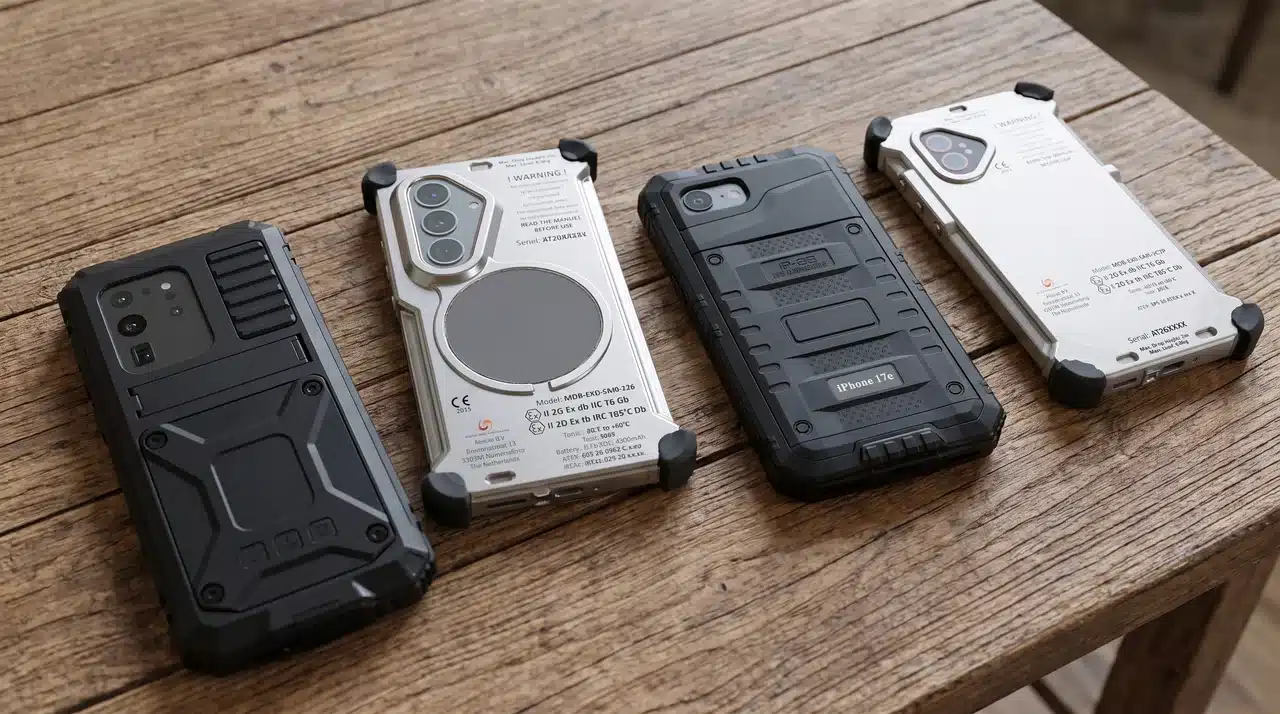
At Atexxo Manufacturing, we consolidate these workflows into a single enterprise terminal. By housing flagship smart hardware—such as the Apple iPhone 17 Pro Max—inside a certified explosion-proof enclosure, we deliver an all-in-one asset management hub rated for ATEX Zone 1 and Zone 21 environments.
Our enclosures are engineered to allow RFID and NFC radio signals, LiDAR laser pulses, and camera optics to operate without obstruction, giving your field crews access to cutting-edge mobile tools while maintaining absolute explosion safety.
Frequently asked questions
Does RFID and NFC scanning function properly through an Atexxo explosion-proof case?
Yes. Atexxo enclosures are precision-engineered from materials that allow RFID and NFC radio frequencies to pass through unobstructed, allowing technicians to scan tagged assets and containers effortlessly without opening the case.
How accurate is mobile smartphone LiDAR for industrial asset management?
Integrated smartphone LiDAR delivers spatial accuracy to approximately 1 cm at close range. This is exceptionally effective for structural movement checks, as-built piping verification, and volumetric inventory calculations during daily field engineering tasks.
Why is real-time CMMS synchronization better than batch data entry at shift end?
Real-time synchronization via private 5G or Wi-Fi 7 eliminates the hours of data lag associated with paper logs. It ensures that safety alerts, defect reports, and inventory updates are instantly visible across the entire enterprise, preventing duplicate work orders and accelerating maintenance response times.