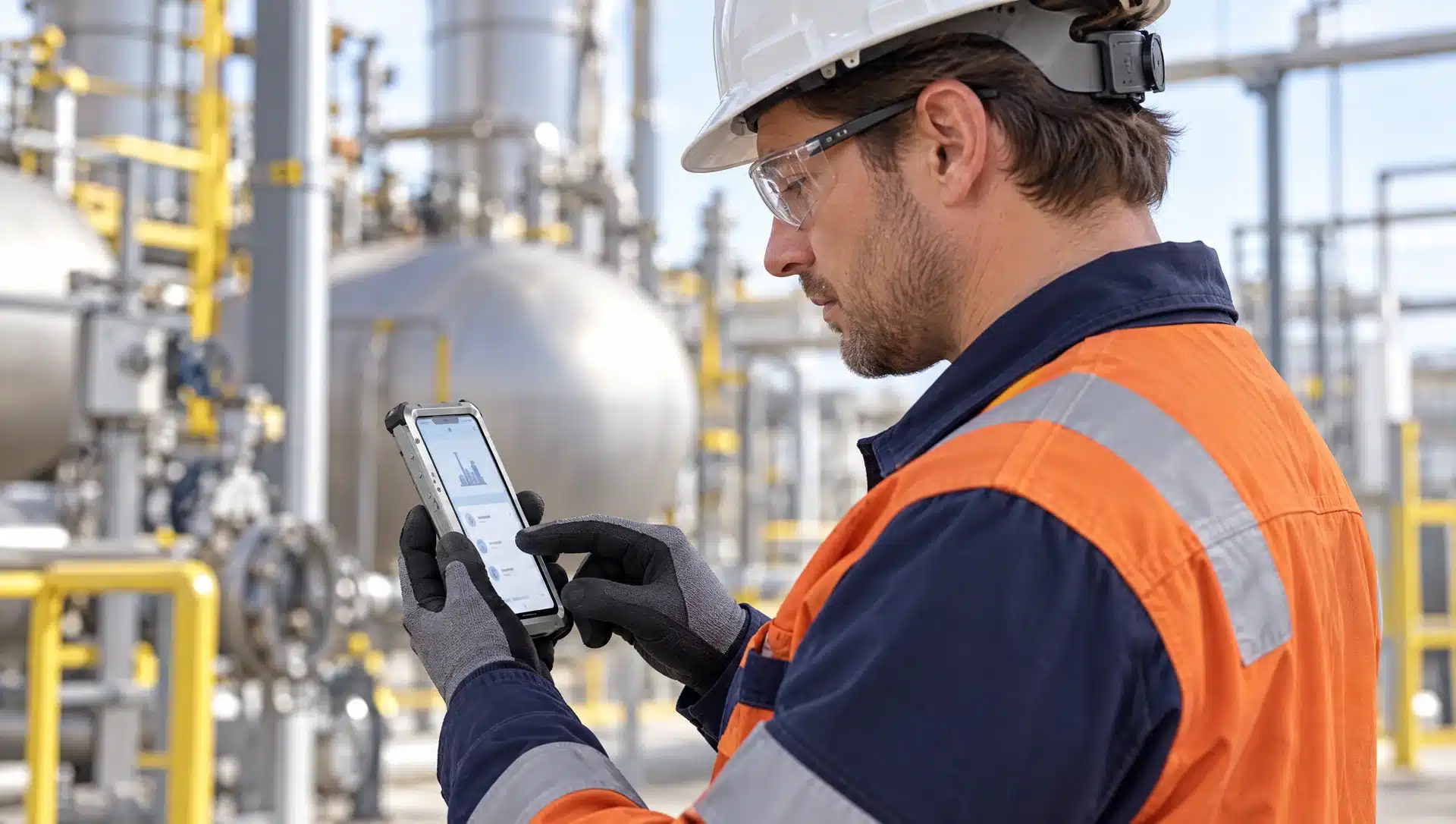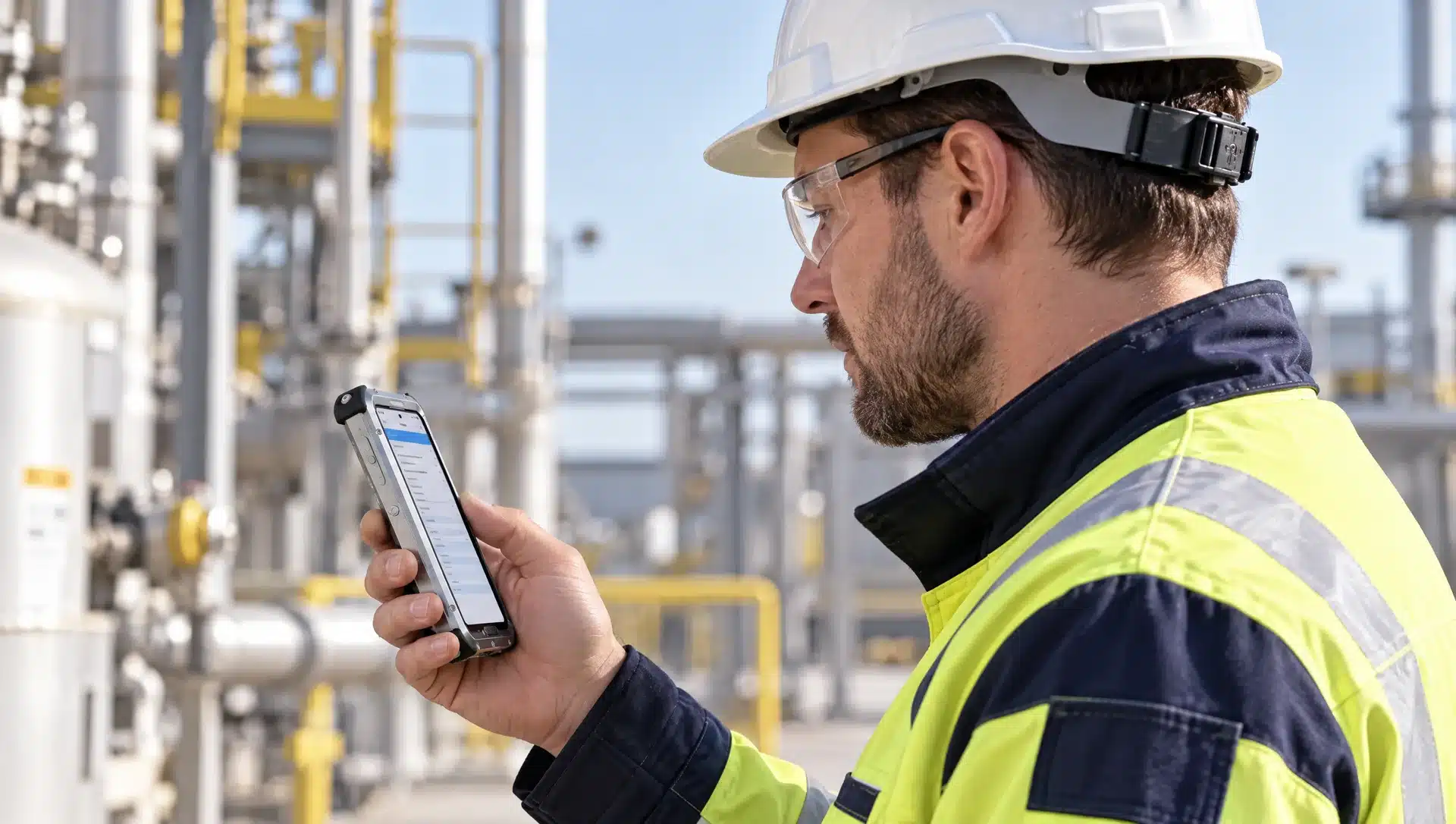


In classified process facilities—including oil refineries, chemical plants, offshore platforms, and pharmaceutical sites—safety is non-negotiable. Electronic hardware deployed in these classified zones must satisfy rigorous ATEX and IECEx explosion protection standards to guarantee it cannot trigger an electrical spark or thermal ignition.
While these regulatory safeguards are essential for life safety, they historically crippled mobile computing. For over a decade, intrinsically safe smartphones lagged years behind consumer market standards. Devices were notoriously slow, heavy, ran outdated operating systems, and featured low-quality cameras. When field technicians compared these handhelds to their personal smartphones, the usability gap was glaring. Millions of euros in corporate mobile investments ended up forgotten in desk drawers because field crews found the devices too frustrating to use.
At Atexxo Manufacturing, we eliminated this compromise by pioneering precision-engineered explosion-proof enclosures for flagship consumer hardware, bringing modern computing directly to the asset face.
The structural bottlenecks of legacy Ex hardware
To understand why traditional industrial smartphones failed to keep pace, you have to look at how niche hardware is manufactured:
- Limited component access: Niche industrial manufacturers produce devices in low volumes, lacking the purchasing power to secure early access to flagship processors, advanced camera sensors, or high-nits OLED displays.
- The certification pipeline lag: Designing custom intrinsically safe circuitry and submitting prototypes to testing bodies often takes 18 to 36 months. By the time a dedicated industrial handset receives its Zone 1 certification, its internal hardware is already two generations behind consumer standards.
- Long-lifecycle component choices: Industrial suppliers rely on low-tier, long-lifecycle parts to prevent component shortages over multi-year production runs. Devices often launch technically “new” to the market, but functionally obsolete on day one.
Energy capping versus physical containment
The underlying engineering methods used in legacy designs created additional operational limits.
Intrinsically safe (Ex i) devices operate by physically capping internal electrical and thermal energy. To stay below minimum ignition thresholds, engineers must severely throttle CPU clock speeds, lower backlight brightness, and limit camera sensor power. The result is a safe device that suffers from severe software lag.
Early flameproof (Ex d) cases attempted to protect commercial phones by wrapping them in heavy cast metal housings. While this preserved internal hardware speed, the resulting assemblies weighed up to two kilograms, making them far too bulky for full-shift use.
To see how these engineering choices impact real-world performance, use our interactive comparison tool below:
The modern paradigm shift by Atexxo Manufacturing
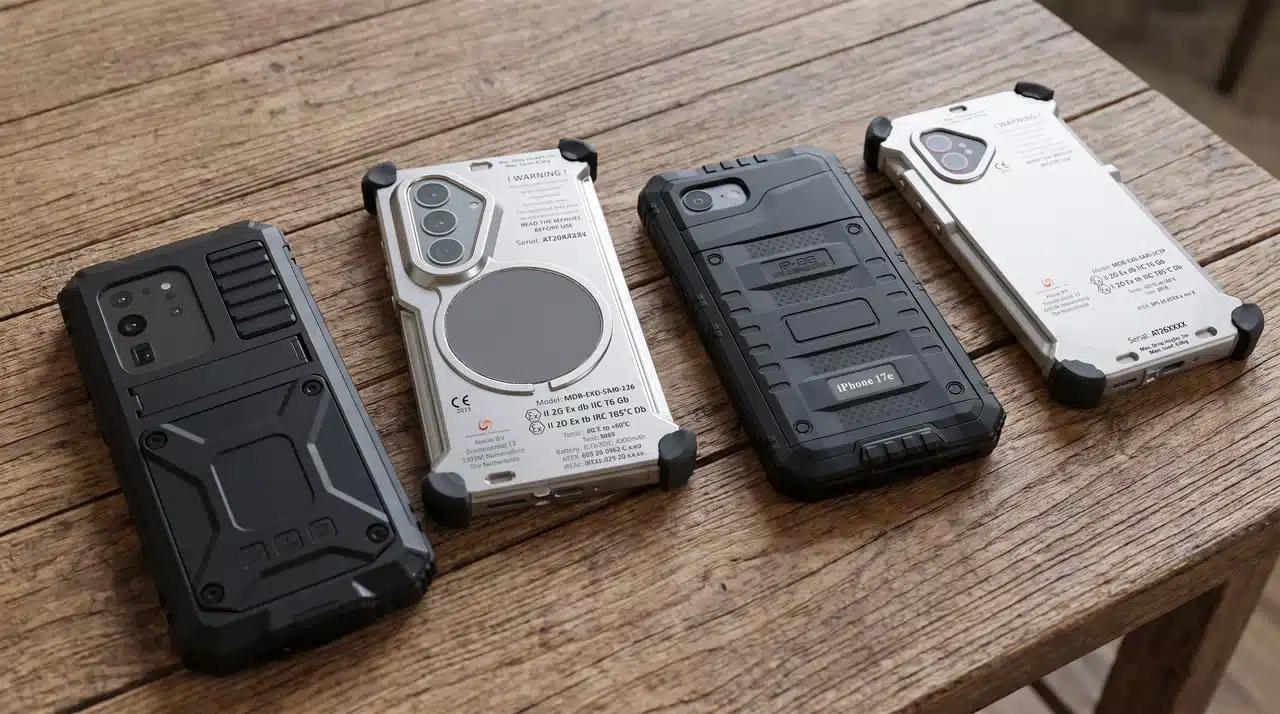
Atexxo Manufacturing transformed hazardous area mobility by shifting the design philosophy. Instead of building an underpowered phone from scratch, we encase unmodified flagship consumer hardware—such as the Apple iPhone 16 Pro Max or iPhone 17 Pro Max—inside patented, precision-engineered ATEX and IECEx Zone 1 and Zone 21 certified enclosures.
Protection is provided by our precision outer housing rather than artificially throttling internal electrical energy. Field teams no longer have to choose between compliance and performance, gaining access to:
- Cinema-grade 4K/120fps video: Allows technicians to run high-frame-rate slow-motion playback for machine vibration analysis and remote expert troubleshooting.
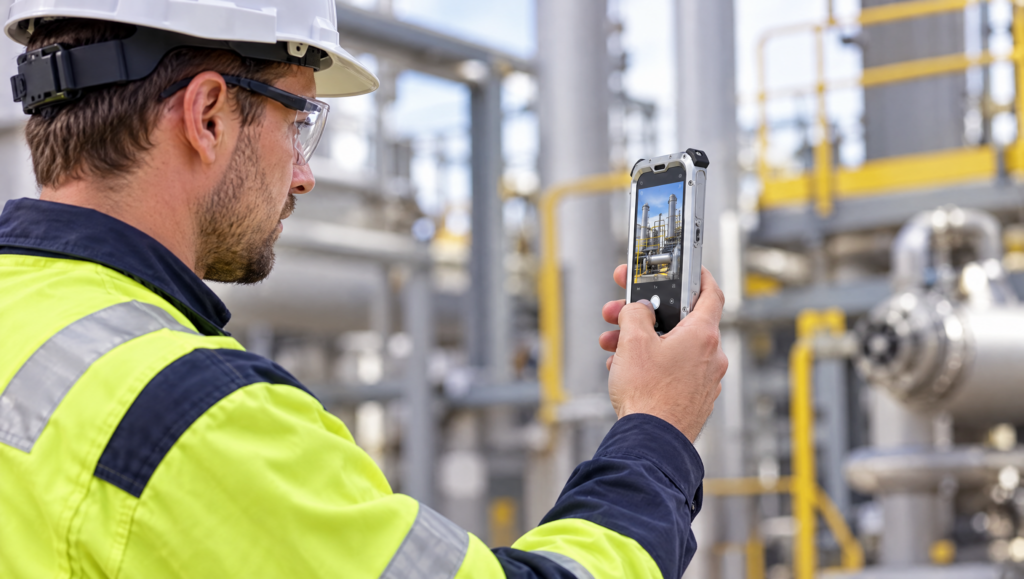
- Pro-grade optics and LiDAR: Enables instant 3D spatial mesh scanning of plant infrastructure and pin-sharp macro defect capture.
- High-speed neural processing: Executes offline edge AI models (such as local procedure queries or computer vision checks) directly on the device with zero cloud latency.
- Ergonomic lightweight design: Engineered specifically from high-grade materials for comfortable, one-handed operation across long shifts.
Streamlining IT governance and fleet security
Standardizing on flagship Apple hardware protected by Atexxo enclosures solves major enterprise IT management challenges:
- Unified mobile device management (MDM): IT departments manage field fleets using the exact same MDM suites (Microsoft Intune, Jamf, SOTI) deployed across corporate offices, enabling zero-touch provisioning.
- Defense-grade digital security: Native iOS holds official NATO Restricted information assurance clearance, guaranteeing silicon-level data protection.
- Extended software support: Apple provides direct OS security patches for six to eight years, eliminating the cyber vulnerabilities associated with abandoned, fragmented Android builds.
Frequently asked questions
Why did legacy intrinsically safe smartphones run so slowly?
Legacy intrinsically safe (Ex i) smartphones strictly limited available electrical voltage and current to prevent sparks. These energy caps forced manufacturers to use underpowered processors, low-resolution displays, and restricted memory, resulting in severe system lag.
How does Atexxo Manufacturing deliver flagship smartphone speed in Zone 1?
We house unmodified consumer iPhones inside independently tested and certified ATEX/IECEx Zone 1 explosion-proof enclosures (Ex d). Physical protection is provided by our precision casing rather than capping internal electrical energy, allowing the phone to execute at 100% of its native speed.
How does this enclosure strategy simplify corporate IT management?
Deploying iPhones in Atexxo cases allows IT departments to manage field devices through standard Apple Business Manager (ABM) and MDM portals like Microsoft Intune or Jamf. Field devices follow the exact same security policies, app distribution pipelines, and update schedules as standard corporate smartphones.