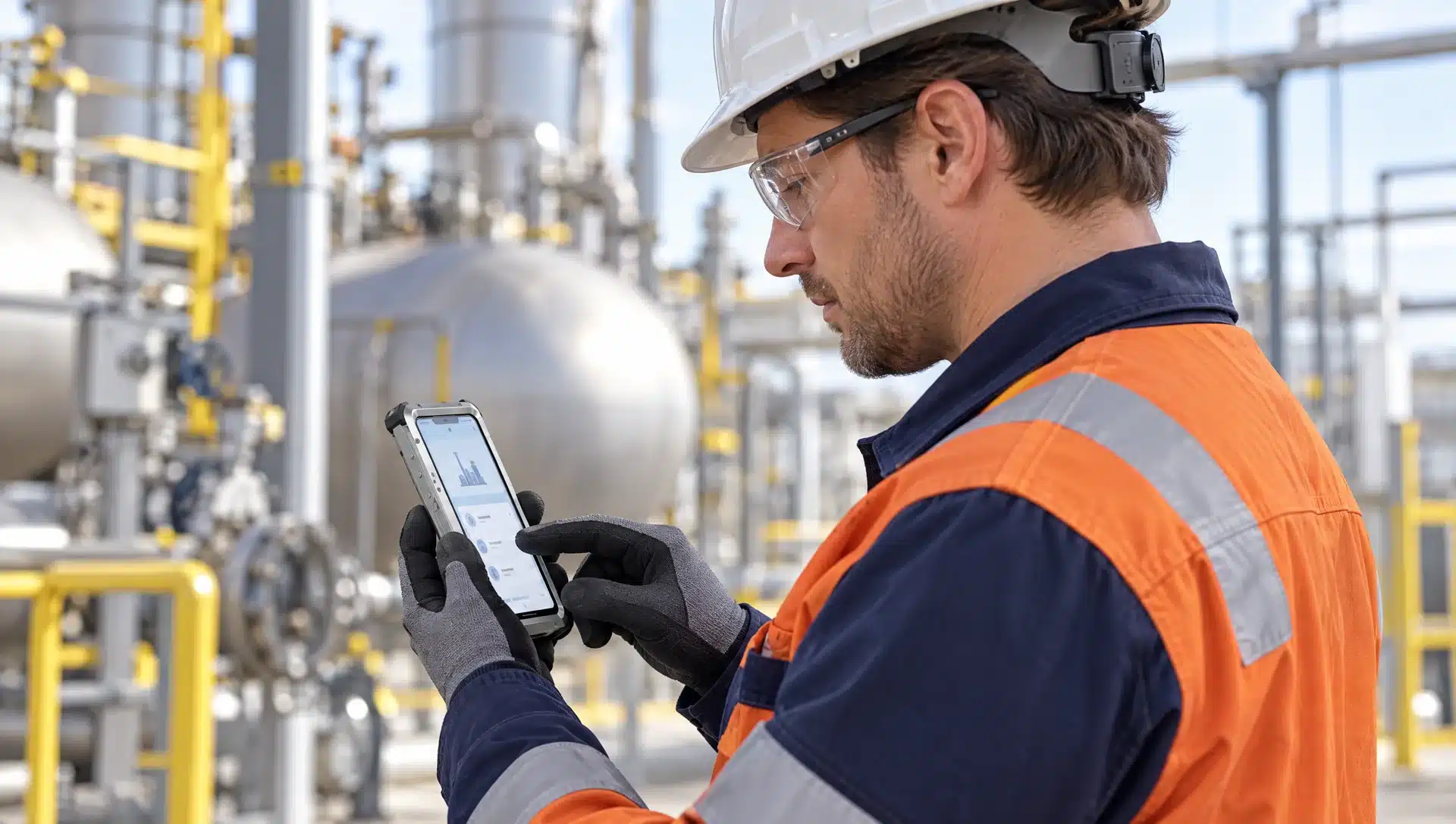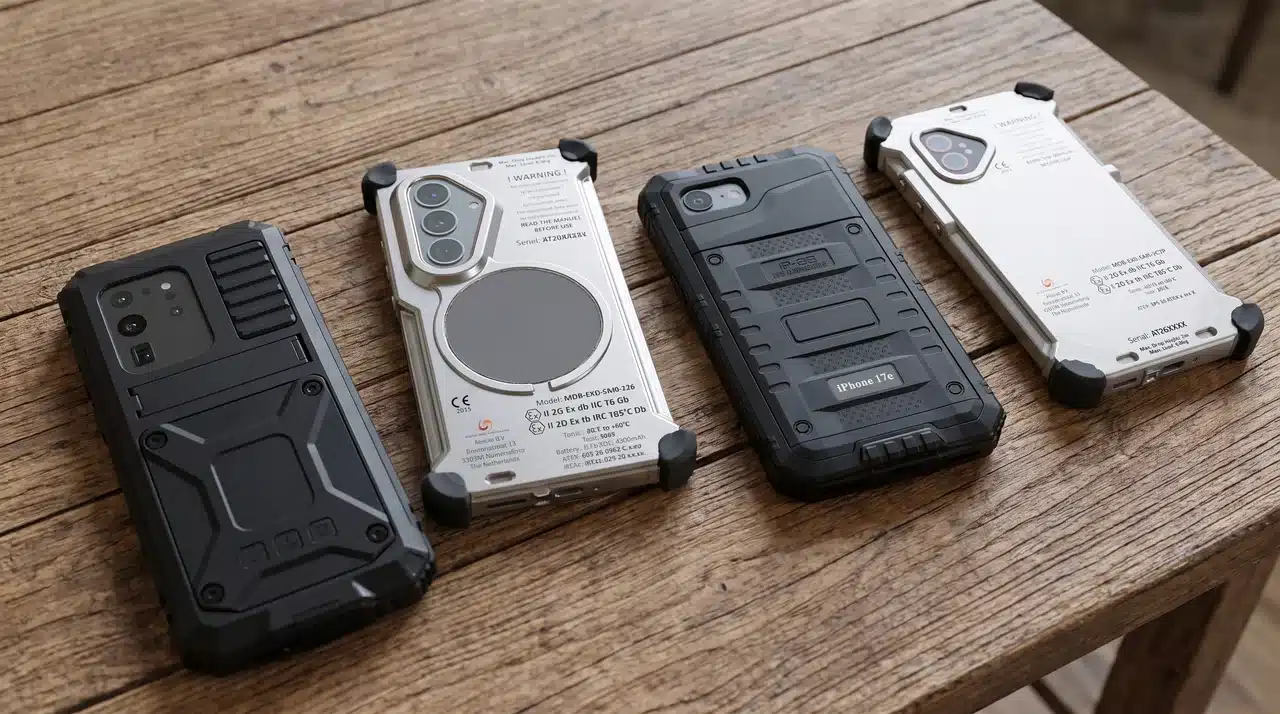


Assigning the wrong safety rating to a mobile device invalidates site audits and introduces catastrophic ignition risks into volatile processing environments. At Atexxo Manufacturing, we help facilities navigate ATEX and IECEx zone classifications to ensure field teams are equipped with compliant, high-performance mobile hardware.
The geography of plant risk: gas versus dust zones
Industrial environments are categorized by the state of the potential fuel—flammable gases or combustible dusts—and the frequency of its presence.
| Gas zone | Dust zone | Exposure frequency | Annual duration | Smartphone viability & operational reality |
| Zone 0 | Zone 20 | Continuous / Long-term | > 1,000 hours/year | Impractical for modern smartphones due to strict Ex ia power limits. |
| Zone 1 | Zone 21 | Occasional | 10 to 1,000 hours/year | The primary operational benchmark for enterprise mobile deployment. |
| Zone 2 | Zone 22 | Rare / Abnormal fault | < 10 hours/year | Low hazard threshold; widely accessible for basic hardware. |
Why Zone 1 and Zone 21 represent the operational sweet spot
Zone 0 and Zone 20 environments (such as the interior of a fuel storage tank or vapor recovery unit) represent continuous hazards where explosive atmospheres exist for more than 1,000 hours per year. Achieving intrinsic safety (Ex ia) for Zone 0 requires capping electrical energy so strictly that running modern microprocessors, high-brightness displays, and cellular radios is practically impossible.
This makes Zone 1 (gas) and Zone 21 (dust) the true operational benchmark for mobile technology. Zone 1 and Zone 21 cover areas where explosive atmospheres occur occasionally during normal daily operations—such as pump skids, sampling ports, filling bays, and powder milling suites.
By engineering explosion-proof conversions of flagship commercial smartphones, Atexxo Manufacturing delivers the high processing power, pro-grade optics, and LiDAR capabilities needed for field work while guaranteeing complete safety compliance in these core operational areas.
Understanding dual-zone ratings and IP68 dust protection
When evaluating equipment labels, safety managers often see slash-separated markings such as Zone 1/21 or ATEX category II 2G/2D. This notation indicates that the hardware is dual-certified for both flammable gas (2G) and combustible dust (2D) atmospheres.
It is vital to recognize that a gas certification does not automatically grant access to dust environments:
- Gas protection (Ex d / Ex i): Focuses on limiting electrical energy or containing thermal ignition.
- Dust protection (Ex t): Relies on physical exclusion. Conductive dusts (such as magnesium or aluminum particles in Group IIIC) can penetrate unsealed housings, bridging micro-circuits and triggering short-circuit fires.
- The IP68 imperative: Any device deployed in a dust zone must carry an IP68 ingress protection rating to guarantee that the casing is completely dust-tight.
If a device is marked only as 2G, taking it into a combustible dust suite violates safety regulations, even if the zone number matches.
The strategic advantage of fleet standardization
Under ATEX and IECEx compliance rules, equipment certified for higher-risk environments can always be safely deployed in lower-risk zones. A Zone 1/21 rated device is fully approved for use in Zone 2 and Zone 22 areas.
Standardizing your entire mobile fleet on Atexxo’s Zone 1/21 dual-certified iPhone conversions offers clear operational benefits:
- Eliminates accidental non-compliance: Technicians can move seamlessly between gas corridors, mixing bays, and powder handling suites without swapping hardware.
- Simplifies fleet logistics: Reduces management complexity by eliminating the need to track separate Zone 2 and Zone 21 device SKUs.
- Future-proofs facility updates: Ensures hardware remains fully compliant if plant modifications expand classified zone boundaries in the future.
Frequently asked questions
What does a Zone 1/21 rating on an Atexxo enclosure mean?
The forward slash indicates dual safety certification: Zone 1 for flammable gases, vapors, and mists, and Zone 21 for combustible dust environments. It is the industry benchmark for mobile devices used across mixed processing facilities.
Can an Atexxo Zone 1 certified iPhone be used in a Zone 2 area?
Yes. Under explosion protection standards, hardware rated for a higher-risk area (Zone 1) can always be safely used in a lower-risk area (Zone 2). However, a device rated only for Zone 2 must never enter a Zone 1 environment.
Why can’t modern smartphones be certified for Zone 0 environments?
Zone 0 requires Ex ia intrinsic safety, which caps electrical current and surface heat so strictly that running modern multi-core processors, high-resolution cameras, and cellular radios exceeds permissible energy limits.