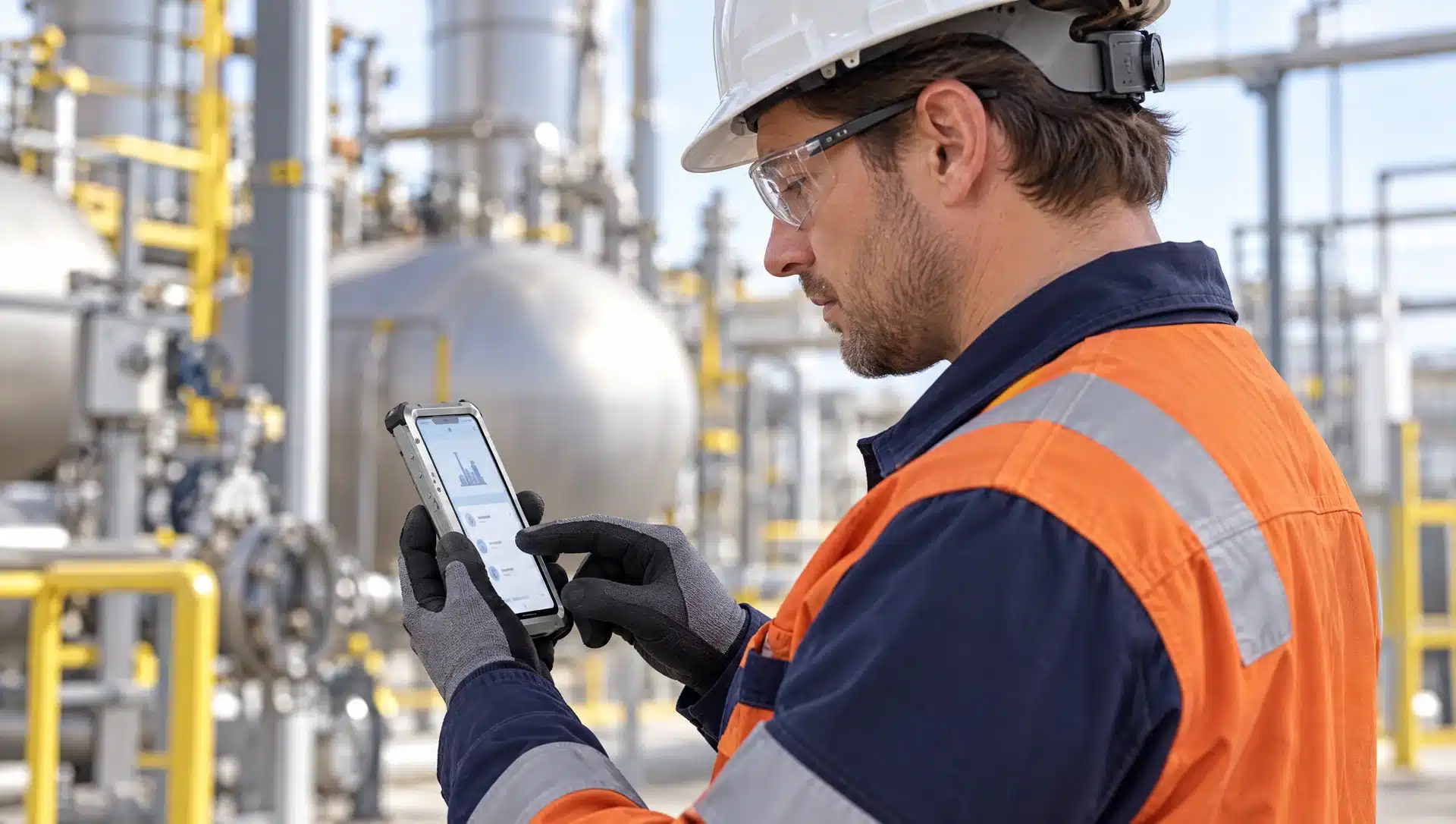


The oil and gas industry has spent the last decade trying to fully digitize its field operations. While the software ambition has always been there, the hardware has often lagged behind. Today, that gap has finally closed.
Intrinsically safe and explosion-proof smartphones are now the central hub for connected field teams. They are actively eliminating non-productive time (NPT) and ensuring strict compliance with complex safety mandates. However, successfully deploying mobile technology across deepwater rigs and sprawling refineries requires more than just installing a few enterprise apps. Success hinges on selecting hardware that can genuinely survive the extreme thermal, chemical, and electrical stresses of a classified environment.
Surviving extreme offshore and refinery environments
Oil and gas facilities are divided into strict safety zones based on the likelihood of an explosive atmosphere forming. An ATEX or IECEx Zone 1 certification, for example, is legally required for devices operating in areas where explosive gases are likely to occur during normal operations. Using a standard, uncertified consumer phone in these areas is not just a policy violation—it is a catastrophic ignition risk.
But electrical certification is only the first hurdle. True operational reliability requires aggressive chemical and environmental resistance:
- Corrosive vapors: in humid environments, hydrogen sulfide (H₂S) converts into sulfuric acid, rapidly destroying the copper and silver circuitry inside standard electronics at mere parts-per-billion levels.
- Marine degradation: offshore platforms subject hardware to relentless saltwater spray, which quickly oxidizes chassis fasteners and degrades unsealed ports.
- Mechanical impact: the risk of dropping a device through steel grating or onto concrete decks is incredibly high.
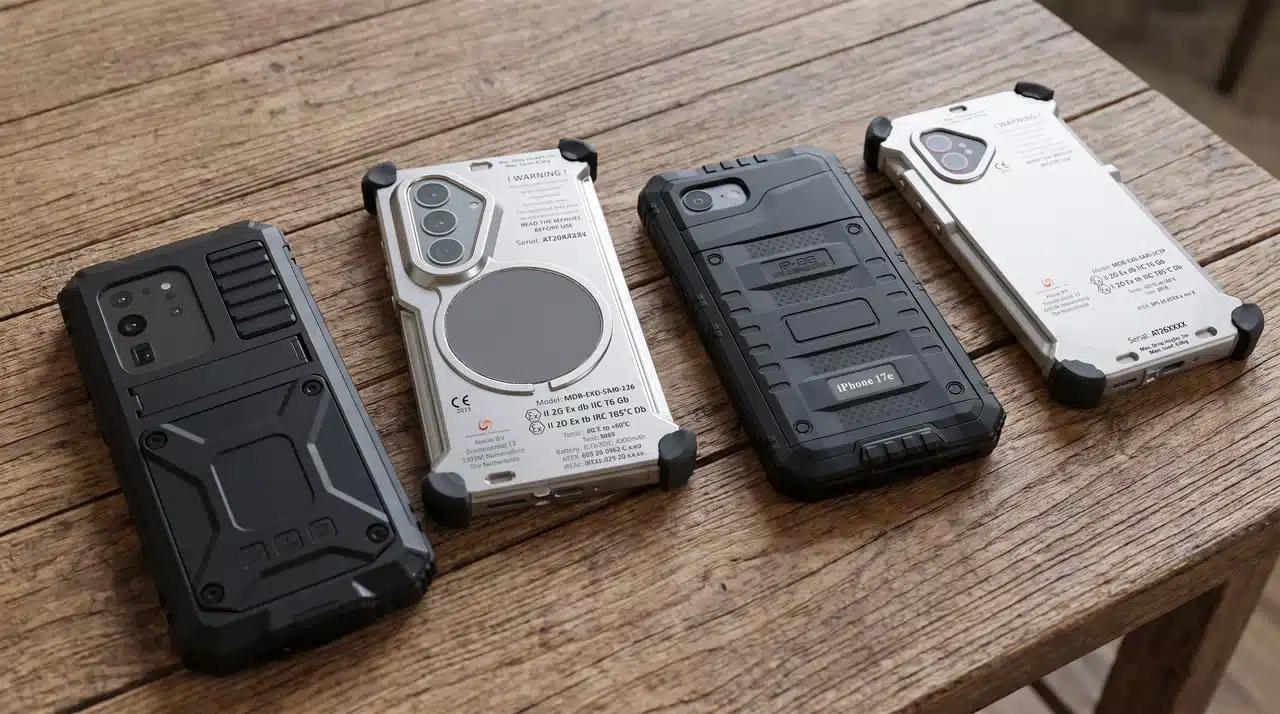
To guarantee long-term survival, Atexxo Manufacturing engineers protective enclosures that combine strict ATEX electrical compliance with industrial-grade materials like 316L stainless steel, sealed polycarbonate, and IP68 ingress protection.
High-impact digital workflows on the rig
Once the hardware is secured, deploying a converted flagship device—like an explosion-proof iPhone 17 Pro Max—unlocks massive efficiency gains across core oil and gas workflows.
Dynamic digital permit-to-work (ePTW)
A paper permit is a static document trying to manage a dynamic, dangerous environment. It cannot react when a secondary crew suddenly initiates hot work nearby. Mobile ePTW platforms, however, update continuously.
If a technician requests a hot-work permit too close to an active confined space entry, the system instantly flags the spatial conflict. Furthermore, if a stationary gas detector trips in the area, the system can automatically revoke active permits and push emergency evacuation alerts directly to every connected worker’s screen.
Streamlined operator rounds
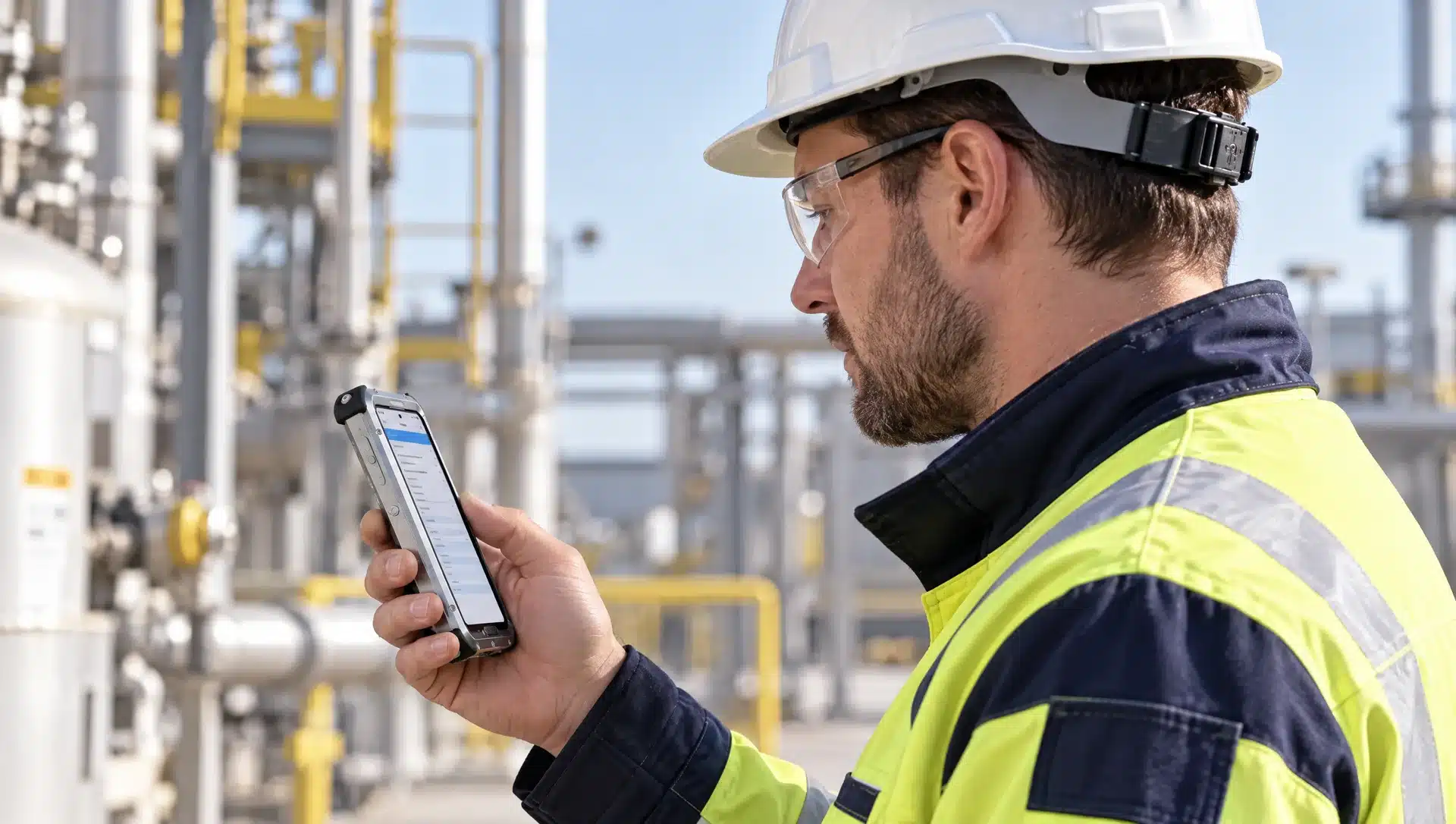
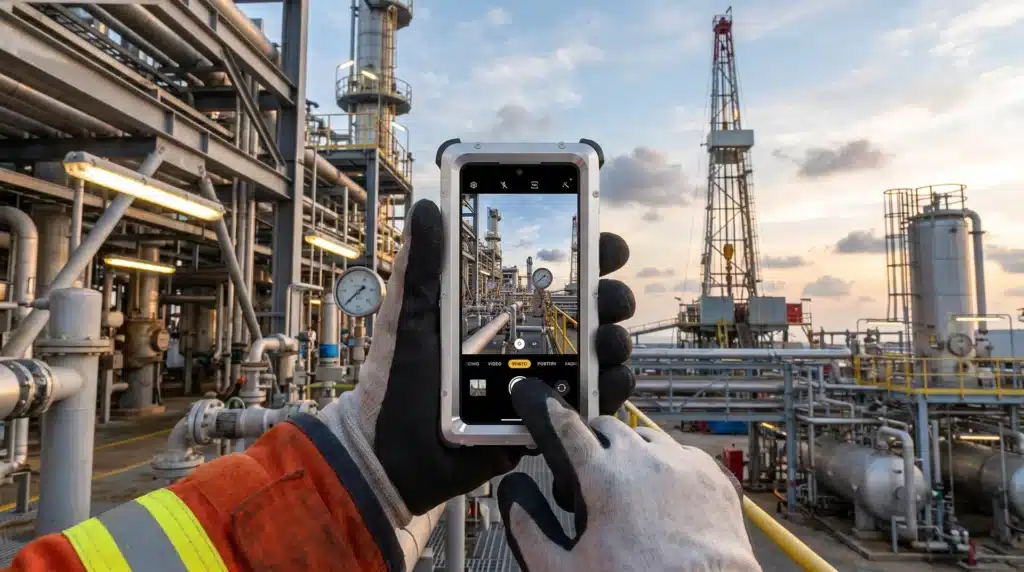
Rather than relying on manual clipboards to monitor un-instrumented pumps and manual valves, technicians can now scan an NFC tag or barcode on the physical asset. This verifies their exact location and instantly loads a dynamic inspection checklist. If the technician spots a leaking flange, they can snap a 48-megapixel photo, and the app automatically generates a work order within the enterprise CMMS (like SAP or IBM Maximo).
Auxiliary sensors, such as Bluetooth thermal cameras or USB-C vibration probes, can even be plugged directly into the phone, turning it into a comprehensive diagnostic tool.
Remote expert support: cutting the helicopter cord
When a complex piece of offshore equipment fails, the traditional response is to fly a senior specialist out by helicopter. This introduces massive travel delays and exorbitant costs—accounting for up to 37% of total unplanned downtime expenses.
By equipping field workers with intrinsically safe smartphones, operators can stream live, 4K video to an expert sitting safely in an onshore control room. Using augmented reality (AR) software, that remote specialist can draw digital arrows or circle specific valves directly on the technician’s screen.
Use the interactive calculator below to explore the massive cost difference between dispatching a helicopter versus utilizing remote video support:
The future: private 5G and autonomous integration
The infrastructure supporting the connected field worker is evolving rapidly. Facilities are aggressively replacing outdated Wi-Fi with private 5G networks, delivering sub-millisecond latency and the capacity to support thousands of connected sensors across a refinery.
For remote pipelines and deepwater assets, low earth orbit (LEO) satellite connectivity is being integrated to ensure continuous non-terrestrial network (NTN) coverage. As this bandwidth increases, field technicians will increasingly use their ATEX-certified smartphones as command units to monitor autonomous inspection drones and ground robots operating in high-risk zones.
Frequently asked questions
What is the difference between ATEX Zone 1 and Zone 2 in oil and gas?
An ATEX Zone 1 classification indicates an area where an explosive gas atmosphere is likely to occur during normal, daily operations. Zone 2 indicates an area where an explosive atmosphere is unlikely to occur normally, and if it does, it will only exist for a very short period (usually due to a fault or leak). Equipment deployed in Zone 1 environments must meet much stricter safety and energy-containment standards than Zone 2 hardware.
Can an iPhone be used legally on an offshore oil platform?
Yes, but only if the device is permanently housed within a certified explosion-proof enclosure that holds a valid ATEX or IECEx Zone 1 or Zone 2 certification for that specific platform’s gas group and temperature class. Bringing an uncased, standard consumer iPhone into a classified area is strictly prohibited.
How does mobile technology reduce non-productive time (NPT) during drilling?
Mobile technology directly connects field crews to real-time telemetry, predictive AI alerts, and offsite engineering support. By eliminating manual data entry, paper-based bottlenecks, and the severe travel delays associated with flying technical specialists out to a rig, teams can resolve equipment anomalies in minutes instead of hours, slashing NPT by up to 80%.