

When procuring mobile technology for classified industrial environments, it is easy to assume that “intrinsically safe” and “explosion-proof” mean the exact same thing. Both terms are frequently used interchangeably in marketing materials and casual conversation.
This is a fundamental mistake.
While both classifications share the ultimate goal of preventing atmospheric ignitions, they rely on completely opposite engineering philosophies to achieve it. Selecting the wrong protection concept for your site can result in severe regulatory non-compliance, frustrating fleet management headaches, and compromised field performance.
At Atexxo Manufacturing, we help facilities navigate these complex choices every day. Here is a breakdown of the technical differences between these two protection concepts and a clear framework for selecting the right hardware for your operations.
The engineering philosophies: prevention vs. containment
The easiest way to understand the difference between the two concepts is to look at how they handle an electrical fault.
Intrinsic safety (Ex i): the prevention philosophy
Intrinsically safe devices are engineered so that a spark can never form in the first place. The internal circuitry is heavily modified to cap the available electrical voltage, current, and stored thermal energy.
Every flammable chemical has a minimum ignition energy (MIE). Intrinsic safety ensures that even if the device suffers multiple component failures simultaneously, the electrical discharge will never reach that MIE threshold.
Explosion-proof / flameproof (Ex d): the containment philosophy
Explosion-proof technology accepts that an internal electrical spark or battery fault might occur. Instead of capping the internal energy, the protection is provided entirely by the outer housing.
If a spark ignites gas inside the device, the heavy-duty enclosure contains the blast. Expanding hot gases are forced through precision-machined gaps called flame paths. As the gas travels through these narrow pathways, it cools rapidly. By the time it exits into the surrounding atmosphere, its temperature is safely below the ignition point of the outside air.
Matching the protection to your ATEX zones
Before you choose a device, you must identify your facility’s specific ATEX or IECEx zone classifications. These zones are determined by how often an explosive atmosphere is present.
- Zone 0 (continuous hazard): An explosive atmosphere is present constantly or for long periods (over 1,000 hours per year). For these highly volatile areas, intrinsically safe devices (specifically Ex ia) are mandatory. Explosion-proof enclosures are prohibited in Zone 0.
- Zone 1 & Zone 2 (occasional/rare hazards): An explosive atmosphere occurs occasionally during normal operations (Zone 1) or rarely during a fault (Zone 2). In these zones, you have the flexibility to use either intrinsically safe devices or explosion-proof enclosures.
To help you navigate this logic quickly, explore our interactive decision tree below:
Why containment unlocks flagship performance in Zone 1
If you are operating in Zone 1 or Zone 2, explosion-proof enclosures offer a massive operational advantage over dedicated intrinsically safe phones.
Because intrinsic safety relies on severely limiting internal power, manufacturers are forced to use underpowered processors, low-resolution camera sensors, and proprietary operating systems to meet the energy caps. The resulting devices are often sluggish and struggle to run modern enterprise software.
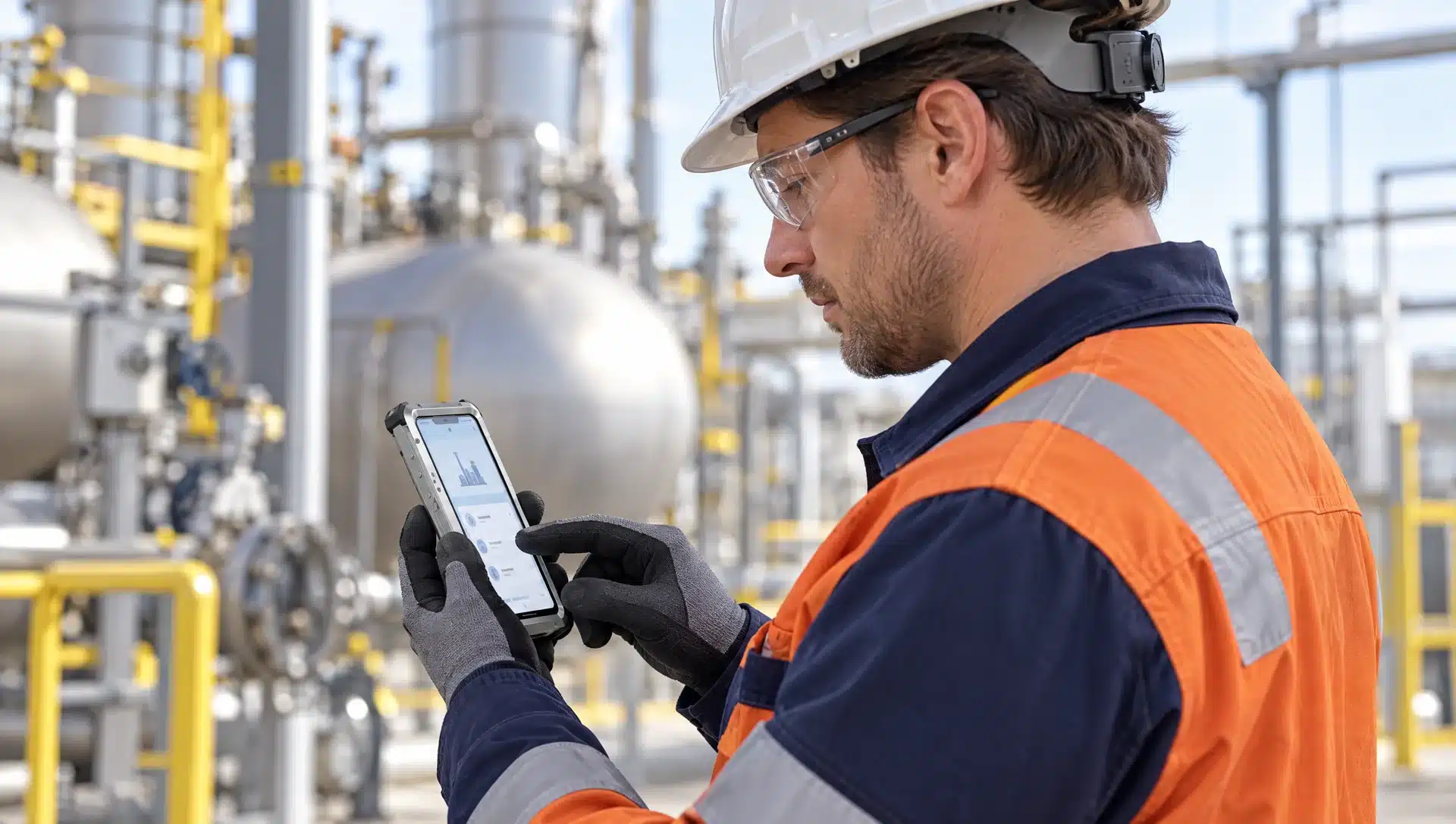
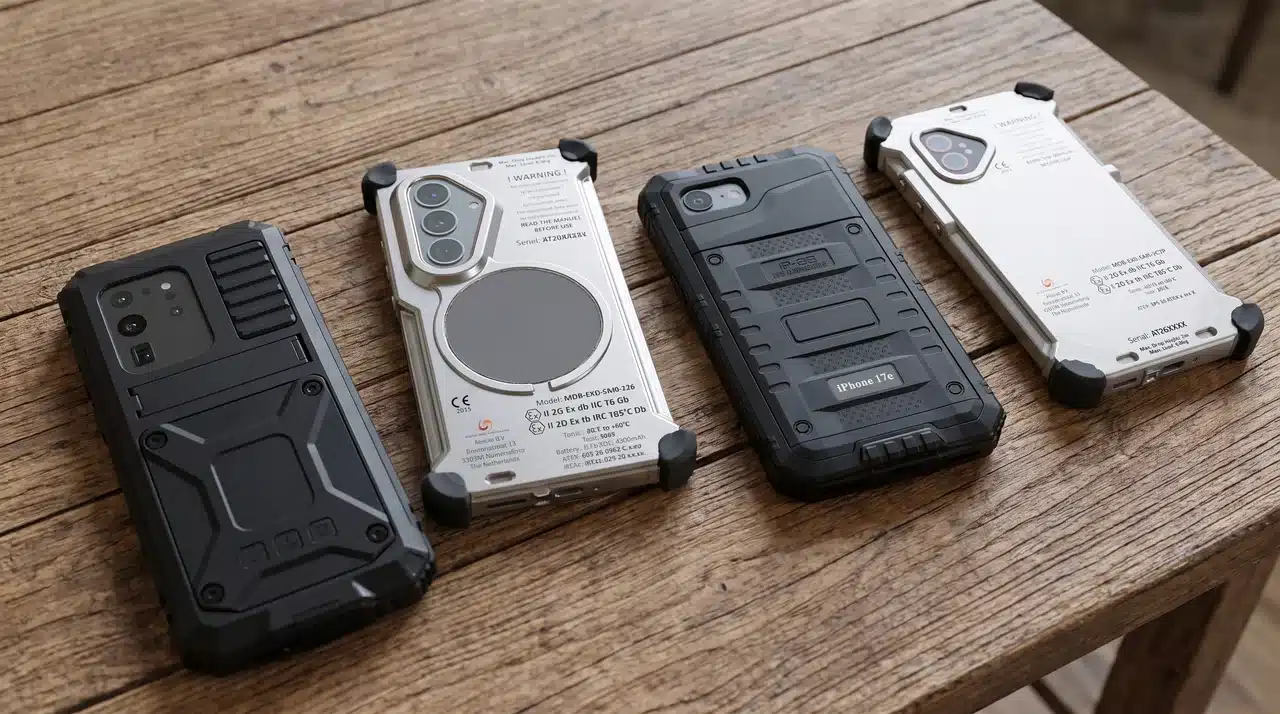
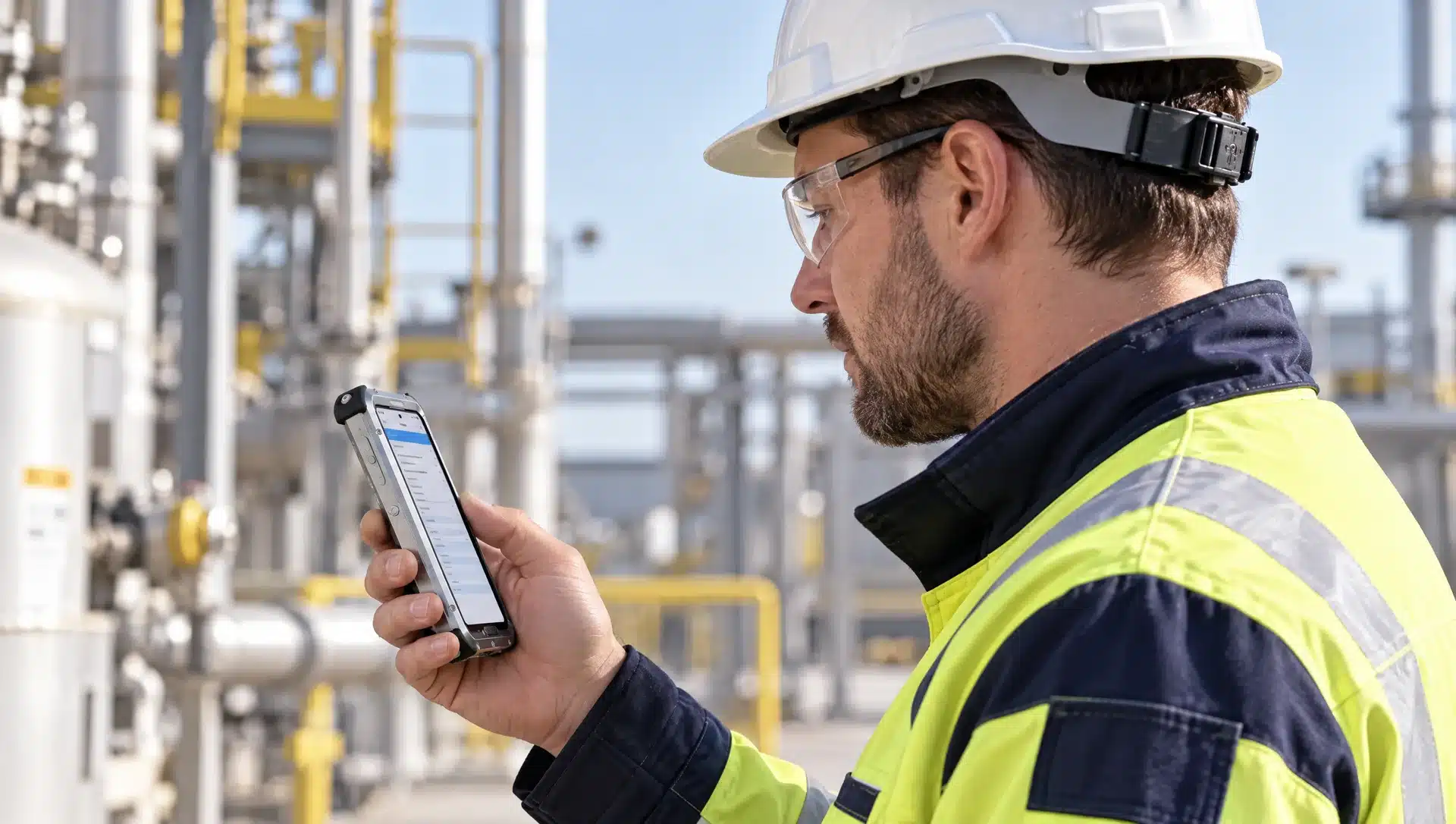
Explosion-proof technology relies entirely on the outer housing for safety. This means the hardware inside does not have to be artificially crippled. At Atexxo, we take flagship consumer devices—like the iPhone 17 Pro Max—and seal them inside precision-engineered Ex enclosures.
This approach gives your field teams access to:
- high-speed neural processors for running offline edge AI.
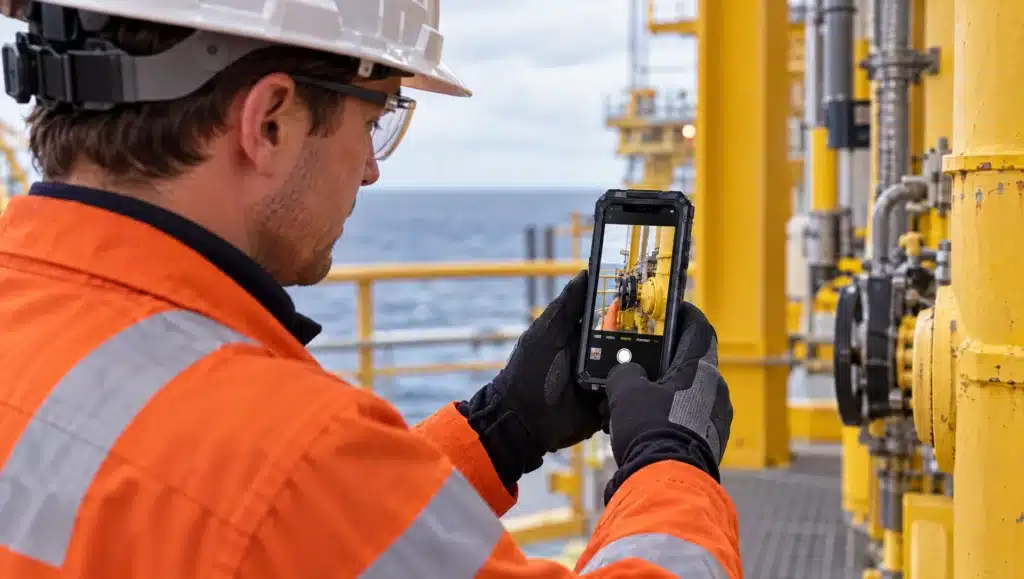
- pro-grade 48MP optics and integrated LiDAR for 3D spatial mapping and remote expert video calls.
- native iOS interfaces that your workforce already knows how to use, ensuring 100% user adoption.
- seamless integration into your corporate mobile device management (MDM) platforms.
Debunking common hazardous area myths
When navigating procurement, watch out for these pervasive industry misconceptions:
- “Rugged is safe enough.” Ruggedized ratings (like IP68 or MIL-STD-810H) only measure how well a phone survives drops or water. They offer zero protection against electrical sparks. Bringing an uncertified rugged phone into a classified zone introduces severe ignition risks.
- “Intrinsic safety is always safer than explosion-proof.” In Zone 0, intrinsic safety is mandatory. But in Zone 1 and Zone 2, a certified explosion-proof enclosure provides equivalent physical safety while delivering vastly superior computing power and usability.
- “Explosion-proof means the device cannot explode.” It actually means the exact opposite. It means that if the device does suffer an internal explosion, the enclosure is strong enough to contain the blast and prevent the fire from spreading to the facility.
Frequently asked questions
Can an explosion-proof (Ex d) phone case be used in Zone 0?
No. Zone 0 environments require Ex ia intrinsic safety, which enforces strict electrical energy limits with two-fault tolerance. Flameproof and explosion-proof enclosures are fully approved for Zone 1 and Zone 2 environments, but they are strictly prohibited in continuous Zone 0 hazards.
What is the primary operational advantage of an Atexxo explosion-proof iPhone case?
An explosion-proof case allows enterprise field teams to utilize flagship iOS hardware—complete with modern processing power, pro-grade optics, LiDAR scanning, and direct MDM integration—safely inside Zone 1 and Zone 2 hazardous areas. This eliminates the clunky user interfaces and slow hardware associated with legacy industrial handhelds.
Are intrinsically safe phones lighter than explosion-proof phones?
Generally, yes. Because intrinsically safe phones limit internal electrical energy at the circuit board level, they do not require heavy, pressure-resistant outer shells. However, modern explosion-proof enclosures are precision-engineered from materials like aircraft-grade aluminum to minimize weight while preserving ergonomic balance for full-shift use.