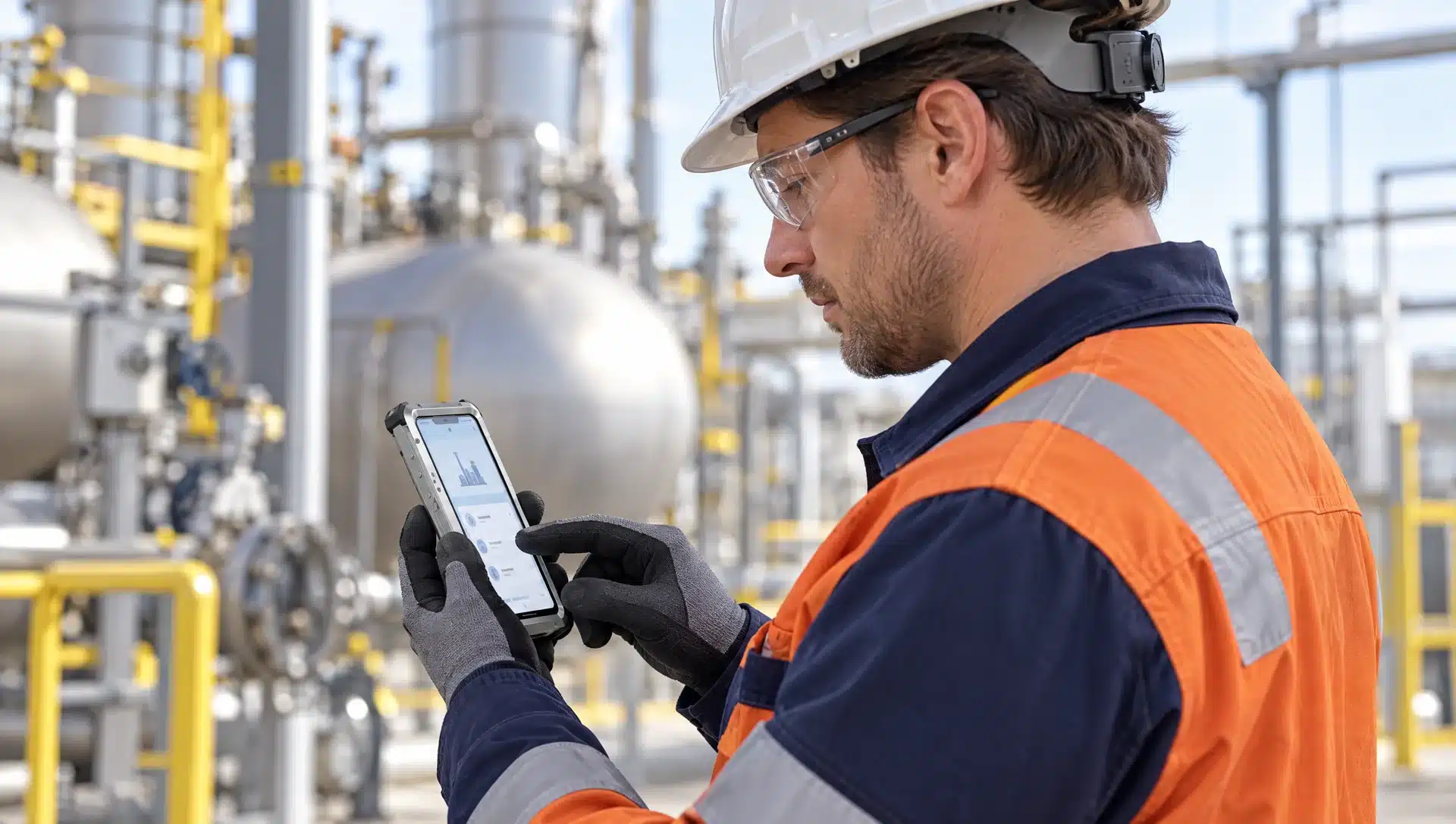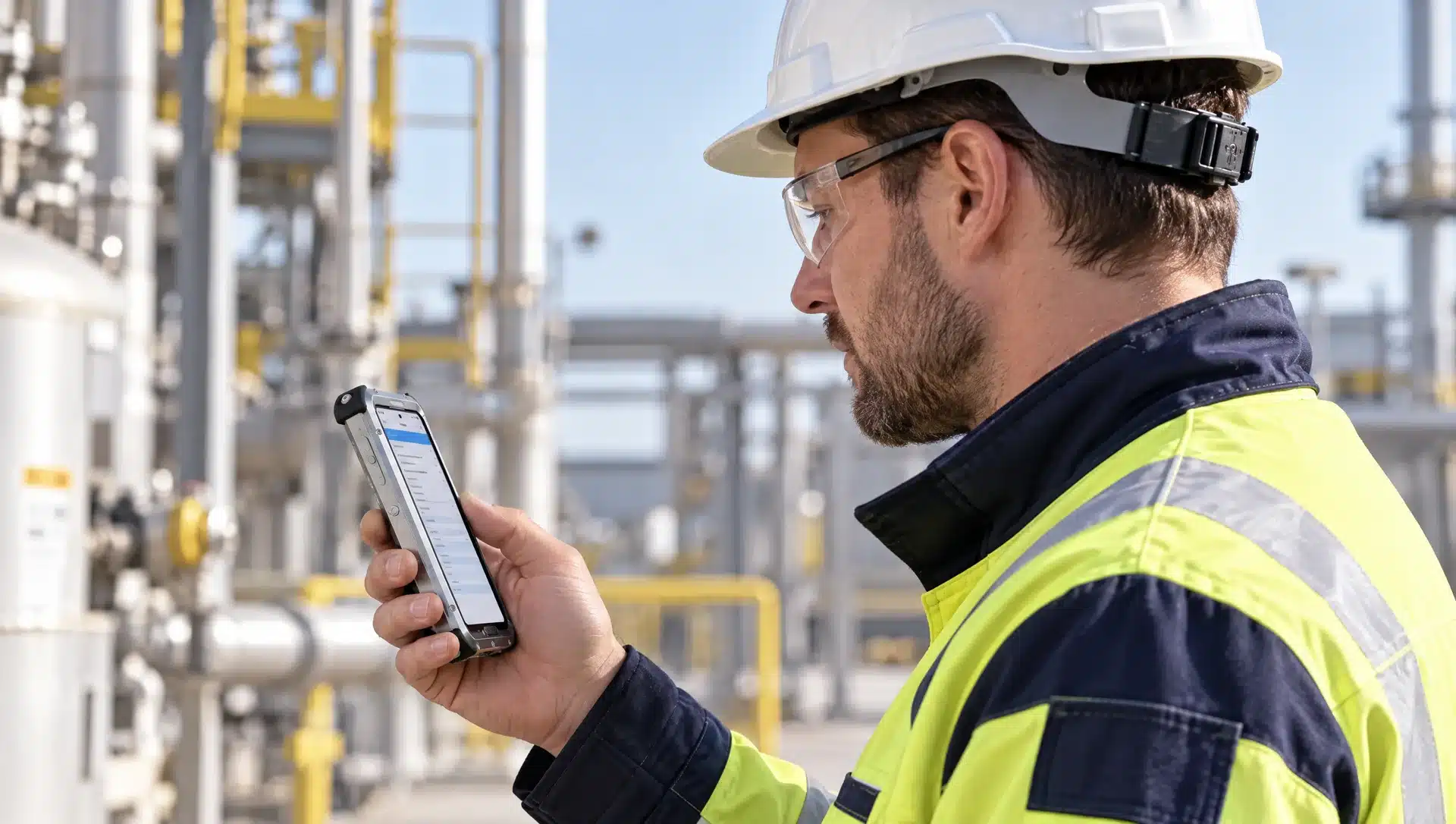


In sprawling chemical refineries and offshore platforms, isolated technicians face the constant risk of sudden incapacitation from toxic gas exposure, structural falls, or equipment strikes. When an operator is unconscious, traditional manual check-ins fail, making automated, sensor-driven mobile monitoring the gold standard for emergency response in hazardous zones.
The failure of manual check-ins and the automated safety net
Relying on technicians to call in every 30 minutes creates dangerous operational delays and administrative drag. If an operator inhales hydrogen sulfide ($H_2S$) or suffers a fall, they cannot pick up a radio or navigate a touchscreen to request help.
Modern enterprise smartphones running background lone worker protection (LWP) software eliminate human reliance by constantly analyzing spatial movement through internal accelerometers and gyroscopes:
- impact detection: identifies sudden acceleration followed by violent deceleration, triggering immediate emergency countdowns after a fall.
- immobility monitoring: detects prolonged periods of complete inactivity, automatically raising an alert if an operator is unconscious or trapped.
- tactile panic triggers: allows conscious workers to initiate an SOS instantly using dedicated physical buttons, even while wearing heavy protective gloves.
High-precision indoor tracking in steel-dense environments
Knowing that a lone worker is in distress is useless if rescue teams cannot pinpoint their physical location within a massive multi-story process tower. Because satellite GPS signals cannot penetrate heavy structural steel or concrete vaults, facility managers must deploy multi-layered positioning strategies.
| Positioning technology | Spatial accuracy | Optimal environment | Operational consideration |
| Outdoor GPS | 5 to 10 meters | Exterior storage yards and open pipe decks | Fails indoors; high battery consumption |
| BLE beacons | 1 to 3 meters | Multi-level plant structures and indoor suites | Requires Zone 1 certified beacons spaced every 10–15m |
| Wi-Fi positioning | Room / Floor level | Large open-plan warehouses | Leverages existing infrastructure; moderate accuracy |
| Ultra-wideband (UWB) | Sub-meter (< 1 meter) | Dense machinery skids and tight vessel corridors | Pinpoints exact proximity to specific equipment |
To explore how automated emergency response workflows reduce rescue times during an incident, use our interactive simulator below:
Why converted smart devices outperform legacy industrial handhelds
Historical “intrinsically safe” handhelds often suffer from small batteries, slow processors, and unsealed physical charging ports that corrode when exposed to harsh chemicals like ammonia or salt spray.
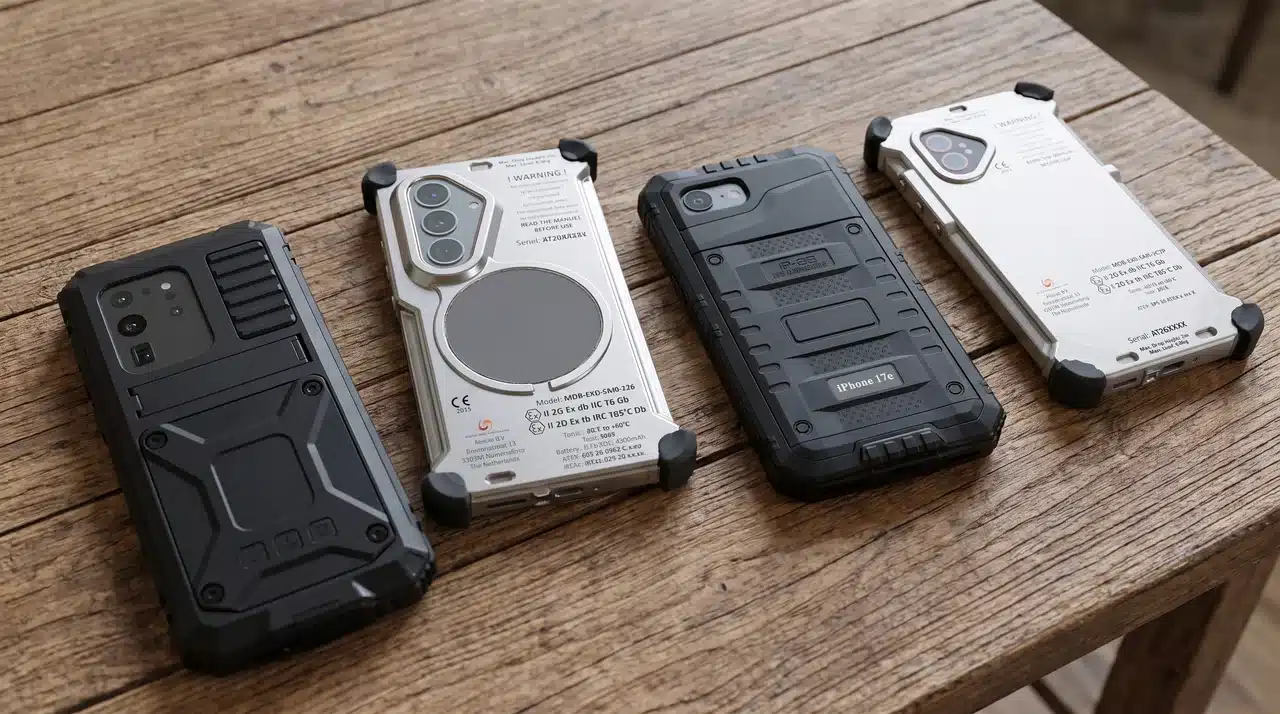
At Atexxo Manufacturing, we solve these vulnerabilities by engineering certified explosion-proof enclosures for flagship smartphones like the latest Apple iPhones, bringing elite hardware safely into ATEX Zone 1 and Zone 21 environments:
- sustained shift battery life: high-capacity batteries paired with energy-efficient processors allow background LWP tracking to run continuously across 12-hour shifts without power depletion.
- sealed wireless charging: supporting MagSafe and Qi2 wireless charging through the Atexxo enclosure allows the device to remain permanently sealed, preventing corrosive gas mists from degrading charging pins.
- instant SOS via physical action button: technicians can trigger emergency alerts by feel alone using the customizable physical button, avoiding touchscreen navigation during high-stress events.
- post-incident 3D LiDAR mapping: following a safety event, investigators can utilize the onboard LiDAR scanner to capture spatial point-cloud models of the scene for regulatory audits and root-cause analysis.
Frequently asked questions
How do automated man-down sensors prevent false alarms?
When an impact or immobility threshold is met, the device initiates a local pre-alarm countdown with loud audio and haptic feedback. This gives the technician a configurable window (typically 15 to 30 seconds) to cancel the alert if they simply dropped the phone or stepped away.
Why is sealed wireless charging crucial for lone worker devices in chemical plants?
Exposed charging ports and rubber plugs are major failure points in environments containing hydrogen sulfide, chlorine, or salt spray. Wireless charging through an Atexxo enclosure allows the phone to stay 100% sealed against corrosive vapors, ensuring physical integrity and electrical safety over years of use.
Can an uncased consumer smartphone be used for lone worker tracking in Zone 1?
No. Bringing an uncertified consumer smartphone into an ATEX or IECEx classified zone violates strict plant safety laws and introduces serious electrical ignition risks. The smartphone must be housed in a certified explosion-proof enclosure engineered by specialists like Atexxo Manufacturing.