

The chemical processing industry is undergoing a massive digital transformation. Operational efficiency, predictive maintenance, and strict safety compliance now rely heavily on getting real-time data into the hands of field technicians.
However, taking a standard smartphone or tablet onto the floor of a chemical plant is extremely dangerous. The constant presence of highly flammable vapors, combustible dusts, and highly corrosive mists creates an environment where a single electrical fault can trigger a catastrophic explosion.
At Atexxo Manufacturing, we specialize in bridging this gap. By equipping field workers with ATEX-certified, intrinsically safe mobile devices, chemical plants can entirely modernize their workflows without compromising on safety. Here is a deep dive into the hardware requirements and the digital processes they unlock.
The harsh reality of chemical environments
Before a mobile device can be used to improve a workflow, it must survive the environment. Chemical plants are uniquely hostile to consumer electronics. It is not just about avoiding explosions; it is about preventing rapid material degradation.
ATEX safety ratings and protection concepts
To legally operate in areas where flammable gases or dusts might be present during normal operations, mobile devices must carry an ATEX or IECEx Zone 1 (or Zone 21 for dust) certification.
Manufacturers achieve this through two primary protection methods:
- Intrinsically safe (Ex i): the internal circuitry is modified to limit electrical energy and thermal heat to levels far below the ignition threshold of surrounding gases, even if the device fails.
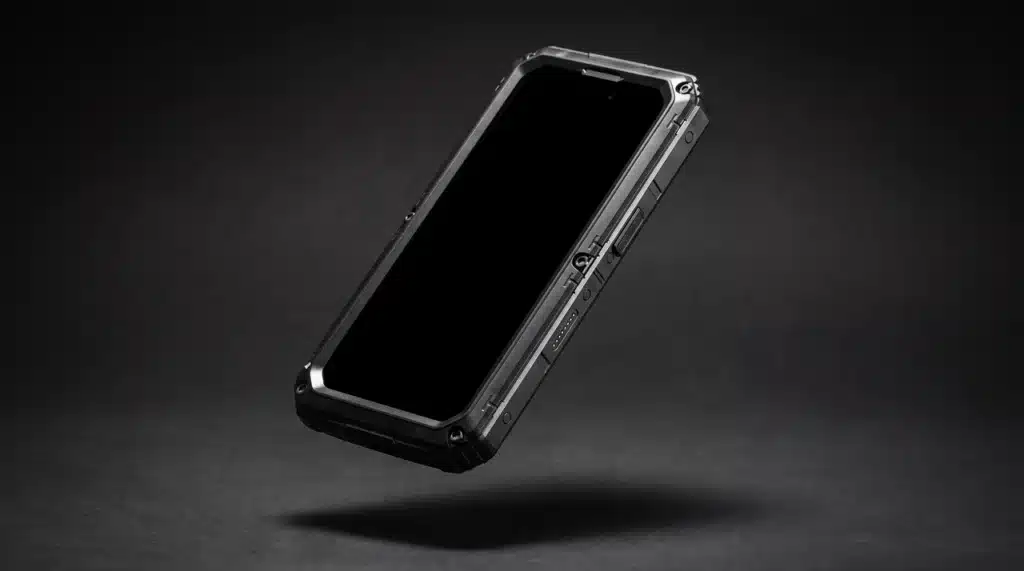
- Explosion-proof (Ex d): the device is sealed within a heavy-duty enclosure engineered to contain any internal explosion, preventing flames or hot gases from escaping and igniting the outside atmosphere.
Battling corrosive degradation
Safety certification grants access, but material resistance ensures longevity. Chemical vapors will eat through standard consumer electronics in weeks. For example, hydrogen sulfide (H₂S) corrodes copper contacts at mere parts-per-billion levels, while ammonia and chlorine vapors cause severe degradation to internal pins.
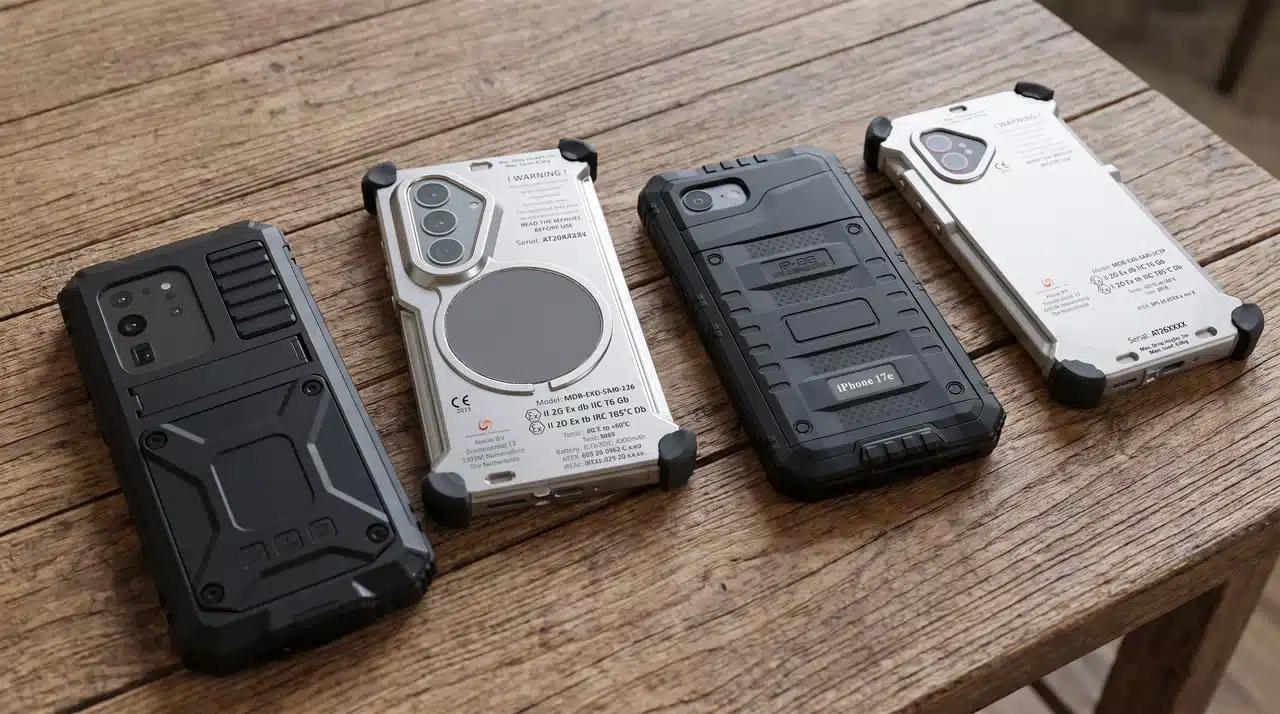
To survive, the device’s protective housing must utilize chemical-grade materials—such as PVDF, PEEK, 316L stainless steel, and high-impact polycarbonate—all backed by a strict IP68 seal to block out corrosive mists.
Transforming field execution with connected workflows
Once a facility deploys compliant hardware, the operational return on investment is immediate. Paper-based systems are replaced by dynamic, real-time digital processes.
Revolutionizing the permit-to-work (e-PTW)
Paper permits are static and highly susceptible to human error. A mobile-enabled e-PTW system is dynamic. If a technician attempts to initiate a hot-work permit too close to an active confined-space entry, the digital system immediately recognizes the spatial conflict and blocks the approval.
Furthermore, if a stationary gas monitor detects a leak, the e-PTW system can instantly revoke all active permits in the area and push evacuation alerts directly to the technicians’ smartphones. Supervisors can also approve permits remotely based on live, time-stamped photos of isolated valves, eliminating administrative bottlenecks.
Dynamic operator rounds
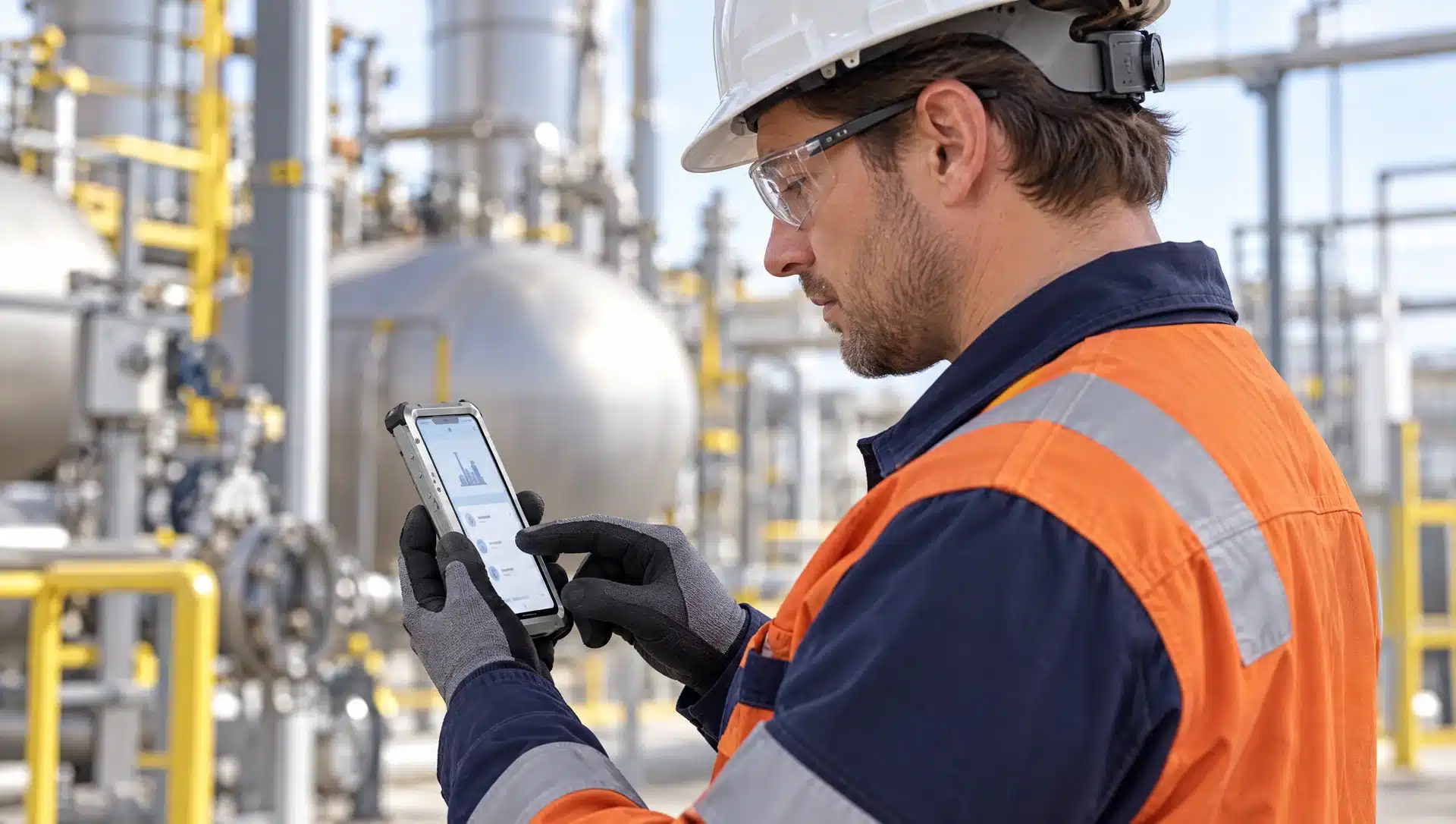
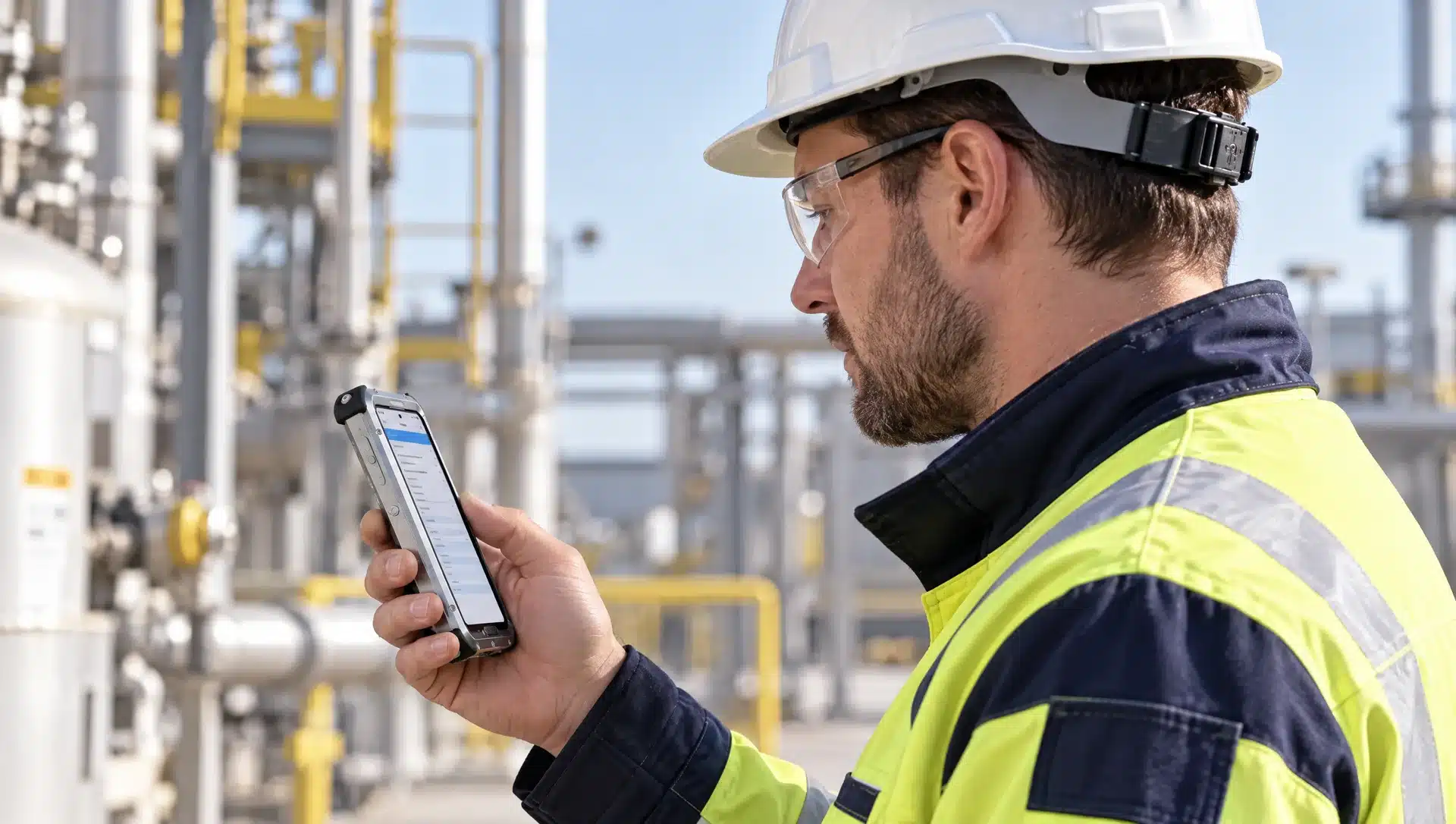
Manual clipboards are being replaced by NFC tags and barcodes mounted on physical assets. A technician scans the tag with their certified device, verifying their presence and pulling up a dynamic checklist. Because the device is essentially a portable computer, technicians can plug in external diagnostic tools—like USB-C vibration probes or Bluetooth thermal cameras—transforming standard rounds into predictive maintenance events.
Instant safety data access
In the event of a chemical spill or exposure, running to a control room to flip through a massive binder of safety data sheets (SDS) wastes critical minutes. With a connected smartphone, a worker can simply scan a container’s globally harmonized system (GHS) label to instantly pull up the correct 16-section SDS, displaying crucial first-aid and containment protocols immediately.
Bridging the skills gap with augmented reality
As a generation of highly experienced engineers retires, chemical plants are utilizing mobile devices to capture and transfer institutional knowledge.
When a junior technician encounters a complex pump failure, they no longer have to wait days for an off-site specialist to arrive. Using their ATEX-certified smartphone, they can stream live, high-definition video directly to an expert working anywhere in the world. Using augmented reality (AR) software, that remote expert can draw digital arrows, circle specific valves, and overlay step-by-step instructions directly onto the technician’s live camera feed.
The advantage of converted enterprise smart devices
While heavy, proprietary legacy radios and industrial cameras meet ATEX standards, they offer a terrible user experience. This is why chemical facilities are moving toward converted enterprise devices.
By taking flagship smartphones—like the iPhone 17 Pro Max—and engineering them into certified explosion-proof enclosures, Atexxo delivers the best of both worlds. Technicians get the high-resolution cameras needed for AR annotations, the processing power to run heavy enterprise apps like SAP or IBM Maximo seamlessly, and an iOS interface they already know how to use.
Frequently asked questions
What is the difference between intrinsically safe (ex i) and explosion-proof (ex d) equipment?
Intrinsically safe equipment is designed to restrict internal electrical energy and surface heat so that it physically cannot ignite flammable gases, even if the device short-circuits. Explosion-proof equipment utilizes a heavy, specialized enclosure built to contain an internal explosion, preventing any flames from escaping into the hazardous plant atmosphere.
How do chemical vapors like ammonia impact standard smartphones?
Airborne compounds like ammonia, chlorine, and hydrogen sulfide are incredibly aggressive. They will rapidly corrode the exposed silver, copper, and electrical connectors found in consumer electronics. Industrial enclosures prevent this by using chemical-resistant materials like PVDF and 316L stainless steel, backed by strict IP68 sealing.
Can an iPhone be used legally in an ATEX Zone 1 chemical plant environment?
Yes, but only if the iPhone is permanently housed within a certified explosion-proof enclosure that holds a valid ATEX or IECEx Zone 1 certification for your facility’s specific gas group and temperature class. An uncased iPhone is strictly prohibited and highly dangerous in classified zones.