

When procurement teams begin sourcing mobile devices for a hazardous area workforce, the first thing they notice is the massive upfront price tag. Intrinsically safe (IS) smartphones are expensive.
Given the intense engineering, thermal testing, and rigorous regulatory audits required to achieve ATEX and IECEx Zone 1 certification, a premium price point is entirely expected. However, focusing solely on this initial capital expenditure is the most common—and most expensive—mistake that industrial facilities make.
Research shows that up to 70% of a mobile device’s total cost occurs after the initial purchase. These hidden costs are driven by ongoing IT management, frustrating helpdesk support, expensive out-of-warranty repairs, and the complete loss of end-of-life residual value. If you stop your financial evaluation at the sticker price, you are guaranteeing a deployment strategy that will drain your operational budget for years to come.
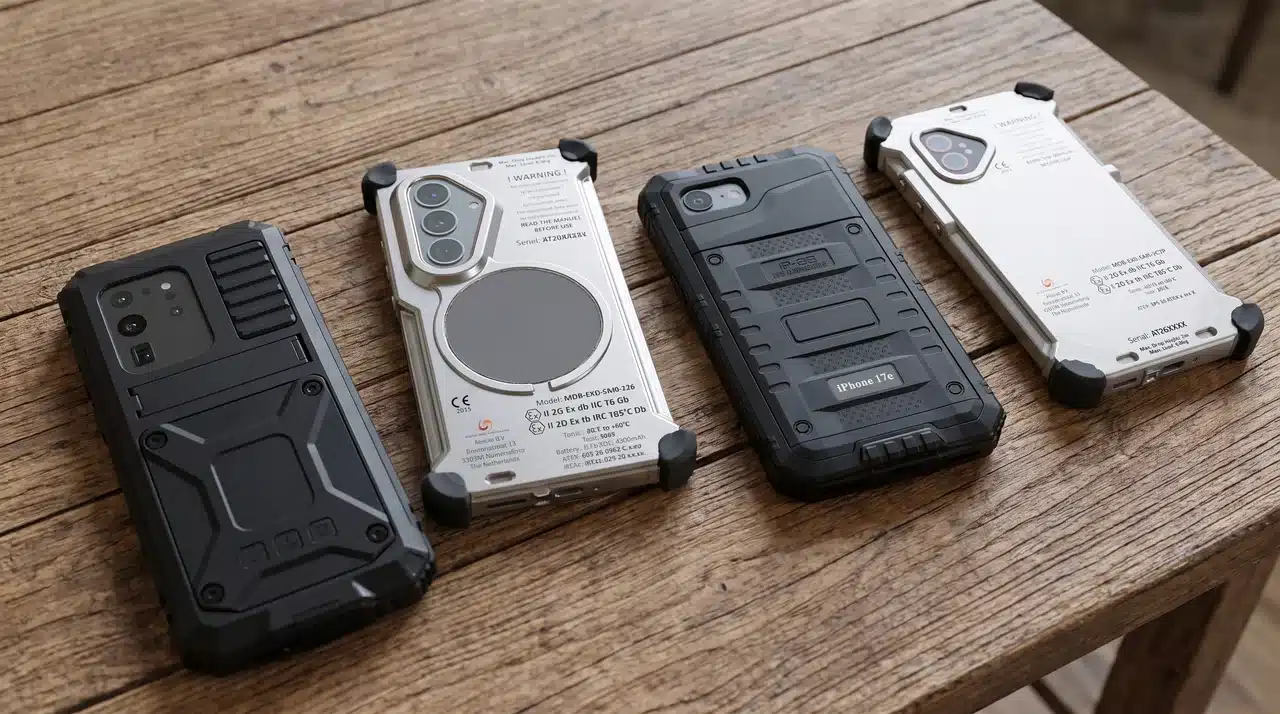
At Atexxo Manufacturing, we help facilities escape this cycle. By engineering certified explosion-proof enclosures for flagship devices like the Apple iPhone, we offer an alternative that radically lowers the true cost of mobility.
The 2026 cost landscape for hazardous area handsets
Meeting ATEX and IECEx Zone 1 and Zone 21 standards requires severe internal energy limitation and strict component isolation. For manufacturers of dedicated industrial Android handsets, that engineering complexity is reflected directly in their market pricing.
Today, a modern, 5G-enabled dedicated intrinsically safe smartphone typically costs between €1,900 and €2,700 (or roughly $2,400 to $3,200) per unit.
For a moderate fleet of just 50 field technicians, that represents a raw capital outlay of €95,000 to €135,000. And that is before you add protective holsters, software licenses, cellular data plans, or mobile device management (MDM) enrollment fees.
Defining total cost of ownership (TCO)
To understand the true lifecycle spend of an industrial mobile fleet, you must evaluate both the direct capital costs (CAPEX) and the indirect operational costs (OPEX).
A true TCO equation looks like this:
TCO = Hardware CAPEX + Software & MDM + Support & Training + Peripheral Hardware Workarounds – Residual Resale Value
To see how these variables interact and compound over a multi-year deployment, use our interactive comparison calculator below:
Five drivers that drastically lower your operational spend
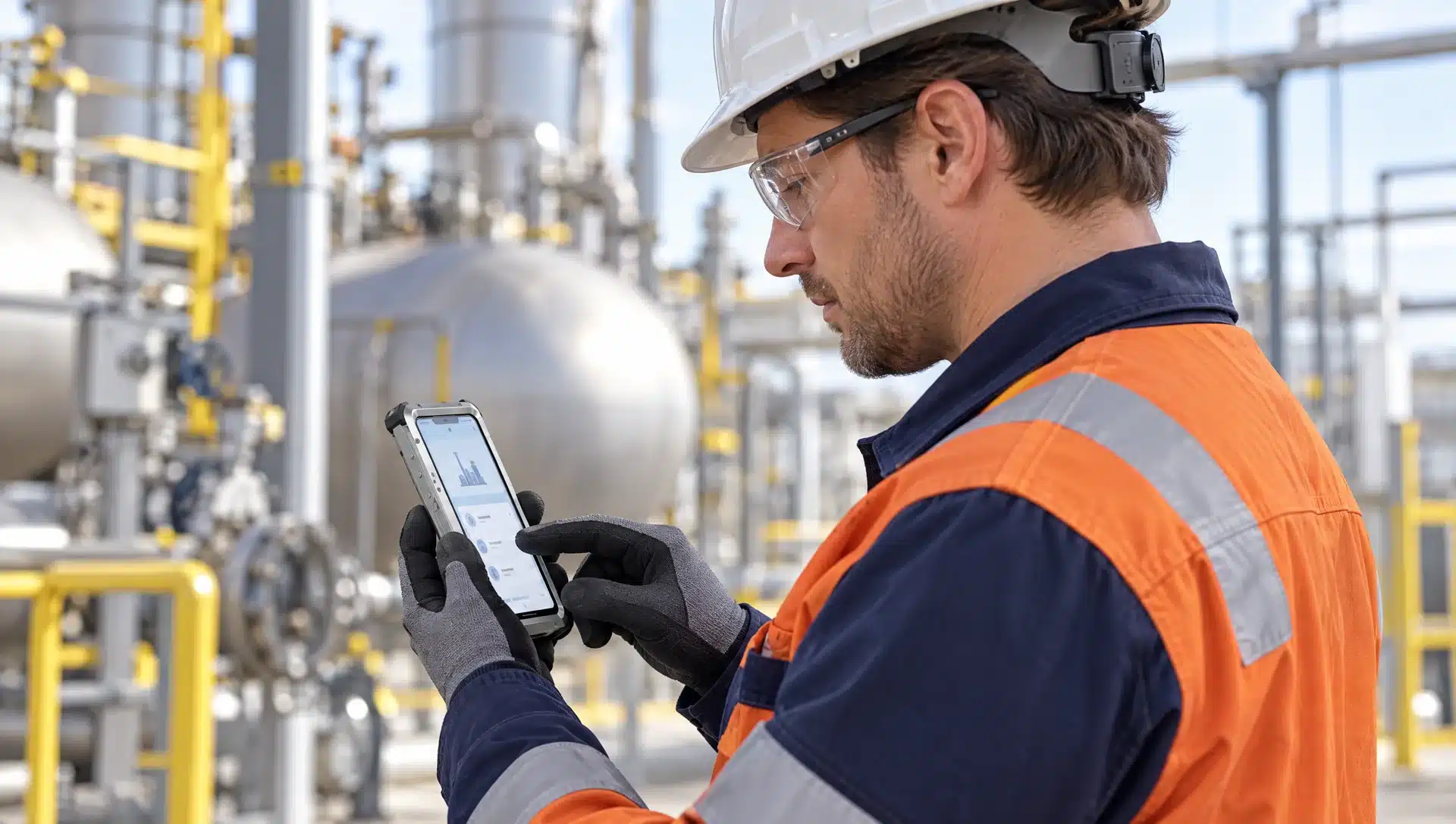
A growing number of industrial operators are abandoning dedicated industrial handsets entirely. Instead, they are pairing flagship consumer smartphones—such as the iPhone 17 Pro Max—with an Atexxo ATEX/IECEx Zone 1/21 certified explosion-proof enclosure.
When comparing this enclosure-based strategy against a purpose-built industrial handset, five specific financial drivers emerge that dramatically reduce your long-term TCO.
1. Eliminating the “two-phone problem”
Legacy industrial handhelds are often clunky, slow, and run unfamiliar, proprietary Android builds. Because they are frustrating to use, field crews frequently refuse to carry them outside the hazardous work units. As a result, enterprises end up issuing two devices per technician: a site-certified IS phone for classified zones, and a standard enterprise smartphone for daily administration and off-site work.
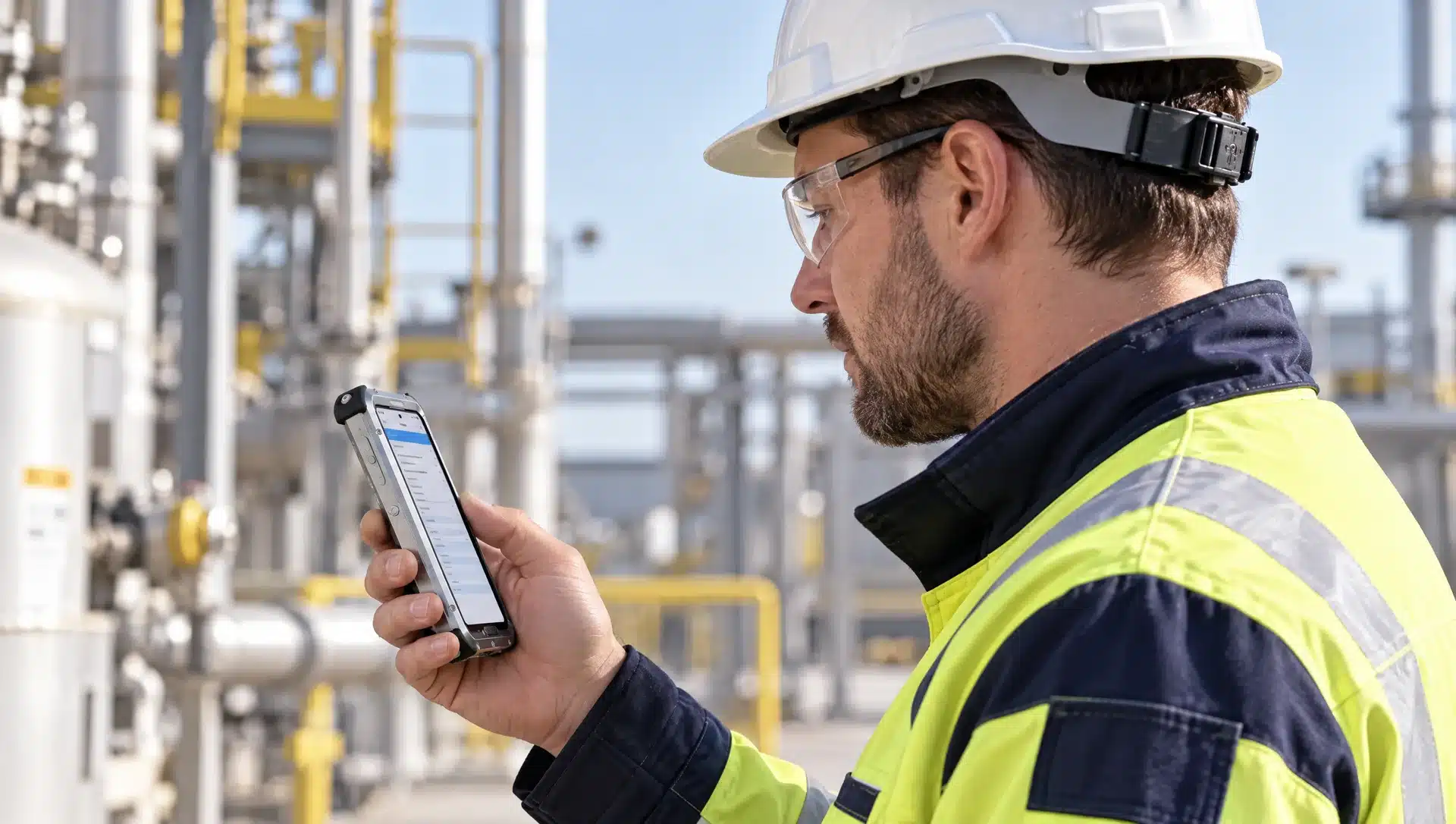
Deploying an Atexxo-certified iPhone provides a single, premium device that workers want to use both inside and outside classified process units. This instantly halves your cellular data plan fees and MDM software seat licenses.
2. Eliminating separate IS camera workarounds
Because dedicated industrial handsets are restricted by strict component certifications, they typically feature low-resolution camera sensors with terrible low-light performance. To take clear inspection photos for maintenance audits, operators frequently spend an extra €1,000 to €1,500 per worker on standalone, intrinsically safe digital cameras.
The iPhone 17 Pro Max features a 48MP primary sensor, optical image stabilization, macro inspection clarity, and an integrated LiDAR scanner. Field teams can capture publication-grade inspection documentation and 3D spatial meshes directly on their primary mobile device, eliminating standalone camera purchases completely.
3. Reduced onboarding and IT helpdesk overhead
Proprietary Android operating systems deployed on niche industrial hardware consistently generate high volumes of IT helpdesk tickets due to app crashes, OS fragmentation, and confusing user interfaces.
iOS is the world’s most intuitive mobile operating system. Your field crews already understand how to use it, and your corporate IT department already possesses automated deployment pipelines (like Apple Business Manager, Jamf, or Microsoft Intune). Onboarding time drops to near zero, and IT administrative overhead falls significantly.
4. Modular hardware replacement cycles
When a dedicated industrial phone suffers severe screen damage or reaches software end-of-life (EOL) after two to three years, the entire unit must be decommissioned and replaced at full cost.
Apple guarantees software security updates for six to eight years, dramatically outlasting dedicated industrial hardware. Furthermore, the Atexxo architecture is completely modular. If the enclosure suffers severe physical damage during a heavy drop, you only need to replace the protective housing—not the €1,500 smartphone inside it.
5. Recapturing end-of-life residual value
Dedicated industrial handhelds carry virtually zero resale or trade-in value at the end of their operational lifecycle. They end up recycled or stored in office drawers as expensive electronic waste.
Premium Apple smartphones, however, retain 30% to 40% of their initial purchase value even after three years of enterprise use. Because Atexxo enclosures are non-destructive and fully removable, enterprise IT teams can uncase the iPhones at hardware refresh intervals, wipe the devices, and sell them back into the secondary market. This allows facilities to recapture tens of thousands of euros per fleet, radically offsetting the cost of their next deployment.
Sticker price versus true lifecycle value
Focusing exclusively on the initial purchase price leads to hidden cost inflation that compounds every single year across your fleet.
By combining the world’s most powerful consumer hardware platform with precision-engineered Zone 1 and Zone 21 explosion-proof protection, Atexxo delivers uncompromised field performance, immediate worker adoption, and the lowest verifiable total cost of ownership in the hazardous area market.