

An industrial inspection report is only as reliable as the visual evidence that supports it. A blurry, poorly lit photograph of a degrading asset provides almost zero actionable insight for a maintenance planner. In contrast, a crystal-clear, high-resolution macro shot allows offsite engineers to instantly diagnose the severity of a defect, order the correct replacement parts, and schedule repairs without ever needing to dispatch a second verification team.
In modern hazardous environments, capturing high-quality visual data is no longer a supplementary luxury—it is a critical operational baseline. At Atexxo Manufacturing, we regularly see facilities struggle with the limitations of outdated inspection hardware. Here is why upgrading to modern, ATEX-certified computational photography is transforming how industrial integrity is managed.
Eliminating subjective guesswork in the field
A massive amount of critical information gets lost in translation between the field technician executing the inspection and the reliability engineer analyzing the report. Written descriptions are inherently subjective. What one operator logs as “minor surface discoloration” might be flagged by a senior engineer as a “critical structural wall-loss risk.”
High-resolution photography bridges this communication gap by creating an objective, unvarnished audit trail:
- Zero opinion: a photograph records the exact physical state of a seal, weld, or bolt at a specific moment in time, establishing a factual baseline.
- Decisive action: offsite planners can analyze the physical condition remotely, reducing the time between defect discovery and repair execution.
- Audit readiness: pulling up time-stamped, high-resolution imagery during regulatory safety audits demonstrates strict compliance far more effectively than handwritten logs.
The hardware specs that actually matter
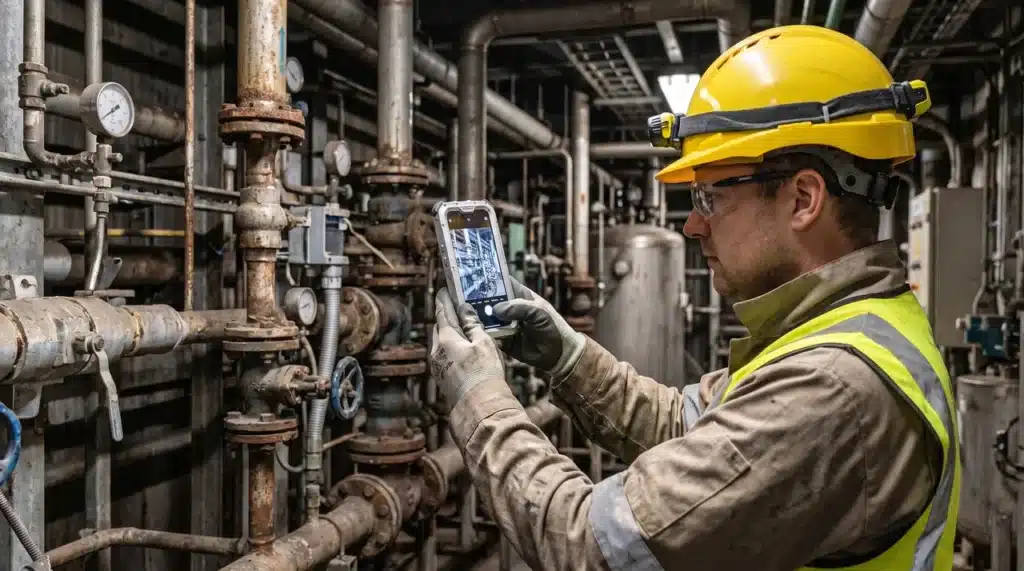
Making critical engineering decisions based on a photograph requires hardware that can resolve tiny physical details under the most difficult site conditions. Industrial environments are notoriously dark, cramped, and vibrating.
To capture usable data, inspectors rely on specific optical features:
- Large sensors and high resolution (48MP): high pixel counts allow engineers to digitally zoom into specific regions of a photo without losing edge definition, while larger sensors absorb more light to reduce digital noise.
- Computational low-light processing: process units often feature extreme lighting contrast. Advanced night modes and smart HDR combine multiple exposures to illuminate pitch-black tank interiors without blowing out the highlights of localized work lamps.
- True optical zoom: digital zoom merely stretches pixels, introducing artifacts. True optical zoom (like a 4x or 8x lens) physically magnifies the image, allowing workers to inspect high-pressure lines or overhead cable trays safely from a distance.
- Sensor-shift image stabilization: offshore platforms and compressor stations suffer from constant structural vibration. Optical image stabilization (OIS) counteracts hand tremors and deck shaking, preventing motion blur.
- Precision macro focusing: inspecting thread engagement or hairline cracks on a gasket seat requires a lens capable of focusing just centimeters away from the asset.
The smart device advantage over legacy cameras
Historically, safety managers faced a frustrating compromise: procure a certified camera that was legally safe for Zone 1, but endure clunky, outdated technology that produced poor images.
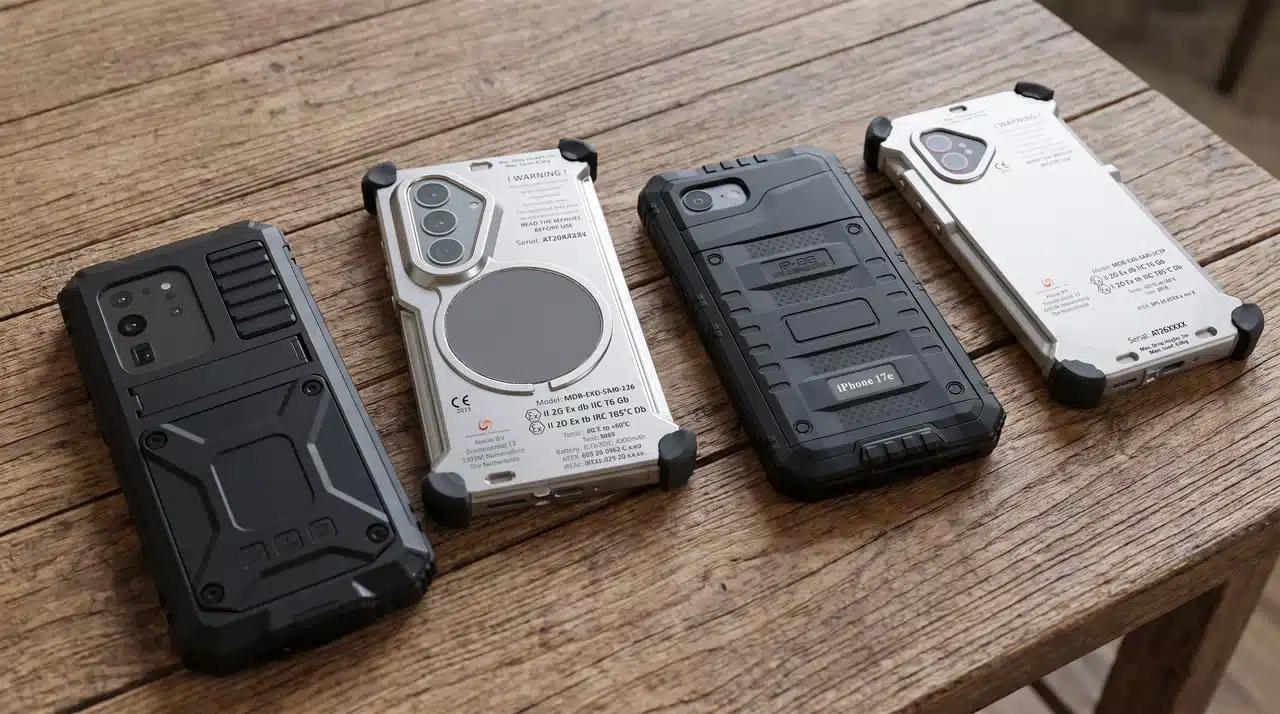
By engineering precision explosion-proof enclosures around modern flagship smartphones—such as the Apple iPhone 17 Pro Max—Atexxo completely eliminates this trade-off.
Use the interactive tool below to compare the operational impact of deploying a legacy dedicated camera versus an Atexxo-converted smart device in a classified zone:
Connecting the field directly to the enterprise
A perfect photograph loses its operational value if it sits isolated on a memory card for two weeks. Connected mobile devices bridge the gap between the field and the office instantly.
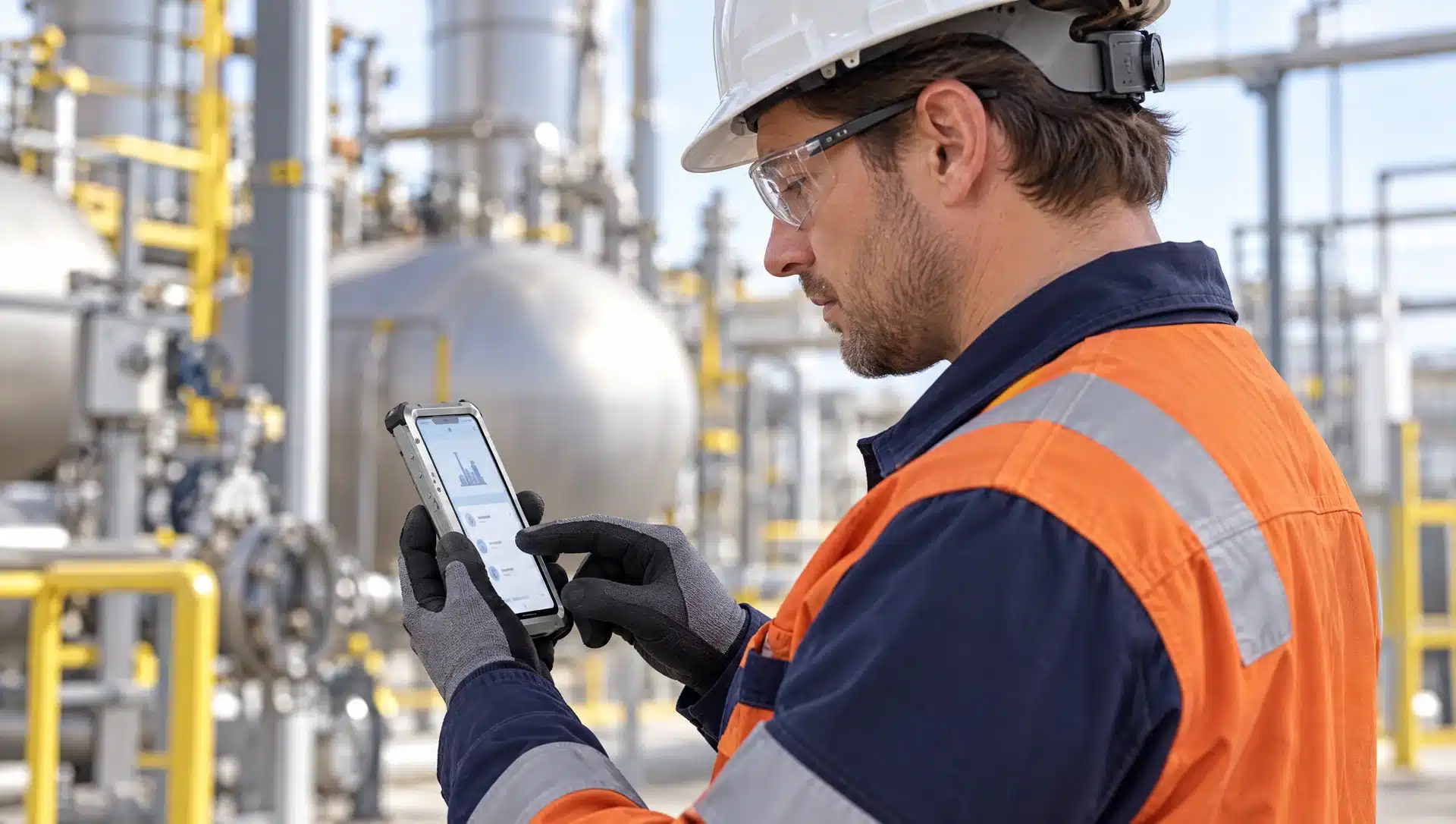
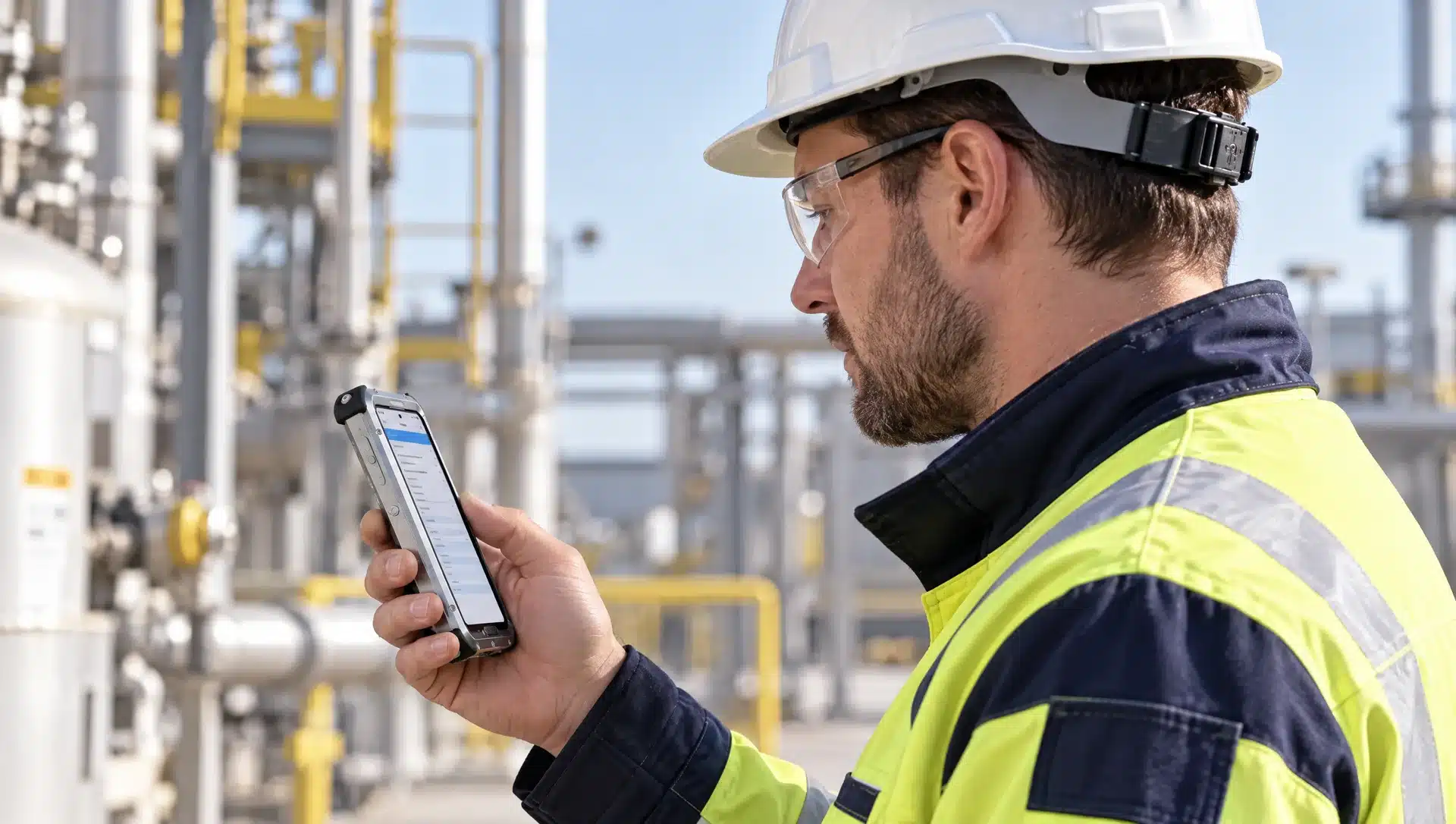
Because an ATEX-certified iPhone operates on native iOS, technicians can use enterprise apps (like SAP, IBM Maximo, or specialized CMMS platforms) directly in the field. They can snap a 48MP photo, let the device automatically embed the precise GPS coordinates and timestamp, and attach it directly to a work order while still standing in front of the machine. Utilizing site Wi-Fi or 5G, this data syncs to secure corporate servers instantly, completely eliminating administrative drag and manual USB transfers.
Frequently asked questions
Can I use a standard consumer smartphone for inspection photography in an oil refinery?
No. A standard consumer phone is not certified for use in volatile gas or dust atmospheres. Bringing an uncased smartphone into a classified area violates safety regulations and introduces severe ignition risks. It must be permanently housed inside a certified explosion-proof enclosure rated for Zone 1 or Zone 2.
Does an explosion-proof case degrade the camera quality or optical clarity?
No. High-quality Atexxo enclosures are engineered with optical-grade lens ports made of high-clarity materials. This ensures that the device’s 48MP image resolution, flash functionality, and color accuracy remain completely uninhibited.
Does the protective enclosure interfere with LiDAR sensors or autofocus?
No. Certified explosion-proof cases undergo rigorous testing to ensure that LiDAR sensors project their laser pulses accurately and that autofocus locking operates instantly without any internal reflection interference.