

When an industrial accident or near-miss occurs in a hazardous environment, the initial response is understandably focused on containment and personnel safety. However, once the immediate danger has passed, a rapidly closing window of opportunity opens. The first twenty minutes of visual documentation will largely dictate the success of the ensuing root cause analysis, insurance claims, and regulatory audits.
Conditions at an incident scene degrade rapidly. Weather washes away chemical residue, recovery teams move critical equipment, and the crucial “as found” state of safety valves and control panels can be altered in an instant.
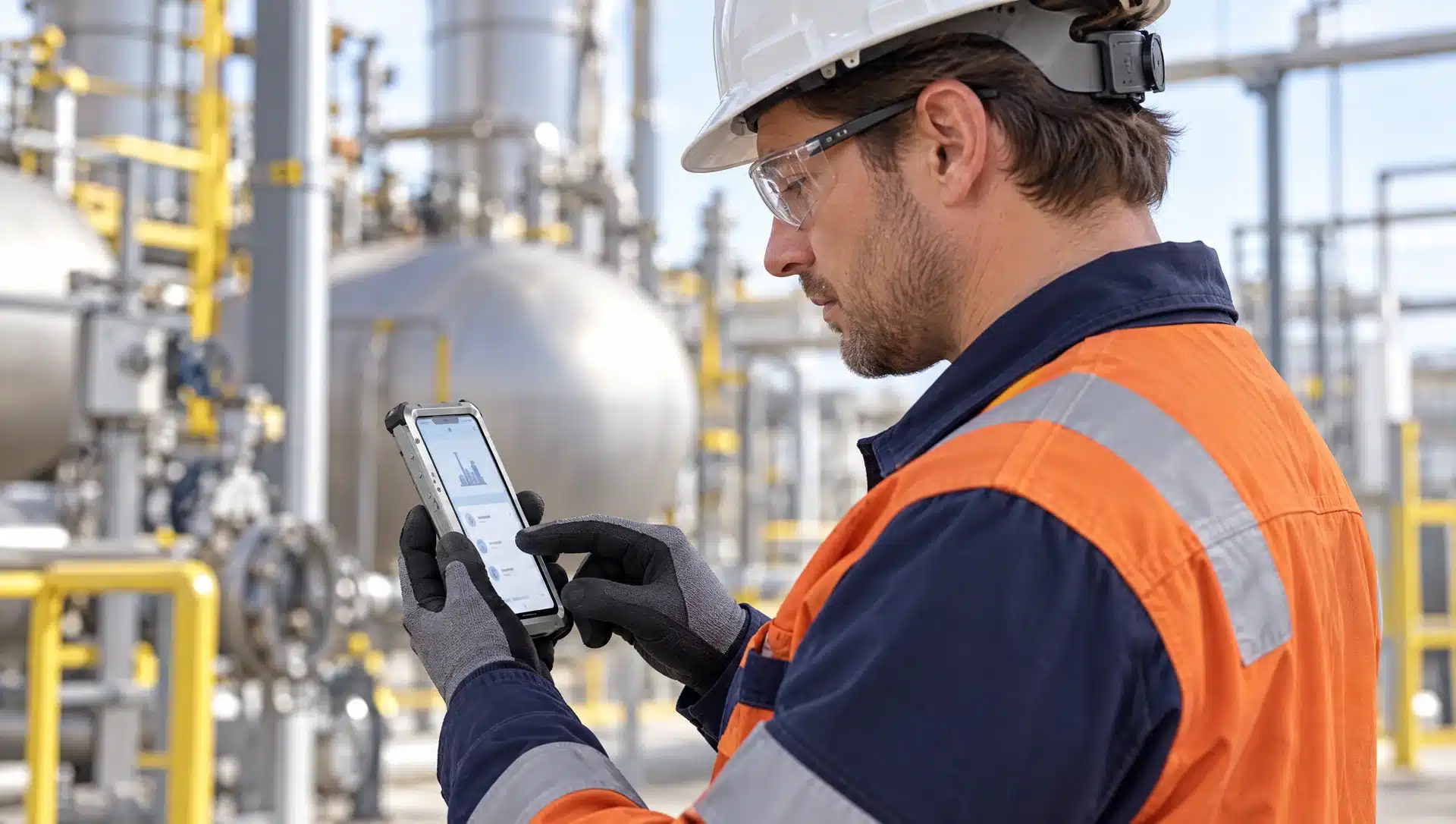
Because professional forensic teams are rarely on-site when an incident occurs, evidence collection usually falls to the nearest field technician. As specialists in ATEX-certified mobile hardware, Atexxo Manufacturing understands that equipping these first responders with the right technology is the only way to guarantee a reliable, legally defensible record of events.
The legal and financial weight of photographic evidence
Modern safety frameworks and energy sector insurance underwriters no longer view post-incident photography as an optional supplementary task. It is a mandatory foundation of the investigation.
If a regulatory auditor or insurance adjuster encounters an evidentiary gap—such as a missing photo of a ruptured seal, or a blurry image where gauge readings are illegible—the entire sequence of events can be contested. Without high-resolution, time-stamped proof of the scene’s exact state before disturbance, facilities leave themselves exposed to prolonged arbitration and denied claims.
A systematic approach to scene documentation
First responders are operating under immense adrenaline and stress. Without a structured methodology, it is easy to take a dozen close-up photos of a broken pipe while completely forgetting to document the surrounding environment.
To build a comprehensive visual narrative, technicians should be trained to follow this specific four-step photographic sequence:
| Priority step | Shot type | What to focus on | Purpose |
| Step 1 | Establishing shots (wide) | The full scene from multiple opposing angles | Provides spatial context and structural relationships before anything is moved. |
| Step 2 | Contextual framing (medium) | Equipment in relation to piping, valving, and the floor | Captures the “as found” states, clearly showing if valves were open or closed. |
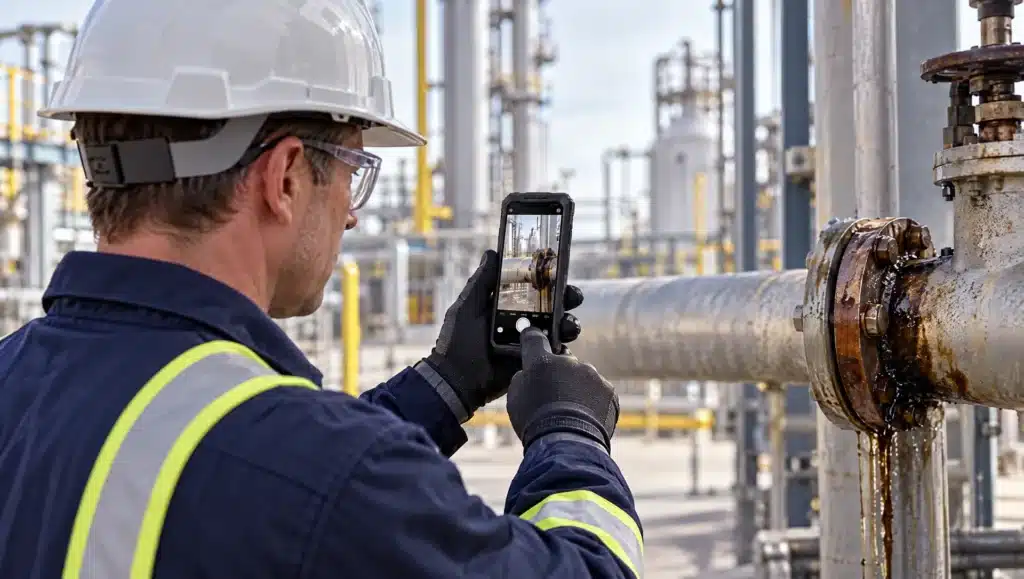
| Step 3 | Detail capture (close-up) | Serial numbers, seal faces, thread engagement, and stress cracks | Delivers the high-resolution technical evidence required by forensic engineers. |
| Step 4 | Human factors (peripheral) | Surrounding safety gear, missing tools, and worker PPE | Documents compliance and potential environmental or human-error variables. |
Technical capabilities your camera actually needs
Capturing usable forensic photos in a complex refinery or offshore module is highly demanding on camera hardware. A standard industrial point-and-shoot often fails when subjected to the dynamic lighting and physical constraints of a real incident. To capture undeniable evidence, your hardware must feature:
- Advanced low-light processing: incident scenes are often poorly lit. You need computational photography engines that can resolve details in dark pump houses without relying on harsh flashes that reflect blindly off stainless steel.
- True optical zoom: damaged pressure vessels or leaking lines often cannot be safely approached. High-ratio optical zoom allows technicians to capture crisp details from behind a safe perimeter without pixelating the image.
- Precision macro focus: identifying whether a mechanical failure was caused by a compression groove or a micro-crack requires sharp focusing within mere centimeters of the component.
- Dynamic video capture: still photos cannot document vibrating structural supports, the sound of failing pressure valves, or the trajectory of vapor plumes. Video provides vital atmospheric context.
Defending your data: the chain of custody
A perfectly composed photograph is useless in arbitration if opposing counsel can question its authenticity. Taking incident photos on unmanaged, personal smartphones and sending them via consumer messaging apps breaks the chain of custody, opening the door to accusations of file tampering.
Enterprise-managed mobile solutions eliminate this risk by embedding immutable metadata directly into the file. GPS coordinates and precise timestamps are locked into the image. Furthermore, through mobile device management (MDM) software, images can be instantly synced to encrypted corporate servers the moment they are captured, ensuring the original file cannot be altered or deleted by the user.
Empowering first responders with familiar tools
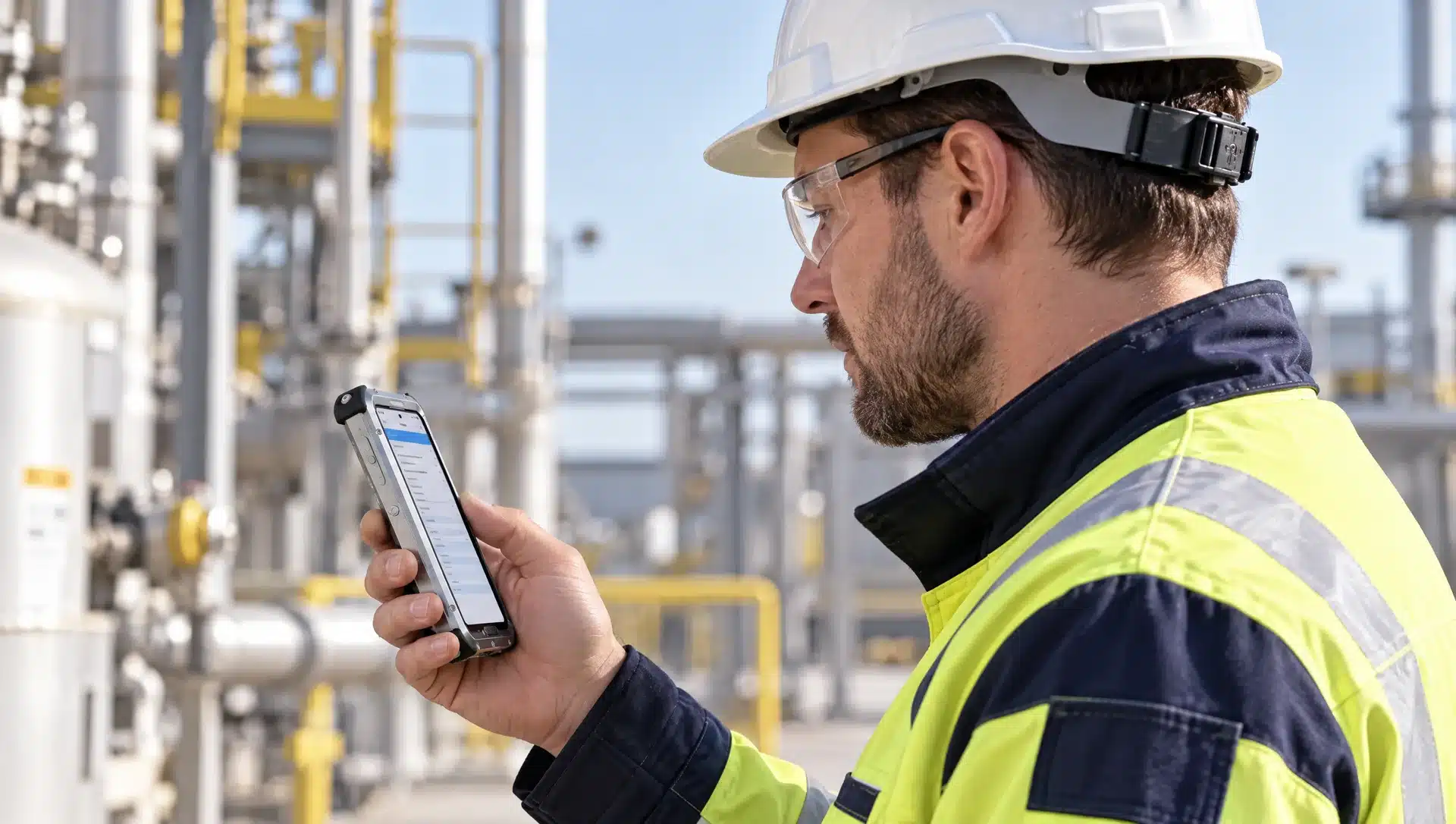
In the chaotic aftermath of an incident, a technician does not have the time to figure out the clunky interface of an unfamiliar, dedicated industrial camera. They need a device that is intuitive, pocketable, and immediately accessible.
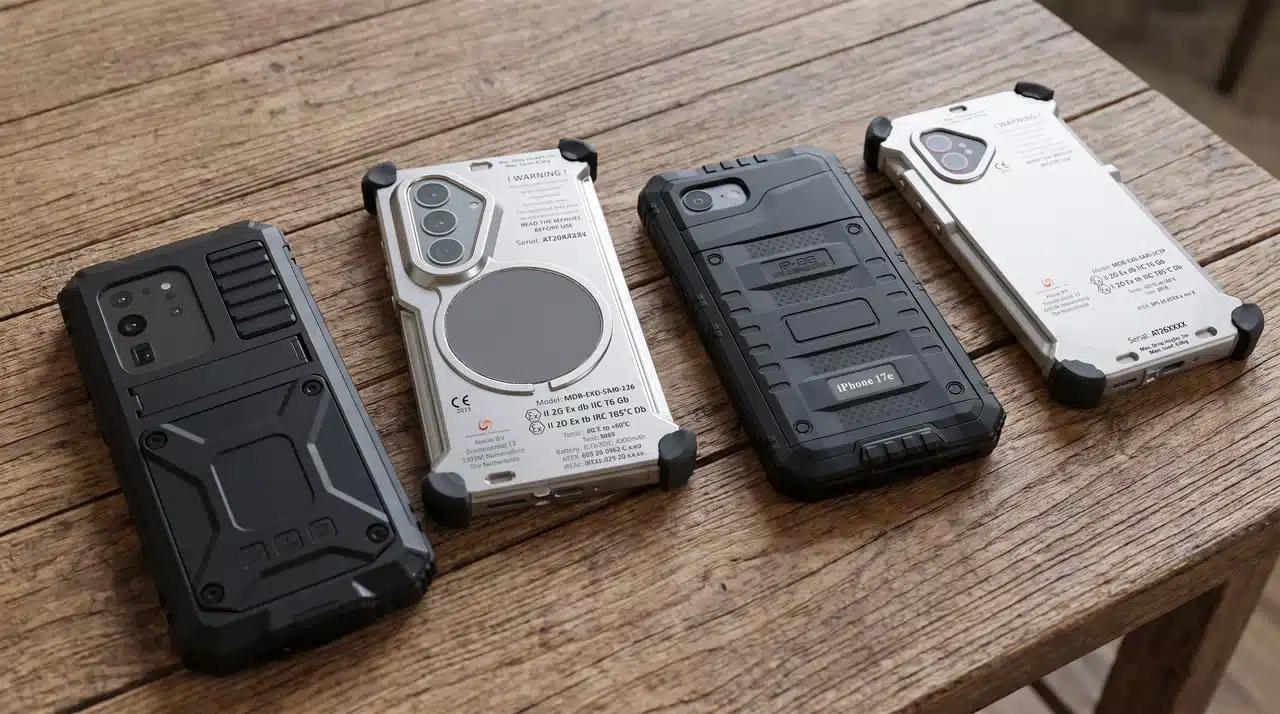
This is where converted smart devices excel. By housing top-tier consumer technology—such as the advanced camera system of the ex-proof iPhone 17 Pro Max—inside a certified Atexxo explosion-proof enclosure, you provide your workers with familiar, cutting-edge tools. They gain access to 48-megapixel sensors, 8x optical zoom, and seamless enterprise syncing, all while maintaining absolute compliance with ATEX and IECEx Zone 1 and Zone 2 safety standards.
Frequently asked questions
What is the correct sequence for taking photos at an incident scene?
Always start wide with establishing shots to capture the overall layout. Next, take medium contextual shots showing how equipment relates to its surroundings (including valve positions). Then, move to macro close-ups of specific damage and serial numbers. Finally, document peripheral details like discarded tools or PPE.
Why are photos from unmanaged personal phones often rejected in insurance claims?
Photos from unmanaged devices lack verifiable chain-of-custody controls. Without automated MDM syncing, encrypted cloud storage, and unaltered metadata (such as locked GPS location and time-stamping), insurance adjusters or legal teams can easily dispute the file’s authenticity and timeline.
Can I use a standard flagship smartphone to document an incident in a Zone 1 area?
No. Bringing an un-cased consumer smartphone into an ATEX or IECEx classified area violates strict plant safety regulations and introduces severe ignition risks. The phone must be permanently sealed within a certified explosion-proof enclosure that has been rigorously tested to contain thermal and electrical energy.
How does your facility currently ensure that incident photos are instantly secured and synced to your central servers before a device leaves the hazardous zone?