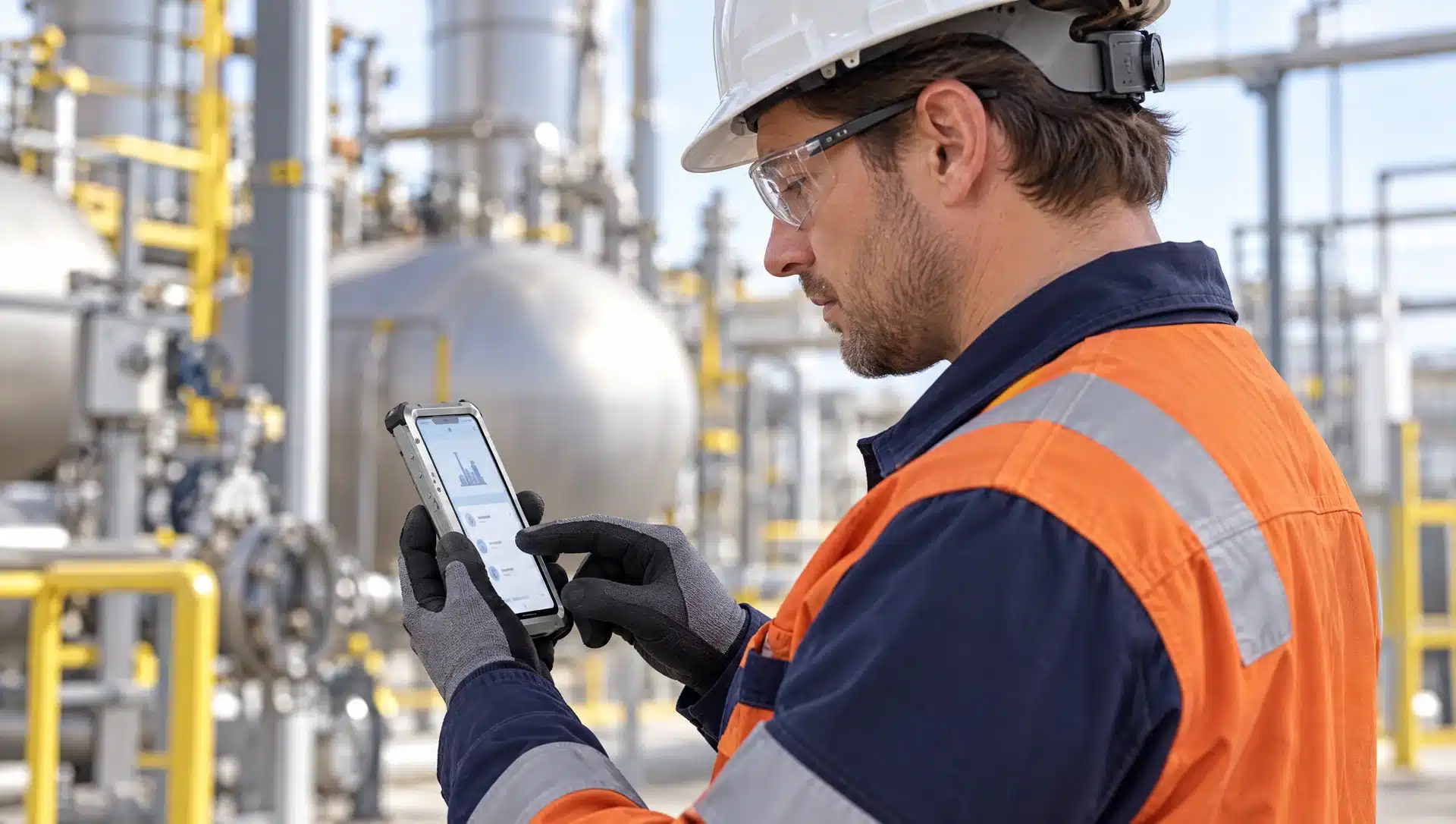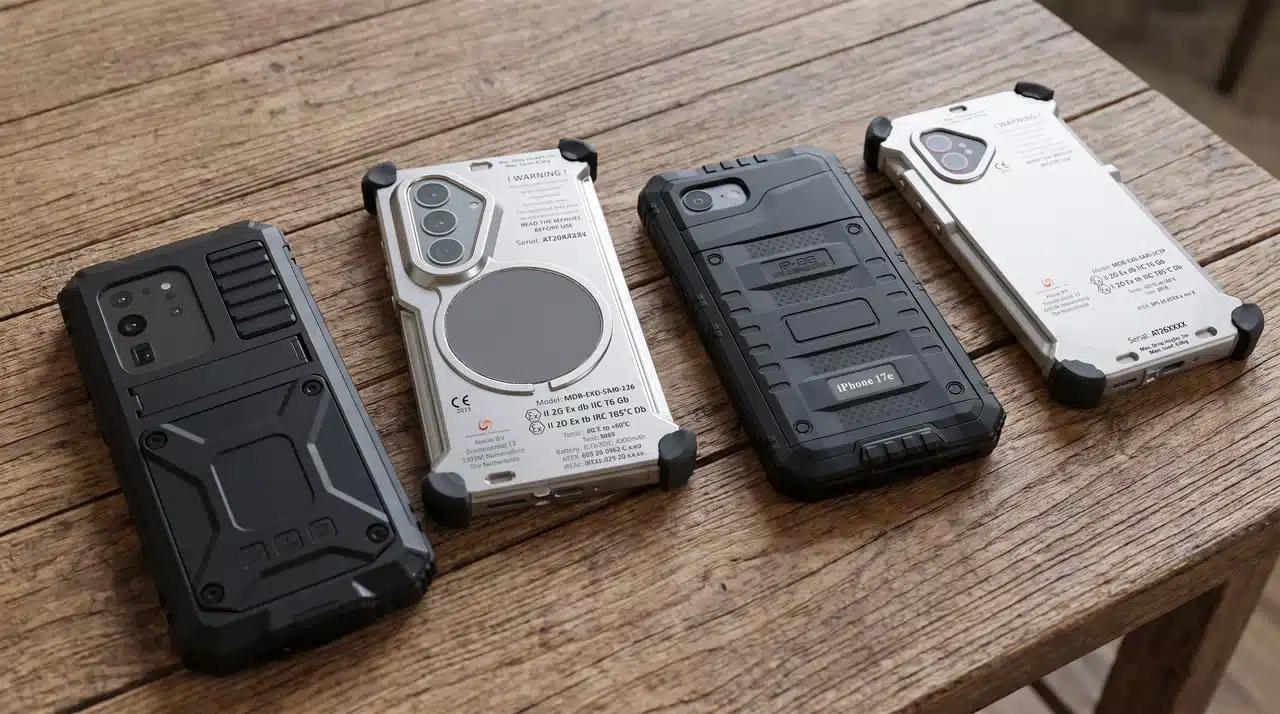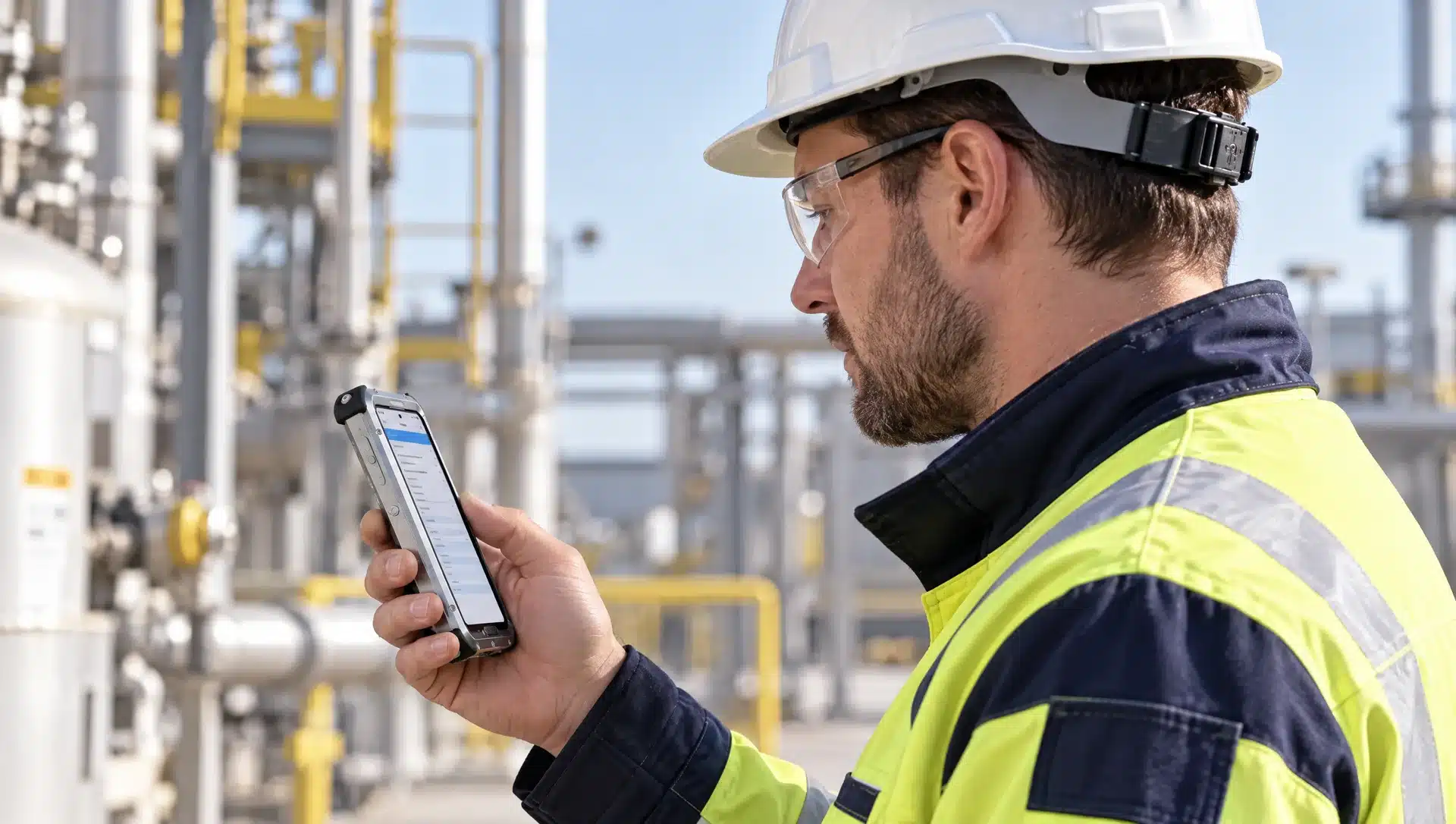


Deploying Apple iPhones into ATEX Zone 1 and Zone 21 hazardous processing environments requires precision-engineered explosion protection to eliminate electrical, thermal, and mechanical ignition hazards. At Atexxo Manufacturing, we convert flagship smart devices into certified, non-destructive Ex housings that preserve native iOS functionality while guaranteeing site compliance.
| Feature | Engineering specification | Operational & safety benefit |
| Zone 1/21 certification | ATEX II 2G Ex db IIC T4 Gb / II 2D Ex tb IIIC T135°C Db | Certified for explosive gas (Group IIC Hydrogen) and dust (Group IIIC) |
| Ex d flameproof housing | Aircraft-grade aluminum & precision optical glass | Contains internal pressure events without sacrificing camera optics |
| Environmental sealing | IP68 & IP69K dual ingress ratings | 100% dust-tight barrier with high-pressure steam/water protection |
| Passive thermal sink | Direct aluminum chassis thermal dissipation | Surface temp stays below T4 (135°C), preventing thermal runaway |
| Military shock rating | Exceeds MIL-STD-810H (26 drops at 1.2m) | Prevents structural housing fracture on steel decks and concrete |
| Electrostatic safety | Anti-static surface treatment (< 10⁹ Ω) | Dissipates static build-up, eliminating ESD spark hazards |
| Industrial ergonomics | PPE glove-friendly buttons & lanyard loops | Maintains full touch response and hands-free climbing agility |
1. Dual ATEX and IECEx Zone 1/21 certification (EPL Gb & Db)
A certified Zone 1 iPhone enclosure must hold official Equipment Protection Levels (EPL) validated by an independent Notified Body:
- Gas safety (EPL Gb / Ex db IIC T4): High-level flameproof containment approved for flammable gases, mists, and vapors—including Group IIC Hydrogen atmospheres.
- Dust safety (EPL Db / Ex tb IIIC T135°C):Dust-ignition protection sealing the chassis against conductive combustible dusts like magnesium or aluminum particles.
Selecting an enclosure carrying dual ATEX (European legal mandate) and IECEx (global harmonized scheme) certification ensures enterprise fleets can deploy across facilities worldwide under a single regulatory baseline.
2. Non-destructive aircraft aluminum construction
Containing internal lithium battery fault energy without modifying the internal iPhone requires precision-engineered housing materials:
- Aircraft-grade aluminum: Forms a pressure-resistant Ex db flameproof shell that absorbs physical impacts and dissipates internal heat.
- Anti-reflective optical glass: Positioned over camera lenses and LiDAR sensors to preserve 48MP resolution and 4K video recording without optical distortion.
- Hermetic elastomeric gaskets: Isolates the internal smartphone from corrosive plant vapors, salt spray, and chemical mists.
3. High-level environmental sealing: IP68 and IP69K
Plant washdowns, sea spray, and fine particulates require multi-tiered ingress barriers:
- IP68 rating: Guarantees 100% dust isolation and continuous water submersion beyond 1 meter.
- IP69K rating: Protects against extreme high-pressure, high-temperature steam washdowns (up to 100 bar at 80°C), ensuring seals remain intact during intensive facility cleaning.
4. Passive thermal management and surface heat capping
Running high-load iOS software—such as live 4K video streams, LiDAR spatial mesh scanning, or local AI processing—generates substantial internal processor heat.
- T4 temperature class capping: Enclosure heat sinks pull thermal energy away from the battery and A-series chip, keeping external surface temperatures well below the T4 threshold of 135°C.
- Performance preservation: Preventing heat accumulation keeps the iPhone operating at native clock speeds without triggering CPU thermal throttling or blackouts in direct sunlight.
5. Military-grade impact absorption (MIL-STD-810H)
A dropped smartphone inside a chemical plant isn’t just an equipment loss—a cracked housing invalidates its explosion protection, creating an immediate ignition risk.
- 26-drop concrete test: Enclosures must survive multi-angle drops onto concrete from 1.2 meters (4 feet) while maintaining structural flame-path integrity.
- Vibration resistance: Resists continuous high-frequency vibration when mounted or carried near heavy industrial pumps, compressors, and turbines.
6. Electrostatic discharge (ESD) safety
Friction between synthetic protective cases and operator work-suits can accumulate high-voltage static charges. A sudden discharge to a grounded steel pipe can trigger an explosion in volatile gas environments.
- Anti-static surface treatment: Surface resistivity is maintained below 10⁹ Ω (1 Gigaohm).
- Safe charge dissipation: Static charges bleed off continuously into the surrounding air, eliminating spark-capable energy accumulation.
7. Glove-friendly ergonomics and PPE compatibility
Protective cases must enhance, rather than hinder, daily worker productivity:
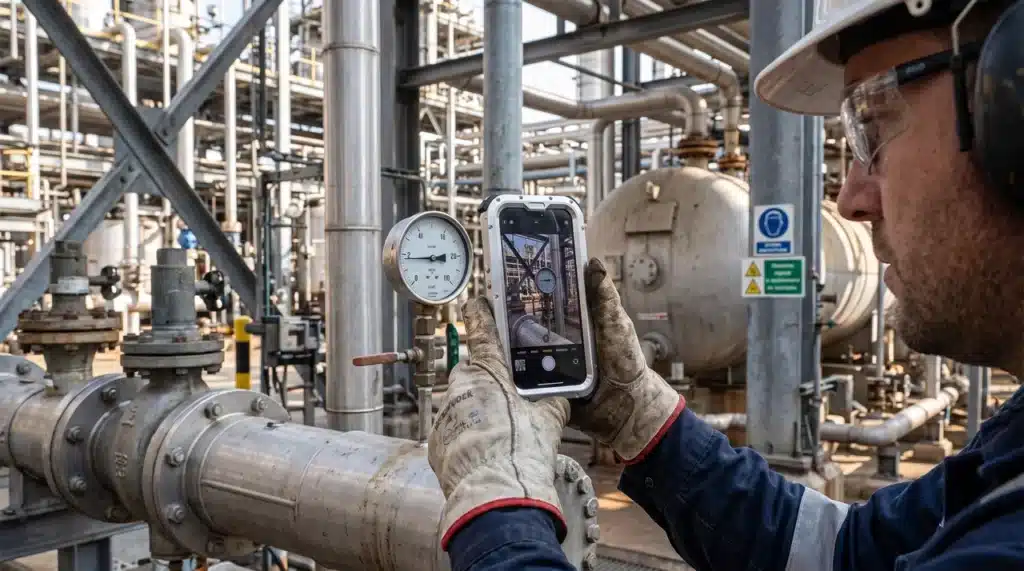
- Tactile button actuators: Enlarged physical button covers allow field teams to navigate iOS controls, take camera shots, and activate the Action Button while wearing heavy work gloves.
- Tethering points: Integrated lanyard loops allow personnel to secure the terminal to a harness when climbing ladders or working at height.
- Wireless charging preservation: Supports Qi2 and MagSafe wireless charging, enabling technicians to recharge devices in safe zones without breaking physical seals.
Frequently asked questions
What is the practical difference between an IP68 rating and an Ex Zone 1 certification?
An IP68 rating verifies dust and water ingress protection. It provides zero testing for electrical spark containment, thermal surface heat caps, or explosion safety. An Ex Zone 1 certification (ATEX/IECEx) confirms that the device will not ignite surrounding flammable gas or dust atmospheres.
Can an Atexxo Zone 1 certified iPhone enclosure be used in Zone 2 areas?
Yes. Hardware certified for high-risk Zone 1 (EPL Gb) environments provides superior protection and is legally approved for use in lower-risk Zone 2 (EPL Gc) areas under ATEX and IECEx rules.
Why is electrostatic discharge (ESD) safety crucial for Zone 1 iPhone cases?
Friction between synthetic materials and work-suits can generate static voltages. In classified gas atmospheres (like Hydrogen or Ethylene), a static spark jumping to a metal structure can cause an ignition. Certified cases use anti-static surface treatments (< 10⁹ Ω) to dissipate static safely.