

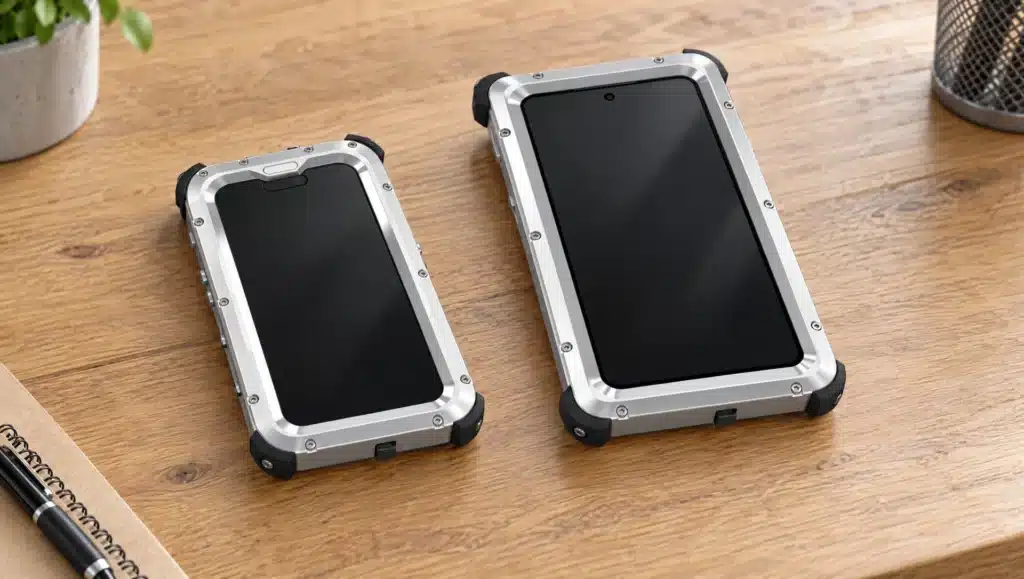
In high-consequence process facilities—such as oil refineries, chemical plants, offshore platforms, and pharmaceutical complexes—enterprises must balance physical explosion safety against digital security, deployment speed, and software update lifecycles.
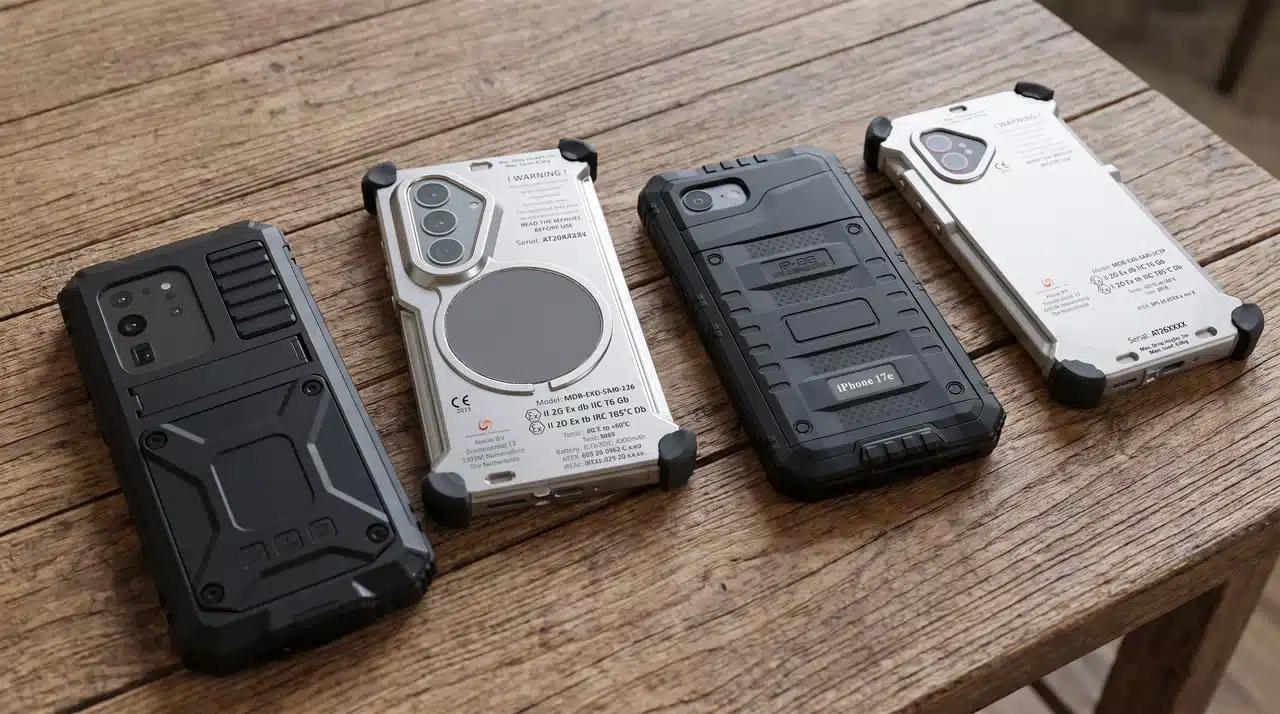
At Atexxo Manufacturing, we engineer certified explosion-proof conversions for both iOS and Android hardware. While many enterprise IT departments lean toward iOS for fleet standardization, both operating systems offer distinct advantages depending on your facility’s existing software infrastructure and field requirements.
Comparing iOS and Android in hazardous industrial deployments
| Evaluation criteria | Apple iOS (in Atexxo Ex-case) | Industrial & Enterprise Android |
| Security architecture | Standardized Secure Enclave across all devices | Hardware security varies by OEM (Knox, Titan, TEE) |
| Application ecosystem | Closed ecosystem; centralized App Store & VPP | Flexible ecosystem; supports custom APKs and sideloading |
| Patch distribution | Direct, simultaneous zero-day patches for 6–8 years | Varies by OEM and chipset; 3 to 7 years depending on model |
| Fleet deployment | Apple Business Manager (ABM) zero-touch | Android Enterprise Zero-Touch enrollment |
| Hardware form factors | Sleek touch-screen flagship smartphones | Diverse form factors (physical keypads, built-in scan engines) |
| Asset residual value | High (captures up to 50% value upon extraction) | Dependent on model and secondary market demand |
Balancing security architectures across mobile fleets
As industrial facilities face growing cybersecurity threats at the operational technology (OT) edge, mobile endpoints operating inside process units must maintain rigorous digital security.
- The iOS approach (standardization):Apple enforces a uniform security baseline across all devices.The hardware-isolated Secure Enclave handles cryptographic keys and biometric authentication (Face ID) locally on chip, isolated from the primary CPU.Because Apple controls both hardware and software, security patches are delivered directly to all supported devices simultaneously.This predictable update cadence simplifies compliance audits for safety officers.
- The Android approach (flexibility): Enterprise-grade Android devices utilize robust security suites like Samsung Knox or Google Titan. Android’s primary operational strength lies in its flexibility. It allows organizations to deploy custom internal applications via direct APK installation without publishing through public app stores. For facilities relying on proprietary, legacy enterprise software, Android provides the open environment required to run specialized industrial tools.
Zero-touch fleet management and enterprise MDM
Deploying mobile hardware across remote offshore platforms or large chemical complexes demands seamless administrative control. Both operating systems integrate directly into enterprise Mobile Device Management (MDM) platforms like Microsoft Intune, Jamf, and SOTI.
Using Apple Business Manager (ABM) for iOS or Android Enterprise Zero-Touch for Android, IT departments can ship pre-configured devices directly to site technicians. The moment a device connects to Wi-Fi or cellular networks, the system automatically provisions security policies, enterprise network certificates, and approved work applications over the air.
Furthermore, both platforms allow IT security teams to enforce remote wipe commands if a device is lost or compromised, ensuring that sensitive plant data and network credentials remain completely protected.
Matching the operating system to your workforce workflows
Rather than declaring a single winner, modern industrial facilities choose the platform that aligns with their specific operational workflows:
- When iOS excels: Enterprise teams standardizing on iOS benefit from zero workforce training curves, as most employees already use Apple devices in their personal lives. Features like AirDrop allow field technicians to share high-resolution photos or spatial LiDAR scans directly with colleagues on site without needing internet connectivity.
- When Android excels: Android is the ideal choice for operations requiring specialized industrial hardware configurations—such as physical numeric keypads for workers wearing heavy Arctic gloves, or built-in hardware barcode engines for high-frequency inventory scanning.
At Atexxo Manufacturing, we supply certified Zone 1 and Zone 2 explosion-proof solutions for both ecosystems, ensuring your field workforce gets flagship hardware performance without compromising on ATEX or IECEx physical safety.
Frequently asked questions
Does Atexxo Manufacturing offer ATEX-certified Android smartphones?
Yes. Atexxo Manufacturing engineers certified explosion-proof conversions for both Android devices and flagship Apple iPhones, allowing enterprise IT teams to maintain their preferred operating system across Zone 1 and Zone 2 hazardous areas.
Why do many IT security teams prefer iOS for fleet standardization?
IT teams often favor iOS due to its standardized hardware-backed security (Secure Enclave) across all models, predictable monthly OS patch delivery directly from Apple, and unified zero-touch deployment via Apple Business Manager.
Can industrial Android smartphones meet strict enterprise cybersecurity standards?
Yes. Modern enterprise-grade Android devices equipped with hardware security chips (such as Samsung Knox or Google Titan) offer robust security. When paired with Android Enterprise MDM management, Android devices provide high digital protection alongside flexible app execution.