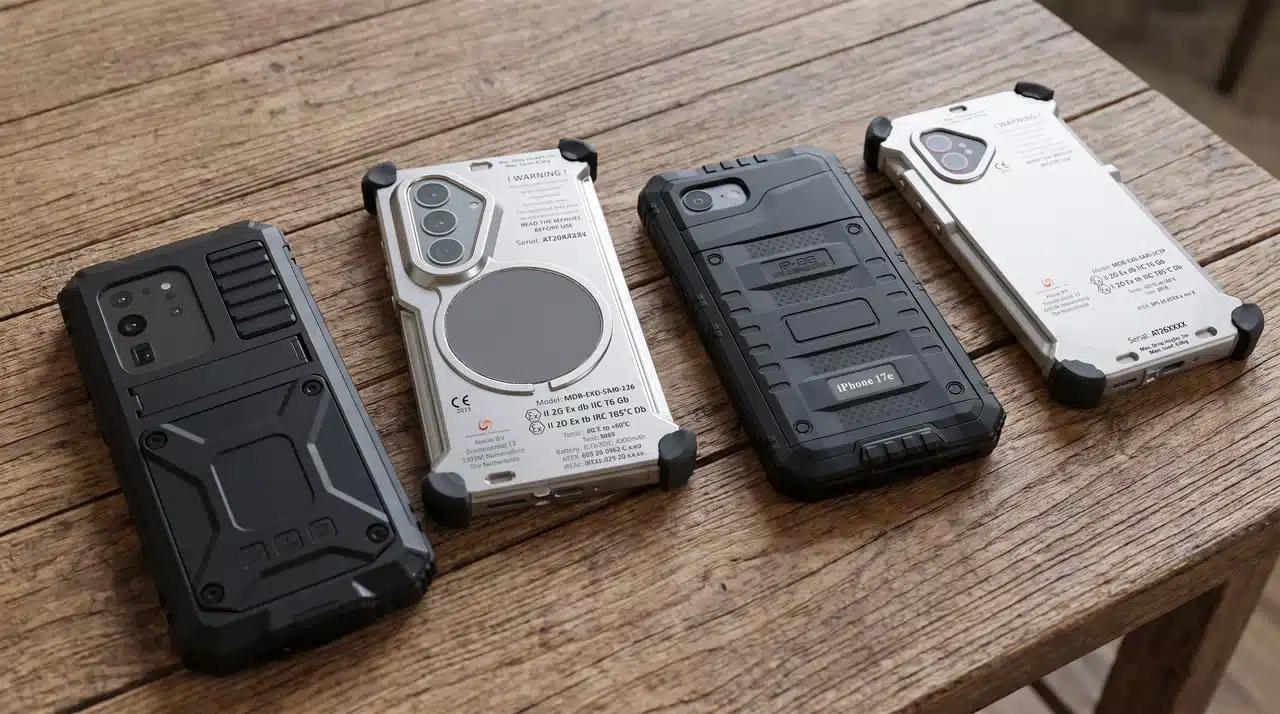


Pharmaceutical facilities operate under a unique paradox. The highly controlled environments where operators desperately need real-time data—such as solvent handling zones, granulation rooms, and active pharmaceutical ingredient (API) synthesis suites—are the exact places where standard commercial electronics are strictly prohibited. Flammable vapors and combustible dusts create severe ignition hazards, forcing many facilities to rely on outdated, error-prone paper workflows.
At Atexxo Manufacturing, we bridge this operational gap by engineering intrinsically safe, explosion-proof mobile hardware. Here is how deploying certified smart devices directly onto the cleanroom floor is revolutionizing pharmaceutical compliance, hygiene, and efficiency.
Eradicating manual transcription errors with electronic batch records
In pharmaceutical manufacturing, the transition to electronic batch manufacturing records (eBMR) is arguably the most powerful use case for mobile hardware. Regulatory frameworks legally mandate that every material weight, processing temperature, and operator validation is meticulously recorded.
When facilities rely on paper binders, transcription error rates can soar as high as 50%. A simple human error—like writing 4.5 kg instead of 45 kg—triggers exhaustive quality investigations, potential batch rejections, and dozens of hours of deviation reporting.
By equipping cleanroom technicians with intrinsically safe smartphones connected to enterprise networks, facilities completely eliminate manual data entry. Measurements from Bluetooth scales and inline sensors populate the eBMR automatically. The software strictly enforces the operational sequence, preventing a technician from proceeding to the next manufacturing step until the previous one is digitally signed and validated.
Surviving extreme cleanroom sterilization
Pharmaceutical manufacturing demands aggressive cleaning protocols that would instantly destroy standard rugged devices. A phone wrapped in a basic drop-proof case is entirely insufficient for a sterile suite.
To survive in this environment, mobile hardware must meet strict hygiene and chemical resistance standards:
- IP69K washdown protection: while standard IP68 ratings only cover stationary water immersion, pharmaceutical suites undergo clean-in-place (CIP) and manual washdowns. IP69K certification guarantees the hardware can withstand high-pressure hot water jets (up to 1,450 psi at 80°C).
- Vaporized hydrogen peroxide (VHP) resistance: cleanrooms and isolators are frequently decontaminated using VHP. Standard TPU cases yellow, degrade, and crack under repeated exposure. Atexxo utilizes high-grade polycarbonate housings that maintain their structural sealing and chemical stability under constant sterilization.
- Disinfectant compatibility: devices must withstand aggressive daily wiping with 70% isopropyl alcohol without surface degradation.
To help facilities select the right device for their specific hazards, you can use this interactive configuration tool:
Next-generation workflows: AI and remote collaboration
Paper standard operating procedure (SOP) binders are notorious for becoming outdated, torn, or chemically contaminated. By deploying managed mobile devices, quality control teams can push the latest, version-controlled SOPs directly to the cleanroom floor.
However, modern ATEX-certified smart devices go far beyond static documents:
- Point-of-use material verification: using the device’s integrated camera, operators can scan raw material barcodes directly at the charging hopper. The system instantly verifies ingredient identity, potency, and expiration dates against the enterprise resource planning (ERP) system, triggering a hard stop if a mismatch is detected.
- Remote expert troubleshooting: when an anomaly occurs, operators can launch high-definition video calls via platforms like Microsoft Teams. Offsite quality engineers can inspect valve settings or view acoustic anomalies without ever needing to scrub into the cleanroom.
- Remote regulatory audits: facilities can perform factory acceptance tests (FAT) and host remote regulatory assessments for the FDA or EMA via secure, live video streams directly from the classified zone.
The ATEX compliance baseline for pharma
Synthesizing active ingredients frequently involves highly volatile solvents, while tablet compression and milling suites generate highly combustible dusts. Standardizing a mobile fleet across these varying hazards requires rigorous safety certifications.
When evaluating explosion-proof hardware for your pharmaceutical facility, ensure your devices meet these minimum criteria:
- certified for ATEX/IECEx Zone 1 (gases) and Zone 21 (combustible dusts).
- rated for gas group IIC and temperature class T4 (ensuring surface temperatures never exceed 135°C).
- constructed with VHP-resistant polycarbonate housings and sealed to IP69K standards.
Frequently asked questions
Why is a standard IP68 water-resistant phone not suitable for pharmaceutical cleanrooms?
An IP68 rating only indicates that a device can survive being submerged in still water. Pharmaceutical cleanrooms are subjected to aggressive high-pressure, high-temperature washdowns. Only an IP69K certification guarantees that the device’s internal components remain protected against pressurized water jets up to 1,450 psi at 80°C.
What ATEX zones are typically found in pharmaceutical manufacturing?
API synthesis suites that utilize volatile organic solvents typically require Zone 1 certification for explosive gases. Conversely, dry powder processing, milling, and tablet granulation suites generate combustible airborne particles, requiring Zone 21 certification for dust hazards.
How does case material affect a device during cleanroom decontamination?
Vaporized hydrogen peroxide is an incredibly aggressive sterilizing agent used frequently in cleanroom isolators. Standard rugged cases made from thermoplastic polyurethane (TPU) will rapidly degrade, yellow, and crack under VHP exposure, compromising the ATEX seal. High-grade polycarbonate housings are required to withstand these repeated chemical cycles.